Medical & affiliate disclosure: CTX Stat provides educational laboratory information and is not a substitute for professional medical advice, diagnosis, or treatment. CTX Stat may receive compensation from some outbound provider links when an affiliate program is active; provider comparisons and rankings are based on consumer fit, effective cost, access, policies, and reputation—not commission.
Quick take
The aPTT blood test—also called activated partial thromboplastin time or PTT—measures how long it takes part of your blood-clotting system to form a clot in a laboratory sample. It is most often used to help evaluate unexplained bleeding or bruising, check for certain clotting factor problems or inhibitors, and monitor some people receiving unfractionated heparin. A high aPTT means the sample clotted more slowly than expected; a low aPTT means it clotted faster than the lab’s reference range. Neither result diagnoses a condition by itself.
Most people do not need to fast for an aPTT test. The sample is drawn from a vein, usually into a light-blue-top sodium citrate tube used for coagulation testing. Results are reported in seconds and must be interpreted with the reference range printed on your own report, because normal ranges vary by lab method, reagent, instrument, age, specimen handling, and clinical context.
Key point: aPTT is a screening and monitoring test, not a stand-alone diagnosis. If your result is unexpectedly prolonged, your clinician may repeat the test, review medications, compare it with PT/INR and platelet count, or order follow-up testing such as a mixing study, fibrinogen, lupus anticoagulant evaluation, or specific clotting factor assays.
What the aPTT blood test measures
An aPTT test measures the time, in seconds, for plasma to clot after the laboratory adds substances that activate clotting. The test reflects the overall function of the intrinsic and common coagulation pathways, which include several clotting factors. Mayo Clinic Laboratories describes aPTT as a screening test for the intrinsic and common pathways and notes that it does not evaluate the extrinsic pathway, which is better assessed with PT/INR, or factor XIII activity, which may require separate testing: Mayo Clinic Laboratories aPTT test catalog.
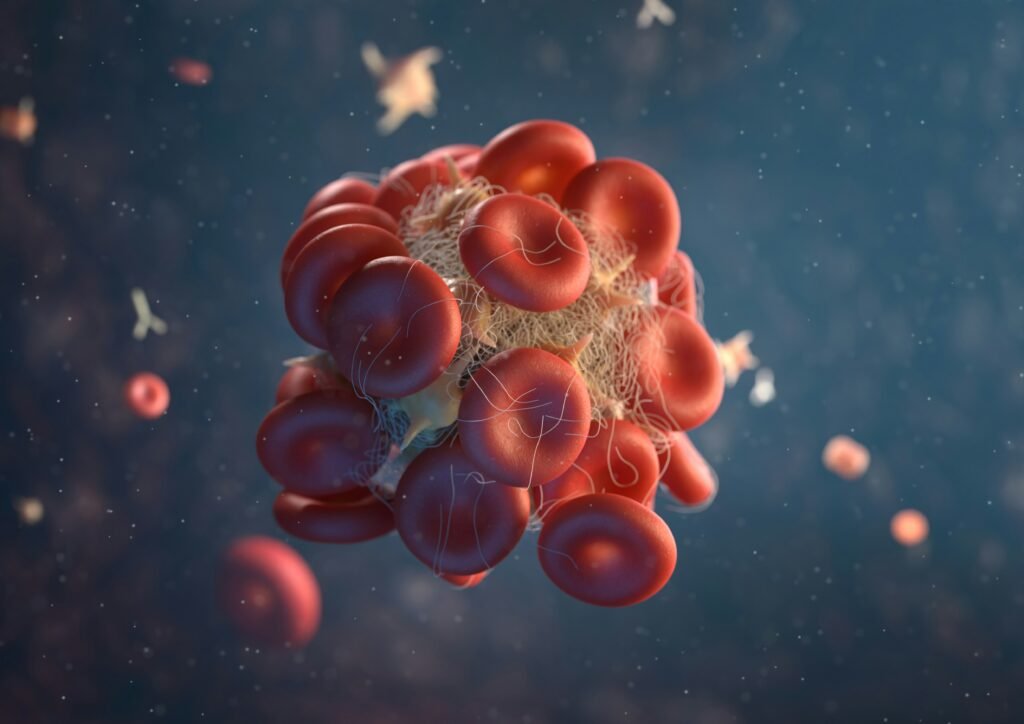
When you bleed from a cut, your body uses a coordinated process called hemostasis. Platelets help form an early plug, while clotting factors create fibrin, a protein mesh that stabilizes the clot. aPTT focuses on the plasma clotting-factor portion of this process. It does not directly measure platelet number, platelet function, blood-vessel fragility, or whether a person is currently forming dangerous clots in the body.
You may see aPTT written as PTT, APTT, activated PTT, or partial thromboplastin time. In routine consumer-facing reports, PTT and aPTT are often used interchangeably, although laboratories may use specific methods and reagents. MedlinePlus explains that a PTT test checks how long a blood sample takes to clot and is often interpreted alongside PT testing to get a broader view of clotting: MedlinePlus PTT test.
Why aPTT is ordered
Your clinician may order an aPTT blood test for several different reasons. The most common situations include evaluation of bleeding symptoms, pre-procedure risk assessment in selected patients, anticoagulant monitoring, and workup of an unexpected abnormal clotting time.
| Reason for testing | What aPTT can help assess | Common companion tests |
|---|---|---|
| Unexplained easy bruising, heavy bleeding, nosebleeds, or prolonged bleeding after dental work or surgery | Whether part of the clotting-factor system is delayed | CBC with platelet count, PT/INR, fibrinogen, von Willebrand testing, factor assays |
| Monitoring unfractionated heparin in some settings | Whether heparin effect is in a target range chosen by the treating team | Anti-Xa heparin assay, platelet count, hemoglobin/hematocrit |
| Unexpected prolonged clotting time | Whether further investigation is needed for deficiency, inhibitor, anticoagulant effect, or specimen issue | Repeat aPTT, mixing study, lupus anticoagulant evaluation, thrombin time, fibrinogen |
| Selected preoperative or pre-procedure assessment | Possible clotting abnormalities when history or risk factors suggest a need | PT/INR, CBC, condition-specific testing |
| Evaluation for lupus anticoagulant or antiphospholipid syndrome when clinically indicated | Screening evidence of a clotting inhibitor, although aPTT alone is not enough | DRVVT, PTT-LA, confirmatory phospholipid testing, anticardiolipin and beta-2 glycoprotein I antibodies |
ARUP Consult emphasizes that evaluation of prolonged clotting times depends on the clinical presentation—bleeding, thrombosis, or an incidental abnormal result—and on which tests are abnormal, such as PT, aPTT, or both: ARUP Consult prolonged clotting time evaluation. That context matters. For example, an isolated prolonged aPTT in a person with no bleeding history may lead to a different workup than a prolonged aPTT in someone with recurrent joint bleeding, severe postpartum bleeding, or a new clot.
How to prepare for an aPTT blood test
Fasting is usually not required. You can generally eat and drink normally unless your clinician or lab gives different instructions because other tests are being drawn at the same time. If your order includes a metabolic panel, lipid panel, or another test with special preparation, follow the instructions for the entire lab visit.
Before the blood draw, tell your healthcare team about all medications and supplements you take. This is especially important if you use anticoagulants or antiplatelet medicines, including heparin, warfarin, apixaban, rivaroxaban, dabigatran, enoxaparin, aspirin, clopidogrel, or over-the-counter products that may affect bleeding. MedlinePlus notes that your provider may tell you to temporarily stop medicines that can affect results, but you should not stop prescribed blood thinners unless the prescribing clinician specifically instructs you to do so: MedlinePlus Medical Encyclopedia on PTT.
- Bring medication details. Include dose, timing of your last dose, and why the medication was prescribed.
- Mention bleeding or clotting history. Tell your clinician about heavy menstrual bleeding, recurrent nosebleeds, bleeding after procedures, blood clots, miscarriages, liver disease, autoimmune disease, or a family history of hemophilia or other bleeding disorders.
- Ask about timing if you are on heparin. For inpatient or infusion monitoring, the timing of the sample relative to the heparin dose or infusion protocol can matter.
- Tell the phlebotomist if you bruise easily or feel faint. They can help you sit or lie down safely and apply pressure after the draw.
The blood draw itself is brief. A phlebotomist or other trained professional cleans the skin, inserts a small needle into a vein, and collects blood into a tube. Coagulation testing is sensitive to specimen collection and handling. For example, Mayo Clinic Laboratories specifies platelet-poor plasma collected in a light-blue-top sodium citrate tube for aPTT testing and notes that platelet contamination can affect accuracy. Labcorp also notes that citrate volume may need adjustment when hematocrit is very high, because the blood-to-anticoagulant ratio can alter coagulation results: Labcorp PT and PTT specimen information.
How to interpret aPTT results
aPTT results are reported as a number of seconds. A common adult reference interval is roughly 25 to 35 seconds or 25 to 37 seconds, but the exact range depends on the laboratory method. MedlinePlus lists a general PTT range of 25 to 35 seconds, while Mayo Clinic Laboratories lists a reference value of 25 to 37 seconds for its aPTT method. Use your own lab’s reference interval rather than applying a generic range to your result.
Important: A result that is only slightly outside the reference range may be handled differently from a markedly prolonged result, especially if you have no bleeding symptoms and the sample may have been difficult to collect. Interpretation depends on your symptoms, medications, other lab results, and whether the finding is new or persistent.
| Result pattern | Plain-language meaning | Possible explanations |
|---|---|---|
| Normal aPTT | The sample clotted within the lab’s expected range. | Many intrinsic/common pathway problems are less likely, but a normal result does not rule out all bleeding disorders. |
| High or prolonged aPTT | The sample took longer than expected to clot. | Heparin or other anticoagulant effect, factor VIII/IX/XI/XII deficiency, lupus anticoagulant, factor inhibitor, liver disease, vitamin K-related problems, fibrinogen problems, DIC, or specimen issue. |
| Low or shortened aPTT | The sample clotted faster than expected. | Often less diagnostically specific; may occur with inflammation-related factor VIII elevation or may reflect collection/processing variables. Clinical significance depends on context. |
What a high aPTT may mean
A prolonged aPTT means clot formation in the sample was delayed. It does not automatically mean you are actively bleeding or that you have hemophilia. Mayo Clinic Laboratories lists several broad causes of aPTT prolongation, including clotting factor deficiency, heparin or another inhibitor, lupus anticoagulant, fibrinogen deficiency, liver disease, and vitamin K deficiency.
Common categories your clinician may consider include:
- Medication effect. Unfractionated heparin is a classic cause of prolonged aPTT. Some direct oral anticoagulants and other drugs can also affect coagulation testing, although the pattern varies by medication and assay.
- Inherited clotting factor deficiencies. Deficiencies of factors VIII, IX, or XI may be associated with bleeding risk. Factor XII deficiency can prolong aPTT but is not typically associated with the same bleeding pattern as hemophilia A or B.
- Acquired factor inhibitors. Some people develop antibodies that interfere with a clotting factor, such as factor VIII. This can cause new or severe bleeding and needs prompt medical evaluation.
- Lupus anticoagulant. Despite the word “anticoagulant,” lupus anticoagulant is often associated with clotting risk in the body, not a simple bleeding tendency. It can prolong phospholipid-dependent clotting tests in the lab and requires specialized confirmation.
- Liver disease, vitamin K problems, or disseminated intravascular coagulation. These can affect multiple clotting factors and may also change PT/INR, platelet count, fibrinogen, D-dimer, or other results.
- Specimen collection or handling issue. Underfilled citrate tubes, clotting in the tube, heparin contamination from a line draw, delayed processing, high hematocrit without citrate adjustment, or platelet contamination can produce misleading results.
What a low aPTT may mean
A shortened aPTT is usually less emphasized than a prolonged aPTT, but it can still be noted on a report. Mayo Clinic Laboratories states that a shortened aPTT may reflect elevated factor VIII activity in acute or chronic illness or inflammation, or may be spurious because of difficult venipuncture or specimen processing. If your aPTT is low but you feel well and other tests are normal, your clinician may simply interpret it in context rather than order an extensive workup.
Can a normal aPTT rule out a bleeding disorder?
No. A normal aPTT can be reassuring, but it does not rule out every cause of abnormal bleeding. Platelet function disorders, some von Willebrand disease patterns, factor XIII deficiency, mild factor deficiencies, medication effects, connective-tissue disorders, gynecologic causes of heavy menstrual bleeding, and local anatomic sources of bleeding may require other evaluation. If you have significant bleeding symptoms, the symptom history often matters as much as the screening clotting tests.
aPTT vs PT/INR: what is the difference?
aPTT and PT/INR are often ordered together because they evaluate different parts of the clotting system. PT measures how many seconds it takes a clot to form through a pathway that includes factor VII and the common pathway; INR is a standardized calculation commonly used for warfarin monitoring. MedlinePlus explains that PT/INR can help compare PT results across labs and methods: MedlinePlus PT/INR test.
| Test | Main pathway emphasis | Common uses | Examples of follow-up questions |
|---|---|---|---|
| aPTT / PTT | Intrinsic and common pathways | Bleeding workup, selected heparin monitoring, inhibitor evaluation | Is there heparin effect, factor VIII/IX/XI deficiency, lupus anticoagulant, or an inhibitor? |
| PT/INR | Extrinsic and common pathways | Warfarin monitoring, liver disease evaluation, vitamin K-related assessment, bleeding workup | Is warfarin effect present? Are vitamin K-dependent factors or liver synthetic function affected? |
| CBC with platelet count | Blood cells, including platelet number | Bleeding or bruising evaluation, anemia assessment | Are platelets low? Is there anemia from blood loss? |
Follow-up testing and practical next steps
If your aPTT is abnormal, the next step is not always more testing. Sometimes the most useful step is to repeat the sample under controlled conditions, especially if the result is unexpected and there is no bleeding history. Your clinician may ask whether the blood was drawn from an IV line, whether you received heparin flushes, or whether the tube was underfilled.
When additional evaluation is needed, follow-up tests may include:
- Repeat aPTT and PT/INR. Confirms whether the abnormality persists and whether more than one pathway is affected.
- CBC with platelet count. Helps evaluate platelet number and anemia.
- Mixing study. Patient plasma is mixed with normal pooled plasma. Correction may suggest a factor deficiency; lack of correction may suggest an inhibitor, although interpretation can be nuanced.
- Specific clotting factor assays. Measures individual factors such as VIII, IX, XI, or XII.
- Lupus anticoagulant evaluation. May include dRVVT, PTT-LA, phospholipid confirmation, and related antiphospholipid antibody testing.
- Fibrinogen, D-dimer, thrombin time, or anti-Xa testing. These may be used when DIC, heparin effect, fibrinogen abnormalities, or anticoagulant monitoring questions are present.
- Von Willebrand testing. Considered when bleeding symptoms suggest von Willebrand disease, even if screening clotting tests are normal or only mildly abnormal.
Seek urgent care now for severe or uncontrolled bleeding, vomiting blood, black or bloody stools, sudden severe headache, weakness on one side, chest pain, shortness of breath, a swollen painful leg, or bleeding after a procedure that will not stop. Lab interpretation can wait only when symptoms are not urgent.
If you are reviewing a result in a patient portal before your clinician has commented, write down three things: the aPTT value and reference range, whether PT/INR and platelet count were normal, and all blood thinners or supplements taken before the draw. This makes the follow-up conversation more productive.
How much does an aPTT blood test cost?
The cost of an aPTT blood test varies by setting, insurance coverage, and whether the test is ordered alone or as part of a panel. In direct-access or self-pay settings, some online lab services list a PTT test in the lower tens of dollars; for example, Lab Test On Demand lists a PTT test price of $35, with information subject to change: Lab Test On Demand PTT test. Hospital outpatient departments and health-system labs may bill substantially more, and the amount you owe may depend on negotiated insurance rates, deductible status, coinsurance, or facility billing.
When comparing options, focus on the effective total cost to the patient, not just the advertised test price. Ask whether the quoted price includes:
- the lab test itself, often billed under CPT code 85730 for thromboplastin time, partial;
- blood draw or phlebotomy fees;
- clinician order, telehealth, or service fees if using a direct-order platform;
- reflex or follow-up testing, which may add separate charges;
- insurance billing versus cash-pay pricing;
- state restrictions or requirements for clinician authorization;
- where the sample is collected and which laboratory performs the test.
Quest Diagnostics provides a self-pay estimate tool and notes that accurate pricing requires the correct service code from the test order: Quest Diagnostics self-pay price estimate. If your clinician orders a broader bleeding or thrombosis workup, the total can increase because panels may include reflex tests performed at additional charge. Quest’s bleeding and thrombosis test menu notes that reflex tests can be associated with additional CPT codes and charges: Quest Diagnostics bleeding and thrombosis test menu.
Limitations of the aPTT blood test
aPTT is useful, but it has important limitations. It is sensitive to pre-analytic variables, meaning the way the sample is collected, filled, mixed, transported, and processed can affect the result. It also does not identify the cause of an abnormal result by itself. A prolonged aPTT can come from a medication, a factor deficiency, an inhibitor, an antibody pattern, liver-related clotting changes, fibrinogen problems, or a specimen artifact. A normal aPTT does not guarantee normal clotting in real life.
Another limitation is that aPTT is reagent-dependent. Different laboratories use different activators and phospholipid reagents, so sensitivity to lupus anticoagulant, heparin, and factor deficiencies can vary. This is one reason your clinician may prefer serial monitoring at the same laboratory when possible, particularly for anticoagulant management.
Finally, aPTT is not a general “clot risk” screening test for healthy people. Some people with a high aPTT are at increased bleeding risk; others may have lupus anticoagulant, which can be associated with clotting risk. The same number can mean different things in different clinical situations.
FAQs about the aPTT blood test
What does an aPTT blood test measure?
It measures how many seconds it takes plasma to form a clot after clotting activators are added in the laboratory. It evaluates the intrinsic and common coagulation pathways and can help investigate bleeding symptoms, heparin effect, factor deficiencies, or clotting inhibitors.
Do I need to fast before an aPTT blood test?
Usually no. Fasting is not typically required for aPTT alone. Follow your lab order instructions if other tests are drawn at the same visit.
What is a normal aPTT range?
Many adult reference ranges are around 25 to 35 or 25 to 37 seconds, but the exact range varies. Always compare your result with the reference interval printed on your own report.
What does a high aPTT mean?
A high aPTT means the sample took longer than expected to clot. Causes can include anticoagulant medication effects, clotting factor deficiencies, inhibitors such as lupus anticoagulant, liver disease, vitamin K-related problems, fibrinogen abnormalities, DIC, or specimen problems.
Can a normal aPTT rule out a bleeding disorder?
No. A normal result does not rule out platelet function disorders, some von Willebrand disease patterns, factor XIII deficiency, mild factor deficiencies, medication effects, or non-blood causes of bleeding.
Is aPTT the same as PT/INR?
No. aPTT evaluates intrinsic and common pathway activity, while PT/INR evaluates extrinsic and common pathway activity and is commonly used for warfarin monitoring. The tests are often interpreted together.
How much does an aPTT blood test cost?
Self-pay cost can range from lower-cost direct-access pricing to much higher health-system or hospital outpatient charges. Compare the total cost, including phlebotomy, ordering fees, service fees, insurance cost-sharing, and any reflex testing.
Educational note
This article is for general education and is not a diagnosis or personal medical advice. aPTT results should be interpreted by a qualified healthcare professional who can review your symptoms, medications, bleeding or clotting history, and other laboratory results.
Source Notes
- MedlinePlus — Prothrombin Time Test And Inr Ptinr
- MedlinePlus: Partial Thromboplastin Time (PTT) Test
- ARUP Consult: Prolonged Clotting Time Evaluation
- MedlinePlus Medical Encyclopedia: Partial thromboplastin time (PTT)
- Lab Test On Demand PTT test
- Quest Diagnostics: Self-pay price estimate
- Quest Diagnostics bleeding and thrombosis test menu