Bottom line: what is actually cheapest?
If you are looking for the cheapest blood tests without insurance , the lowest price is usually not from a hospital outpatient bill. It is usually from one of four routes:
A local cash-pay clinic or direct primary care practice that has negotiated low wholesale lab pricing.A community clinic or federally qualified health center with sliding-scale pricing if you qualify.An online discount lab marketplace that sends you to a partner patient service center for collection.A direct-to-consumer lab program from a major national laboratory, such as Quest Health or Labcorp OnDemand.
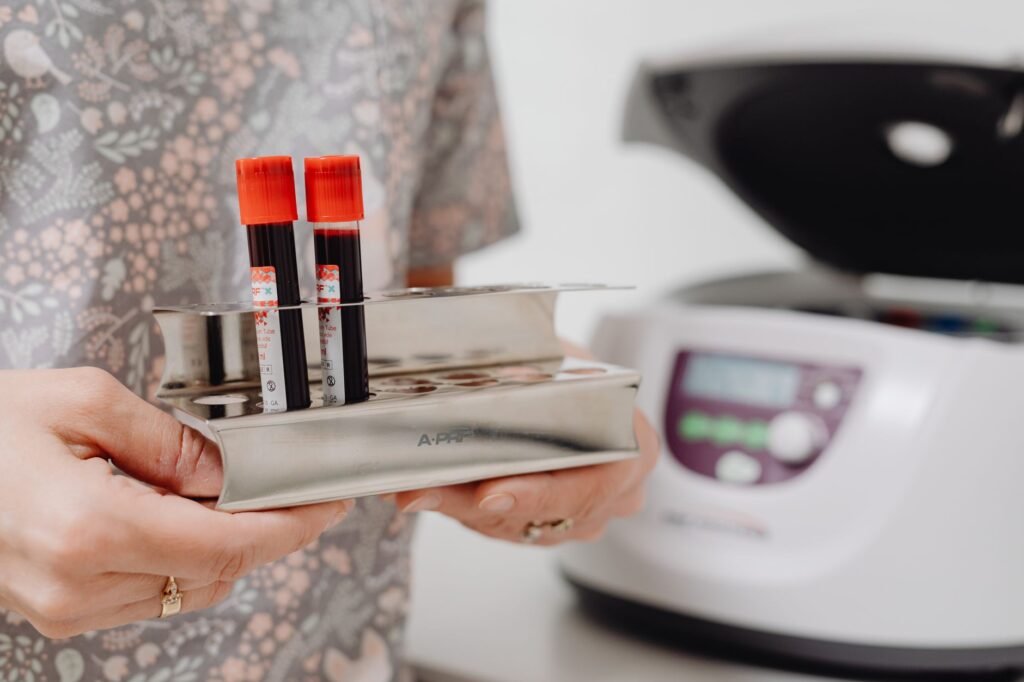
Lab Tech Insight: The tube, specimen handling, and test method matter. A CBC is typically performed on whole blood collected in an EDTA tube, while chemistry tests such as CMP, lipid panel, TSH, ferritin, and vitamin D are usually serum or plasma chemistry/immunoassay tests. A cheap test is only useful if the right specimen is collected, labeled, transported, and analyzed under appropriate laboratory quality systems.
Self-pay blood test price comparison
Option
Example routine prices found
Best for
Watch-outs
Local cash-pay clinic, DPC, community clinic, or university health service Examples found: CBC with diff $14 and CMP $14 on one university fee schedule; some DPC member lists show lower wholesale-style prices.
People who also need clinical context, a provider order, or follow-up.
May require visit fee, membership, eligibility, or financial-assistance application. Prices are local, not national.
Ulta Lab Tests / discount lab broker Search-result snippets listed CBC pricing around $18.95 promotional and $22.95 quick-order pricing.
Price shoppers who are comfortable ordering online and using a partner draw site.
Live site may block some users, promotions change, and direct-access restrictions may apply. Ulta’s pharmacy FAQ says partner patient service centers are available across the U.S. except HI, NJ, NY, and RI, and notes NY, NJ, and RI direct-access restrictions. Ulta FAQ
Walk-In Lab / online lab broker Public page showed CBC with differential and platelets add-to-cart price of $26; promotional sale pricing may be temporary.
People comparing online lab brokers and coupon pricing.
Verify final price, lab network, state eligibility, coupon date, cancellation policy, and whether the lab location is convenient. Walk-In Lab CBC page
Labcorp OnDemand CBC $29, CMP $49, lipid panel $59, A1c $39 on the health and wellness test page.
Simple checkout, Labcorp location access, HSA/FSA users.
Many tests are age-limited to adults; final availability can depend on state and test. Labcorp’s CBC page states it is collected in person and that no special preparation is needed. Labcorp CBC
Quest Health CBC $29, CMP $49, lipid panel $59; A1c was shown at $35.10 sale / $39 regular. Quest states an additional physician service fee starting at $6 is collected for Quest lab tests.
People who prefer Quest collection locations or want Quest’s direct program.
Quest Health help content states tests are not currently available in Arizona, Hawaii, or Puerto Rico; individual tests may have age, state, or sex restrictions, and you must be 18+ to purchase on QuestHealth.com. Quest Help Center
Compare lab test prices before you buy
Prices move quickly, and the cheapest provider for a CBC may not be cheapest for a CMP, lipid panel, thyroid panel, ferritin, or vitamin D. Before you check out, compare current cash prices, provider fees, draw-site access, and state restrictions.
Where to buy cheap blood tests without insurance
1. Start with the test your clinician actually needs
The cheapest order is the one that answers the right question without unnecessary add-ons. If a healthcare professional asked you to get labs, ask for the exact test names and, when possible, CPT or lab order names. “Blood panel” is not specific. A wellness panel might include CBC, CMP, lipid panel, A1c, TSH, urinalysis, and vitamin D—or it might include dozens of tests you do not need.
CTX Stat internal reading: see our Lab Tests guide, CBC test guide, CMP guide, lipid panel guide, and A1c guide.
2. Check local self-pay options first
3. Compare direct-to-consumer lab programs
Quest Health and Labcorp OnDemand make online ordering relatively straightforward. They usually include a defined test menu, online payment, and collection at an affiliated patient service center. This is convenient, but not always the lowest cash price. Quest Health’s shop page lists routine prices and notes a healthcare provider fee starting at $6 for Quest lab tests; Labcorp OnDemand lists several common routine tests with fixed consumer prices. Quest shop tests Labcorp test menu
4. Compare discount lab brokers
Online lab brokers can be cheaper because they negotiate pricing and route the specimen to a partner lab network. The tradeoff is that pricing, coupon codes, state availability, refund policies, and draw-site locations may be more complex. Before purchasing, confirm the performing lab, collection network, whether physician authorization is included, whether results are reviewed, and whether your state allows the order.
5. Do not ignore financial-assistance and public-health options
Hidden fees and checkout traps
When comparing the cheapest blood tests without insurance, compare the total cost, not just the advertised test price.
Physician or provider authorization fee: Some services include this in the price; Quest notes an additional fee starting at $6 for Quest lab tests.Venipuncture or draw fee: Some sites include collection; others add a separate draw fee.Panel duplication: A “wellness panel” may include tests you already bought separately.State restriction problems: Direct-access testing rules vary. Quest Health says its tests are not currently available in Arizona, Hawaii, or Puerto Rico and that some tests have additional restrictions. Ulta’s FAQ identifies exceptions and direct-access limitations for several states. Quest restrictions Ulta restrictions Expired promotions: Coupon prices can disappear. Screenshot the final checkout page for your records.Repeat collection costs: If a specimen clots, hemolyzes, is insufficient, or is collected in the wrong tube, you may need a redraw.No interpretation visit: A low-cost lab result may still require a paid clinician visit if abnormal or confusing.
Lab Tech Insight: A specimen problem can turn a cheap test into wasted money. Hemolysis can interfere with some chemistry tests; underfilled tubes can affect anticoagulant ratios; delayed processing can affect certain analytes. Use the collection site recommended by the ordering service and follow prep instructions carefully.
Common cheap blood tests and what they do
Test
What it generally evaluates
Typical prep
Helpful CTX Stat guide
CBC with differential Red blood cells, white blood cells, platelets, hemoglobin, hematocrit, and white-cell types. It can provide clues about anemia, infection, inflammation, bleeding, and other conditions, but it is not a diagnosis by itself. MedlinePlus notes that CBC measures different cells in blood and usually requires no special preparation. MedlinePlus CBC
Usually no fasting.
CBC test
CMP Glucose, electrolytes, kidney-related markers, liver enzymes, bilirubin, albumin, and protein markers depending on the panel.
Fasting may be requested depending on glucose interpretation and provider instructions.
CMP test
Lipid panel Total cholesterol, HDL cholesterol, LDL cholesterol, and triglycerides.
May be fasting or nonfasting depending on clinical purpose and lab/provider instructions.
Lipid panel
Hemoglobin A1c Average blood glucose exposure over roughly the prior few months; used in diabetes screening and monitoring contexts.
No fasting for A1c alone.
A1c test
TSH Thyroid-stimulating hormone, often used as an initial thyroid function marker.
Ask about timing and thyroid medication instructions if applicable.
TSH test
Ferritin / iron studies Iron storage and iron transport markers; often used in anemia or iron-status evaluation.
Some iron tests may have timing or fasting instructions.
Ferritin test
Vitamin D 25-hydroxyvitamin D concentration.
Usually no fasting.
Vitamin D test
Preparation and specimen factors that affect results
Even inexpensive routine labs deserve proper preparation. For many blood tests, you can eat and drink normally. For others, fasting, medication timing, exercise, hydration, or supplement use can change the result or how it is interpreted. MedlinePlus notes that a CBC usually needs no special preparation, while other blood tests may require fasting depending on what is being measured. CBC preparation Fasting guidance
Fasting: If your order includes glucose, triglycerides, insulin, or certain metabolic markers, ask whether fasting is required.Hydration: Being well hydrated can make venipuncture easier, unless you were told to restrict fluids.Supplements: Biotin and other supplements can interfere with some immunoassays. Ask the lab or clinician before stopping anything.Timing: Some hormones and drug levels are time-sensitive.Exercise: Strenuous exercise can transiently affect some enzymes, kidney markers, inflammatory markers, and blood counts.Specimen type: CBC, chemistry, coagulation, and endocrine tests may require different tubes and handling.
For a deeper prep checklist, read CTX Stat’s blood test fasting guide and blood test results guide.
Safety, quality, and result interpretation
In the United States, CMS regulates most human laboratory testing through the Clinical Laboratory Improvement Amendments program, commonly called CLIA. CMS states that it regulates all laboratory testing performed on humans in the U.S. except research through CLIA. CMS CLIA
CLIA certification is important, but it does not mean every test is useful for every person. The FDA advises consumers to understand both the benefits and limitations of direct-to-consumer tests before using them. FDA direct-to-consumer tests
Reference intervals are not universal. They can vary by laboratory, analyzer, reagent, specimen type, population, age, sex, pregnancy status, and medical context. Do not compare your result to a random internet range without checking the range printed on your report. If your result is unexpected, significantly abnormal, or does not match how you feel, contact a qualified healthcare professional.
Questions to ask before ordering
Price and logistics
What is the final checkout total after provider, draw, processing, and tax fees?
Is the collection site close enough, and are appointments required?
Is the test available in my state and for my age/sex?
What is the refund or cancellation policy?
Will results be sent to me, a clinician, or both?
Clinical usefulness
Why am I ordering this test?
Do I need a single test or a panel?
Will the result change what I do next?
Who will help interpret abnormal or borderline results?
Are symptoms present that should be evaluated before waiting for a self-ordered test?
Preparation
Do I need to fast?
Should I avoid strenuous exercise before collection?
Do any supplements or medications affect this test?
Is the test time-sensitive?
Do I need to bring ID, requisition forms, or payment confirmation?
FAQs
What is the cheapest blood test without insurance?
For many people, the cheapest single routine blood test is a CBC purchased through a local cash-pay clinic, discount lab broker, or direct-to-consumer lab service. Online prices reviewed for this article commonly ranged from the high teens to about $30 for a CBC, but final cost depends on fees, promotions, state restrictions, and draw-site access.
Is Labcorp or Quest cheaper for blood tests without insurance?
For the routine examples reviewed here, Labcorp OnDemand and Quest Health were similar on several list prices: CBC $29, CMP $49, and lipid panel $59. Quest Health also notes a healthcare provider fee starting at $6 for Quest lab tests. The cheaper choice may change when promotions, local access, test selection, and state restrictions are considered.
Can I order my own blood tests without a doctor?
Often yes, but it depends on the test, provider, age, and state. Direct-to-consumer and direct-access lab services usually include some form of physician or provider authorization, but availability is not uniform nationwide. Always confirm state restrictions before purchasing.
Are cheap blood tests accurate?
A low price does not automatically mean low quality. Many discount services use large CLIA-certified reference laboratories. However, accuracy also depends on ordering the right test, correct specimen collection, proper handling, analytical method, and appropriate interpretation. Use reputable providers and ask who performs the test.
Do I need to fast for cheap blood tests?
It depends on the test. CBC and A1c usually do not require fasting. Lipid panels, glucose, insulin, and some metabolic tests may have fasting instructions depending on the clinical purpose. Follow the instructions from the ordering service or your healthcare professional.
Can a CBC diagnose anemia, infection, or cancer?
A CBC can show patterns that may suggest anemia, infection, inflammation, blood loss, or other conditions, but it does not diagnose most conditions by itself. Labcorp’s CBC page explicitly notes that a CBC is not a diagnostic test and cannot confirm a specific illness or disease. Discuss abnormal results with a qualified healthcare professional.
Why are hospital blood tests so expensive without insurance?
Hospital outpatient billing may include facility overhead, chargemaster pricing, separate collection fees, and billing processes that differ from cash-pay direct-access testing. If you are uninsured, ask for the cash-pay price and financial-assistance options before the draw whenever possible.
Can I use HSA or FSA funds for self-pay blood tests?
Some direct-to-consumer lab services accept HSA/FSA payment, but eligibility depends on your plan rules and whether the expense is considered qualified. Labcorp OnDemand lists HSA/FSA as accepted on its CBC page. Keep receipts and check your plan documents.
What if my result is abnormal?
Do not self-diagnose from one abnormal result. Reference intervals vary by lab, and results must be interpreted with symptoms, medications, medical history, and repeat or confirmatory testing when appropriate. Contact a qualified healthcare professional, especially for severe, unexpected, or symptom-related abnormalities.
Source Notes
Compare lab test prices before you order
Use the CTX Stat nationwide comparison tool to review self-pay prices across major laboratory testing providers.
Compare Test Prices