Medical & affiliate disclosure: CTX Stat provides educational laboratory information and is not a substitute for professional medical advice, diagnosis, or treatment. CTX Stat may receive compensation from some outbound provider links when an affiliate program is active; provider comparisons and rankings are based on consumer fit, effective cost, access, policies, and reputation—not commission.
Quick take: high vs. low LH
Luteinizing hormone (LH) is a pituitary hormone that helps coordinate ovulation, menstrual-cycle timing, testosterone production, sperm production, puberty, and menopause-related hormone changes. A high or low LH result is not interpreted by the number alone. It has to be read with your age, sex assigned at birth, menstrual-cycle day if applicable, symptoms, pregnancy status, medications, and related hormone results.
- High LH can be normal during the midcycle LH surge before ovulation and after menopause.
- Persistently high LH outside the expected context can point to the ovaries or testes not responding well to pituitary signaling, sometimes called primary gonadal dysfunction.
- Low LH in adults can point to reduced hypothalamus or pituitary signaling, especially when FSH and sex hormones are also low.
- LH is most useful as a pattern test. It is commonly interpreted with FSH, estradiol, progesterone, testosterone, prolactin, thyroid testing, pregnancy testing, and sometimes AMH or imaging.
- One LH result does not diagnose PCOS, menopause, infertility, or low testosterone by itself. It is a clue that helps guide the next step.
What is LH?
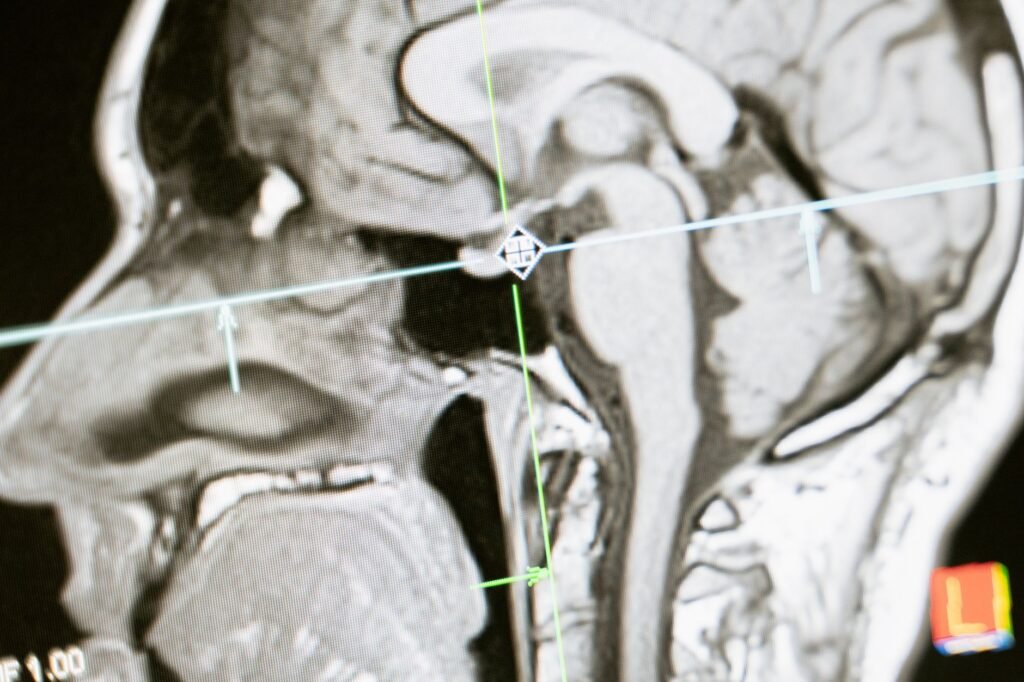
LH is made by the pituitary gland, a small hormone-producing gland at the base of the brain. The hypothalamus sends signals to the pituitary, and the pituitary releases LH and follicle-stimulating hormone (FSH). Together, these hormones help regulate the ovaries or testes.
In people who menstruate, LH helps control the menstrual cycle and triggers ovulation. The sharp rise in LH before ovulation is the same hormone surge detected by many urine ovulation predictor kits. In the ovary, LH also supports hormone production after ovulation, including progesterone production by the corpus luteum.
In men, LH acts on Leydig cells in the testes and helps stimulate testosterone production. Testosterone, along with FSH and other local signals, supports sperm production and male sexual development. In children and adolescents, LH is part of the hormone system that turns on during puberty.
Authoritative patient resources from MedlinePlus and laboratory reference information from Mayo Clinic Laboratories both emphasize that LH interpretation depends on sex, age, menstrual-cycle phase, symptoms, and related hormone tests.
Typical LH reference ranges
Reference ranges vary by laboratory method, unit, age group, and menstrual-cycle phase. Always compare your result with the reference interval printed on your own report. The table below uses representative serum LH ranges from Mayo Clinic Laboratories to show why the same number can be normal in one setting and abnormal in another.
| Group or timing | Example LH reference range | Why context matters |
|---|---|---|
| Adult males | About 1.3–9.6 IU/L | Often interpreted with morning testosterone, FSH, prolactin, and symptoms. |
| Premenopausal follicular phase | About 1.9–14.6 IU/L | Often used early in the cycle when evaluating irregular periods or fertility. |
| Premenopausal midcycle | About 12.2–118.0 IU/L | A high result may reflect the normal LH surge that triggers ovulation. |
| Premenopausal luteal phase | About 0.7–12.9 IU/L | Usually interpreted with progesterone if ovulation is being assessed. |
| Postmenopausal | About 5.3–65.4 IU/L | LH is commonly higher after menopause because ovarian estrogen production has fallen. |
Many labs report LH in IU/L or mIU/mL; for LH, those units are often numerically equivalent, but you should still use your lab’s stated units and reference range. A result slightly outside a range may not have the same significance as a result that is dramatically abnormal or repeatedly abnormal.
What does a high LH result mean?
High LH means the pituitary is releasing more LH than expected for the reference range being used. The key question is whether that is appropriate for your age and cycle timing or whether it suggests that the ovaries or testes are not responding as expected.
High LH around ovulation
In a typical ovulatory menstrual cycle, LH rises sharply just before ovulation. If your blood was drawn near midcycle, a high LH may be expected. A urine LH test may also turn positive during this window. This is one reason a single LH value without the collection date and cycle day can be misleading.
If the goal is to confirm ovulation, clinicians often rely on the timing of cycles, urine LH testing, ultrasound monitoring in fertility care, or a progesterone level drawn in the luteal phase rather than a random LH value alone.
High LH in perimenopause and menopause
LH and FSH tend to rise as ovarian follicle activity declines and estrogen feedback decreases. In someone in the expected age range with typical menopausal symptoms and changing periods, a higher LH may fit the menopause transition. However, hormone levels can fluctuate substantially during perimenopause. For people age 45 or older with typical symptoms, menopause is often assessed clinically rather than by a single LH test.
High LH in younger people who menstruate
In a younger person with irregular or absent periods, high LH may occur when the ovaries are not responding normally or when ovulation is not occurring regularly. Possible contexts include primary ovarian insufficiency, Turner syndrome, prior ovarian surgery, chemotherapy or radiation exposure, autoimmune ovarian damage, thyroid or adrenal disorders, and some patterns seen in polycystic ovary syndrome (PCOS).
PCOS deserves special caution. LH can be higher in some people with PCOS, and an elevated LH-to-FSH ratio is sometimes mentioned online. But PCOS is not diagnosed from LH alone. The 2023 International Evidence-based PCOS Guideline uses combinations of ovulatory dysfunction, androgen excess, and polycystic ovarian morphology or AMH in adults, while excluding other causes. In adolescents, clinicians are especially careful because normal puberty can overlap with PCOS-like features.
High LH in men
In men, a high LH result is often interpreted with testosterone and FSH. If testosterone is low and LH is high, the pituitary may be trying to stimulate testes that are not producing enough testosterone. This pattern can occur with primary testicular dysfunction, prior testicular injury, mumps orchitis, chemotherapy or radiation exposure, Klinefelter syndrome, or other testicular conditions.
The Endocrine Society guideline on testosterone therapy in men with hypogonadism recommends using LH and FSH to help distinguish primary testicular causes from secondary pituitary-hypothalamic causes when hypogonadism is being evaluated. Importantly, testosterone deficiency should not be diagnosed from LH alone; symptoms and consistently low testosterone are part of the evaluation.
High LH in children or teens
In children, LH is normally low before puberty. High LH and FSH in a child with early pubertal signs may suggest central precocious puberty, while different patterns may suggest peripheral hormone exposure or adrenal, ovarian, or testicular causes. Early breast development, testicular enlargement, pubic hair, rapid growth, acne, body odor, or menstrual bleeding at a young age should be discussed promptly with a pediatric clinician.
What does a low LH result mean?
Low LH means the pituitary is releasing less LH than expected for the reference range being used. In adults, this can be significant when it occurs with low FSH and low sex hormones, because it may reflect reduced signaling from the hypothalamus or pituitary gland.
Low LH with missed periods
In people who menstruate, low or low-normal LH and FSH with low estradiol and absent periods can fit a central pattern, meaning the ovaries may not be receiving enough signal from the brain-pituitary system. One important cause is functional hypothalamic amenorrhea, a diagnosis of exclusion associated with energy deficit, weight loss, undernutrition, eating disorders, high exercise load, psychological stress, or combinations of these factors.
The Endocrine Society guideline on functional hypothalamic amenorrhea recommends excluding pregnancy and other medical causes, taking a detailed history, and evaluating hormones such as TSH, free T4, prolactin, LH, FSH, estradiol, and AMH. It also notes that prolonged amenorrhea can require bone-health assessment and, in severe cases with bradycardia, low blood pressure, orthostasis, or electrolyte abnormalities, urgent evaluation.
Low LH in men
In men, low LH is most concerning when testosterone is also low. This pattern may suggest secondary hypogonadism, meaning the pituitary or hypothalamus is not providing enough signal to the testes. Possible contributors include pituitary tumors, high prolactin, certain medications, anabolic steroid or testosterone use, opioid use, severe systemic illness, obesity-related hormonal suppression, sleep disorders, iron overload, head trauma, or genetic conditions affecting GnRH signaling.
A low LH with normal testosterone may be less clear. It can be a transient finding, a timing issue, or a sign that the body is maintaining testosterone with lower pituitary drive. Clinicians usually interpret it with repeat morning testosterone testing, FSH, prolactin, symptoms, fertility goals, and medication history.
Low LH after hormonal medications
Hormonal medications can suppress LH. Examples include combined oral contraceptives, some progestins, gonadotropin-releasing hormone agonists or antagonists, testosterone therapy, anabolic steroids, and some fertility-treatment medications depending on timing. If you are testing LH while using hormonal contraception or testosterone, ask the ordering clinician whether the result can be interpreted for your intended question.
How LH is interpreted with other hormone results
LH becomes more meaningful when combined with other labs. The following patterns are simplified examples, not diagnoses.
| Lab pattern | Possible interpretation | Common next questions |
|---|---|---|
| High LH, high FSH, low estradiol in a younger person with missed periods | May suggest primary ovarian insufficiency or ovarian damage. | Age, pregnancy test, repeat FSH/estradiol, autoimmune or genetic evaluation, fertility goals, bone health. |
| High LH near midcycle with expected cycle timing | May be the normal ovulatory LH surge. | Was the sample drawn near ovulation? Is progesterone later in the cycle consistent with ovulation? |
| High or relatively high LH, irregular cycles, androgen excess symptoms | May fit PCOS in the right clinical setting, but LH is not diagnostic. | Total/free testosterone, DHEA-S, TSH, prolactin, 17-hydroxyprogesterone, ultrasound or AMH depending on age and context. |
| Low LH, low FSH, low estradiol with absent periods | May suggest hypothalamic or pituitary suppression. | Pregnancy test, nutrition and exercise history, stress, weight change, prolactin, thyroid tests, pituitary symptoms. |
| High LH, low testosterone in a man | May suggest primary testicular dysfunction. | Repeat morning testosterone, FSH, fertility goals, testicular history, genetic or urologic evaluation. |
| Low or normal LH, low testosterone in a man | May suggest secondary hypogonadism. | Repeat morning testosterone, prolactin, medications, sleep apnea, pituitary symptoms, possible imaging if indicated. |
Symptoms that may lead to LH testing
LH is not usually ordered as a general wellness test. It is typically used when the clinical question involves fertility, menstrual-cycle function, puberty, menopause, pituitary disease, ovarian function, or testicular function.
- In people who menstruate: irregular periods, absent periods, infertility, suspected ovulation problems, hot flashes at a young age, possible primary ovarian insufficiency, or evaluation of PCOS-like symptoms.
- In men: low libido, erectile dysfunction, infertility, low sperm count, low testosterone, reduced shaving frequency, loss of muscle mass, gynecomastia, or symptoms suggesting pituitary disease.
- In children and teens: puberty that starts very early, puberty that is delayed, rapid growth changes, or unexplained pubertal development.
How to prepare for an LH blood test
Most LH blood tests use a small blood sample drawn from a vein. Fasting is usually not required unless other tests are being drawn at the same time. Preparation depends on the clinical question:
- Record the first day of your last menstrual period and the cycle day of the blood draw if you have periods.
- List all hormones and fertility medications, including birth control pills, patches, rings, injections, implants, testosterone, DHEA, ovulation induction drugs, and gender-affirming hormone therapy.
- Tell the clinician about supplements, especially high-dose biotin. The FDA has warned that biotin can interfere with some lab tests, including some hormone immunoassays. Do not stop prescribed medications without medical guidance, but ask whether any supplement should be held before testing.
- Ask whether timing matters. Fertility and menstrual-cycle evaluations may require testing on specific cycle days. Testosterone-related evaluations in men often use early-morning testosterone testing, with LH and FSH interpreted alongside it.
Limitations: why LH can be confusing
LH is released in pulses, so a single blood draw is a snapshot. In a person with cycles, LH also changes dramatically across the month. A random result can look “high” simply because it was drawn around ovulation, or “low” because it was drawn at a time when LH is normally lower.
Reference intervals also differ by lab. One laboratory may use a different instrument, antibody method, or calibration than another. Mayo Clinic Laboratories notes that immunoassays can be affected by certain interfering antibodies in some patients. Biotin interference is also assay-dependent, meaning it affects some test methods more than others.
Finally, LH is a signaling hormone, not a direct measure of fertility, egg supply, sperm count, ovulation quality, or menopause symptoms. A normal LH does not rule out every reproductive or endocrine condition, and an abnormal LH does not prove one diagnosis.
Cost and ordering considerations
LH may be ordered by a clinician as part of an insurance-covered evaluation, or it may be purchased as a self-pay blood test in many U.S. markets. The meaningful price is the total out-of-pocket cost, not just the advertised test price. When comparing options, include the lab test charge, provider or ordering fee, draw-site fee, shipping fee if at-home collection is used, follow-up availability, state restrictions, and whether the result includes clinical interpretation.
What to do after a high or low LH result
- Match the result to the correct reference range. Use the range for your age, sex, and menstrual phase if applicable.
- Confirm timing. Write down the date of the blood draw, cycle day, and any ovulation test results or fertility medications.
- Review related hormones. LH is rarely the only test needed. FSH, estradiol, progesterone, testosterone, prolactin, TSH, free T4, hCG, AMH, DHEA-S, and 17-hydroxyprogesterone may be relevant depending on the scenario.
- Consider repeat testing. Repeating LH at the right time can help separate a true pattern from a one-time fluctuation.
- Seek prompt care for red flags. Severe headaches, vision changes, unexpected nipple discharge, fainting, very low blood pressure, signs of an eating disorder, sudden testicular pain, rapid virilization, or puberty signs far earlier than expected should be evaluated quickly.
FAQs about high and low LH
What level of LH is considered high?
There is no single cutoff for everyone. In premenopausal people, LH can be much higher at midcycle than in the follicular or luteal phase. After menopause, higher LH is expected. In adult men, values above the lab’s male reference range may be considered high, but interpretation depends on testosterone, FSH, symptoms, and repeat testing.
What level of LH is considered low?
Low means below the reference interval for the relevant age, sex, and timing. In adults, low LH is more meaningful when FSH and sex hormones are also low or when symptoms suggest pituitary, hypothalamic, ovarian, or testicular dysfunction.
Can high LH mean I am ovulating?
Yes, if the timing fits. A sharp LH rise shortly before ovulation is normal. But a high blood LH drawn at an unknown cycle point does not prove that ovulation occurred. A luteal-phase progesterone level, ultrasound monitoring, or cycle tracking may provide more information.
Can low LH stop periods?
Low LH can be part of a hormone pattern that leads to missed or absent periods, especially if the hypothalamus or pituitary is under-signaling the ovaries. Common contributors include energy deficit, significant weight loss, intense exercise, stress, eating disorders, high prolactin, thyroid disease, pituitary disorders, and certain medications.
Does high LH always mean PCOS?
No. High LH can occur with ovulation, menopause, primary ovarian insufficiency, ovarian damage, some genetic conditions, and other endocrine disorders. PCOS requires a broader clinical evaluation; LH alone is not enough.
Can stress affect LH?
Yes. Significant physical or psychological stress, especially when combined with low energy intake, weight loss, or high exercise load, can suppress hypothalamic signaling and contribute to low or low-normal LH and FSH in some people.
Can LH be normal even if something is wrong?
Yes. A normal LH does not rule out thyroid disease, high prolactin, PCOS, endometriosis, diminished ovarian reserve, sperm abnormalities, pituitary disease, or other causes of infertility or hormone symptoms. LH is one piece of the evaluation.
Should LH be tested at home or in a lab?
Urine LH tests are useful for detecting the LH surge before ovulation, but they are not the same as a quantitative blood LH test. Blood LH testing is more appropriate when a clinician is evaluating pituitary, ovarian, testicular, puberty, or hormone-pattern questions.
Educational note
This article is for general education and does not diagnose a medical condition. LH results should be interpreted by a qualified clinician who can review your symptoms, medications, cycle timing, and related test results.
Source Notes
- MedlinePlus — Luteinizing Hormone Lh Levels Test
- 2023 International Evidence-based Guideline for the Assessment and Management of PCOS
- Endocrine Society: Testosterone Therapy in Men With Hypogonadism Guideline Resources
- Endocrine Society: Hypothalamic Amenorrhea Clinical Practice Guideline Resources
- FDA — U.S. Food and Drug Administration: Testing for Biotin Interference in In Vitro Diagnostic Devices
- MedlinePlus Medical Encyclopedia: Luteinizing hormone (LH) blood test