Medical & affiliate disclosure: CTX Stat provides educational laboratory information and is not a substitute for professional medical advice, diagnosis, or treatment. CTX Stat may receive compensation from some outbound provider links when an affiliate program is active; provider comparisons and rankings are based on consumer fit, effective cost, access, policies, and reputation—not commission.
Quick take
Follicle-stimulating hormone (FSH) is a pituitary hormone that helps regulate ovarian follicles, ovulation, sperm production, and puberty. A high or low FSH result is not a diagnosis by itself. It is a clue about how the brain, pituitary gland, ovaries, or testicles are communicating.
- High FSH often means the ovaries or testicles are not responding strongly enough, so the pituitary gland releases more FSH to stimulate them.
- Low FSH can point toward reduced signaling from the hypothalamus or pituitary gland, but it can also be seen with pregnancy, some medications, undernutrition, rapid weight loss, or intense exercise patterns.
- In menstruating people, timing matters. FSH changes across the menstrual cycle, so many fertility evaluations use an early-cycle sample, commonly around cycle day 2 to 4, depending on the clinician’s protocol.
- FSH is interpreted with other tests, especially luteinizing hormone (LH), estradiol, anti-Müllerian hormone (AMH), prolactin, thyroid tests, testosterone, or semen analysis when relevant.
- Reference ranges vary by lab. Always compare your number with the range printed on your report and review it in context with a qualified healthcare professional.
Bottom line: A “high” or “low” FSH result can mean very different things in a 25-year-old with missing periods, a 48-year-old with hot flashes, a man with abnormal semen analysis, or a child with early puberty signs. The most useful question is not just “Is my FSH abnormal?” but “What pattern does my FSH make with my symptoms and the rest of my hormone results?”
What FSH does in the body
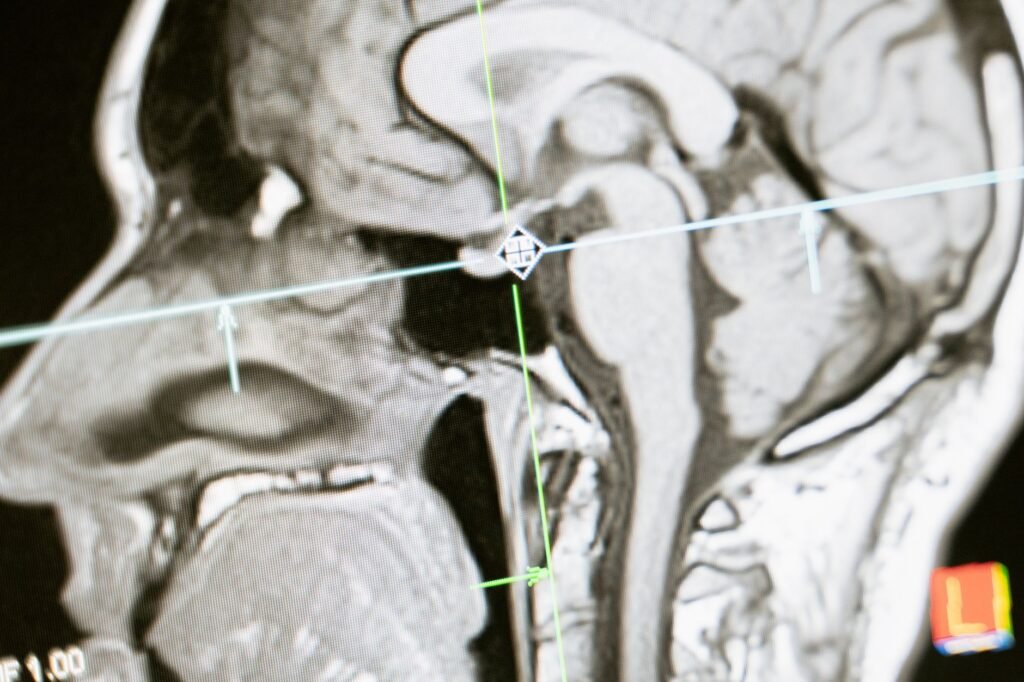
FSH is made by the pituitary gland, a small hormone-producing gland at the base of the brain. The pituitary receives signals from the hypothalamus and then releases FSH and LH into the bloodstream. These hormones act on the gonads: the ovaries in people with ovaries and the testicles in people with testicles.
In ovaries, FSH helps ovarian follicles grow and supports estrogen production. One follicle may become dominant and release an egg during ovulation. In testicles, FSH supports sperm production through effects on Sertoli cells. Because FSH is part of a feedback loop, the result often reflects both pituitary output and how well the ovaries or testicles are responding.
When estrogen, inhibin, or testosterone feedback is lower than expected, the pituitary may increase FSH. When hypothalamic or pituitary signaling is reduced, FSH may be low or inappropriately normal even if sex hormone levels are low.
Common reasons FSH is tested
An FSH blood test may be ordered as part of an evaluation for:
- Irregular, absent, heavy, or changing menstrual periods
- Infertility or difficulty conceiving
- Perimenopause or menopause symptoms such as hot flashes, night sweats, vaginal dryness, or cycle changes
- Suspected primary ovarian insufficiency before age 40
- Low testosterone symptoms or suspected hypogonadism
- Abnormal semen analysis, low sperm count, or azoospermia
- Early or delayed puberty in children and teens
- Possible pituitary or hypothalamic disorders when symptoms suggest broader hormone disruption
FSH may also be measured during fertility treatment planning, but its role depends on the specific treatment approach. A single FSH value cannot reliably predict whether someone can or cannot become pregnant.
Typical FSH reference ranges
FSH is commonly reported in mIU/mL, which is numerically equivalent to IU/L for this test. Ranges differ by lab method, age, sex assigned at birth, pubertal stage, menstrual cycle phase, pregnancy status, and use of hormone therapy. The table below gives broad examples from published medical references, not universal cutoffs.
| Group or situation | Example FSH pattern | How to interpret cautiously |
|---|---|---|
| Adult men | Often roughly 1.5–12.4 mIU/mL in one common reference example | A high result may suggest impaired sperm production or testicular dysfunction; a low result may suggest pituitary or hypothalamic under-signaling. |
| Menstruating adult women | May vary widely across the cycle; one broad example is about 4.7–21.5 mIU/mL | Cycle day and estradiol are essential. Early-cycle FSH is often used in fertility workups. |
| After menopause | Often elevated; one broad example is about 25.8–134.8 mIU/mL | High FSH is expected after menopause because ovarian estrogen and inhibin feedback fall. |
| Children before puberty | Usually low | Interpretation requires pediatric reference ranges and puberty staging. |
Do not use another lab’s range to overrule your own report. Some laboratories use different assay platforms and reference intervals. If your result is near the edge of the range, the clinical context usually matters more than the label alone.
What a high FSH result may mean
A high FSH result usually means the pituitary gland is trying harder to stimulate the ovaries or testicles. In medical terms, this pattern can fit primary gonadal dysfunction: the problem is mainly at the level of the ovary or testicle rather than the brain-pituitary signal.
High FSH in people with ovaries
In people with ovaries, high FSH can be expected, concerning, or unclear depending on age and symptoms.
- Menopause: FSH commonly rises after menopause. If someone is in the typical age range and has gone 12 months without a menstrual period, menopause is usually a clinical diagnosis rather than a lab diagnosis alone.
- Perimenopause: FSH can fluctuate from month to month. A normal FSH does not rule out perimenopause, and a high FSH may not stay high on repeat testing.
- Primary ovarian insufficiency: In someone younger than 40 with irregular or absent periods, elevated FSH with low estradiol may raise concern for primary ovarian insufficiency. Clinicians usually confirm this pattern with repeat testing and evaluation for other causes such as pregnancy, thyroid disease, or high prolactin.
- Diminished ovarian reserve: In fertility evaluations, an elevated early-cycle FSH can suggest reduced ovarian reserve or a lower expected response to ovarian stimulation. It does not prove that pregnancy is impossible.
- Ovarian damage or reduced follicle function: Prior chemotherapy, radiation, ovarian surgery, autoimmune conditions, or certain genetic conditions can be associated with higher FSH.
High FSH is sometimes discussed as an “egg quality” or “fertility” test, but that wording can be misleading. FSH is only one part of ovarian reserve assessment. Age, AMH, antral follicle count, cycle history, prior pregnancies, partner factors, and treatment goals may all matter.
High FSH in men and people with testicles
In men, high FSH can suggest that the pituitary is signaling strongly because the testicles are not producing sperm normally. It is often interpreted with testosterone, LH, testicular exam findings, and semen analysis.
- Impaired sperm production: Elevated FSH may be seen with low sperm count or no sperm in the ejaculate when the issue is reduced production rather than blockage.
- Primary testicular dysfunction: Genetic conditions such as Klinefelter syndrome, prior mumps orchitis, trauma, chemotherapy, radiation, or severe testicular injury can be associated with high FSH.
- Fertility evaluation: Guidelines for male infertility often use FSH with semen results and testicular size to help distinguish impaired production from obstruction.
A high FSH in a man does not automatically mean there are no treatment options. Depending on the semen analysis and exam, next steps may include repeat semen testing, reproductive urology referral, genetic testing, imaging in selected cases, or assisted reproductive technology discussions.
High FSH in children and teens
In children, high FSH and LH in the setting of early sexual development can suggest central precocious puberty, meaning the brain-pituitary-gonad axis has activated earlier than expected. Puberty signs before age 8 in girls or age 9 in boys deserve medical evaluation. Conversely, elevated FSH in a teen with delayed puberty may suggest primary gonadal dysfunction. Pediatric interpretation should always use age- and puberty-stage-specific ranges.
What a low FSH result may mean
Low FSH means the pituitary is releasing less FSH than expected. Sometimes that is normal, such as before puberty or during pregnancy. In other cases, low or “inappropriately normal” FSH may point toward reduced hypothalamic or pituitary signaling.
Low FSH in people with ovaries
In a person with irregular or absent periods, low FSH may be considered alongside LH, estradiol, pregnancy testing, prolactin, thyroid function, weight changes, exercise patterns, nutrition, stress, and medication history.
- Pregnancy: FSH is normally suppressed during pregnancy.
- Functional hypothalamic amenorrhea: Low energy availability, significant weight loss, undernutrition, eating disorders, high exercise load, or major physiologic stress can reduce hypothalamic signaling and lead to low estrogen with low or normal gonadotropins.
- Pituitary or hypothalamic disorders: Tumors, infiltrative disease, prior brain radiation, head trauma, surgery, or other pituitary hormone deficiencies can reduce FSH output.
- Hormonal medications: Combined hormonal contraceptives, some progestins, GnRH analogs, and other medications can suppress FSH depending on timing and dose.
- PCOS context: FSH may be normal or relatively low compared with LH in some people with polycystic ovary syndrome, but PCOS cannot be diagnosed from FSH alone.
Low FSH with low estradiol is a different pattern from high FSH with low estradiol. The first points more toward reduced central signaling; the second more toward reduced ovarian response. That distinction can change the follow-up plan.
Low FSH in men and people with testicles
In men, low FSH can reflect reduced pituitary or hypothalamic stimulation. If testosterone is also low, clinicians may consider secondary hypogonadism. Possible contributors include pituitary disease, high prolactin, certain medications, anabolic steroid or testosterone use, opioids, severe illness, obesity-related hormonal changes, and systemic disease.
Exogenous testosterone is especially important to mention. Testosterone therapy can suppress LH and FSH, which may reduce sperm production. Men who are trying to conceive should discuss fertility-preserving options with a clinician before starting or continuing testosterone.
Why FSH is rarely interpreted alone
FSH is a signal in a larger endocrine conversation. A more meaningful interpretation often comes from the pattern:
| Pattern | Possible interpretation | Common follow-up tests or context |
|---|---|---|
| High FSH + low estradiol | Reduced ovarian response, menopause, or primary ovarian insufficiency depending on age | Repeat FSH/estradiol, pregnancy test, TSH, prolactin, AMH or ultrasound when fertility is relevant |
| Lowormal FSH + low estradiol | Possible hypothalamic or pituitary under-signaling | Nutrition/exercise review, prolactin, TSH/free T4, other pituitary hormones, MRI in selected cases |
| High FSH + abnormal semen analysis | Possible impaired sperm production | Repeat semen analysis, testosterone/LH, testicular exam, reproductive urology evaluation |
| Low FSH + low testosterone | Possible secondary hypogonadism or medication suppression | Morning testosterone confirmation, LH, prolactin, medication review, pituitary evaluation if indicated |
| High FSH/LH in a child with early puberty signs | Possible central puberty activation | Pediatric endocrinology evaluation, bone age, sex hormones, imaging when indicated |
How to prepare for an FSH test
FSH is a blood test. Most people do not need to fast unless other labs are being drawn at the same time. The most important preparation is making sure the timing and medication context match the reason for testing.
- Ask which cycle day to test. If you menstruate and the test is for fertility or ovarian reserve, your clinician may want early-cycle testing. If periods are absent or unpredictable, ask how to time the draw.
- List all hormones and fertility medications. Birth control pills, hormone therapy, testosterone, anti-estrogens, ovulation induction medications, and GnRH medications can change results.
- Tell the lab or clinician about biotin. High-dose biotin supplements can interfere with some immunoassays. The effect depends on the test platform, so ask your clinician or laboratory whether you should pause biotin before testing.
- Do not stop prescribed medications on your own. If a medication could affect FSH, ask the prescribing clinician how to handle testing.
- Bring prior results. Trends are often more useful than one isolated value, especially in perimenopause or fertility evaluations.
Limitations of FSH testing
FSH is useful, but it has important limits:
- It fluctuates. In menstruating and perimenopausal people, one result may not represent the overall pattern.
- It does not diagnose infertility by itself. Fertility depends on ovulation, sperm, fallopian tube anatomy, uterine factors, age, timing, and other health variables.
- It does not prove menopause in every situation. Menopause is usually diagnosed clinically after 12 months without a period when no other cause is suspected. Hormonal contraception, hysterectomy without ovary removal, and perimenopause can complicate interpretation.
- It can be affected by medication and assay factors. Hormonal medications and some supplement-related assay interferences may make results harder to interpret.
- “Normal” is not always reassuring. A normal FSH can still be inappropriate if estradiol or testosterone is low and symptoms suggest pituitary or hypothalamic disease.
Practical next steps after a high or low FSH result
If your FSH result is outside the lab’s reference range, start by confirming the basics: your age, sex-specific reference interval, cycle day if applicable, pregnancy possibility, current medications, and why the test was ordered. Then ask what pattern the result forms with other hormones.
Consider discussing these questions with your clinician:
- Was this FSH drawn at the correct time for the question we are asking?
- Do we need to repeat FSH with estradiol, LH, prolactin, TSH, AMH, testosterone, or another test?
- Could birth control, hormone therapy, testosterone, fertility medication, supplements, or recent illness affect this result?
- If I am trying to conceive, should I see a reproductive endocrinologist, reproductive urologist, or fertility specialist?
- If periods are absent or puberty timing is abnormal, are there red flags that require faster evaluation?
Seek timely medical care if an abnormal FSH result occurs with severe headaches, vision changes, new milk-like nipple discharge when not breastfeeding, fainting, unexplained weight loss, delayed puberty, early puberty signs, or sudden loss of periods after previously regular cycles. These symptoms do not mean a serious condition is present, but they can change how quickly follow-up should happen.
Paying cash for testing? If you are comparing self-pay lab options, compare the full cost to the patient, including the test price, draw fee, physician or order-review fee, service fee, and whether the collection site is available in your state. You can before ordering.
FAQs about high and low FSH
Is high FSH always bad?
No. High FSH is expected after menopause and can be normal for that life stage. In younger people, high FSH may need follow-up because it can suggest reduced ovarian or testicular response, but the meaning depends on symptoms, age, cycle timing, and related tests.
Can a low FSH result be normal?
Yes. FSH is normally low before puberty and is suppressed during pregnancy. It may also be low because of hormonal medications. When low FSH occurs with low sex hormone levels or concerning symptoms, clinicians may evaluate hypothalamic or pituitary causes.
What FSH level means menopause?
There is no single FSH number that proves menopause in every person. Postmenopausal ranges are generally higher than premenopausal ranges, and some laboratory references note postmenopausal FSH often above about 25–40 mIU/mL. However, perimenopause can cause fluctuating levels, and menopause is often diagnosed based on menstrual history and symptoms rather than FSH alone.
Does high FSH mean I cannot get pregnant?
Not necessarily. High early-cycle FSH can suggest reduced ovarian reserve or lower expected response to fertility medications, but it does not prove pregnancy is impossible. Age, ovulation, AMH, ultrasound findings, sperm factors, tubal status, and medical history all matter.
Why would FSH be high if estrogen or testosterone is low?
FSH works in a feedback loop. If the ovaries or testicles are not producing enough hormones or inhibin feedback, the pituitary may release more FSH to stimulate them. That pattern can suggest primary ovarian or testicular dysfunction.
Why would FSH be low if estrogen or testosterone is low?
Low sex hormones with low or inappropriately normal FSH may mean the pituitary is not sending enough signal. Possible reasons include hypothalamic suppression from undernutrition, major weight loss, intense exercise, stress physiology, pituitary disorders, high prolactin, medication effects, or prior use of testosterone or anabolic steroids.
Should FSH be tested on day 3 of the menstrual cycle?
For ovarian reserve or fertility evaluation, many clinicians measure FSH early in the menstrual cycle, often around day 2, 3, or 4. The exact timing should come from your clinician or fertility clinic because protocols vary.
Can at-home FSH tests diagnose menopause or fertility problems?
At-home urine FSH tests may detect higher-than-usual FSH and may be marketed for menopause screening, but they cannot reliably determine whether you can become pregnant or explain all causes of symptoms. Discuss positive, negative, or confusing home results with a healthcare professional.
Source Notes
- MedlinePlus: Follicle-Stimulating Hormone (FSH) Levels Test
- MedlinePlus Medical Encyclopedia: Follicle-Stimulating Hormone Blood Test
- American College of Obstetricians and Gynecologists: Primary Ovarian Insufficiency in Adolescents and Young Women
- Endocrine Society: Functional Hypothalamic Amenorrhea Guideline Resources
- American Urological Association/American Society for Reproductive Medicine: Male Infertility Guideline
- FDA — U.S. Food and Drug Administration: Biotin Interference with Lab Tests