Medical & affiliate disclosure: CTX Stat provides educational laboratory information and is not a substitute for professional medical advice, diagnosis, or treatment. CTX Stat may receive compensation from some outbound provider links when an affiliate program is active; provider comparisons and rankings are based on consumer fit, effective cost, access, policies, and reputation—not commission.
Quick Take
- Uric acid is a waste product made when your body breaks down purines, which come from normal cell turnover and from some foods and drinks.
- High uric acid in blood is called hyperuricemia. It can occur when your body makes too much uric acid or your kidneys do not remove enough of it. It may increase the chance of gout or uric acid kidney stones, but it does not diagnose either condition by itself.
- Low uric acid is less common. It often has no symptoms on its own, but it can be associated with certain medicines, low purine intake, SIADH, Fanconi syndrome, inherited metabolism conditions, or increased uric acid loss in urine.
- Reference ranges vary by lab, age, sex, and specimen type. Always interpret your number using the range printed on your own report.
- If you have known gout and take urate-lowering medicine, your clinician may monitor repeat uric acid levels and commonly aim for less than 6 mg/dL, consistent with American College of Rheumatology guidance.
What uric acid measures
Uric acid is the end product of purine breakdown. Purines are naturally present in your body’s cells and are also found in foods and drinks such as red meat, organ meats, some seafood, beer and other alcohol, and products sweetened with high-fructose corn syrup. Most uric acid dissolves in the blood, travels to the kidneys, and leaves the body in urine. MedlinePlus explains that uric acid can build up when the body makes too much or the kidneys remove too little.
A uric acid test may be performed on a blood sample, often reported as serum urate or serum uric acid, or on a urine sample, sometimes as a 24-hour urine collection. Blood testing is commonly used when gout, kidney disease, medication effects, or chemotherapy-related uric acid changes are being considered. Urine testing may be used when a clinician is evaluating kidney stones or trying to determine whether the body is excreting too much or too little uric acid.
Important distinction
A high blood uric acid result is a risk marker and a clue. It is not the same as a gout diagnosis. Gout usually requires symptoms that fit the pattern, and in uncertain cases, joint-fluid crystal analysis or imaging may be needed.
What is a normal uric acid level?
There is no single universal “normal” range. Laboratories use different instruments, methods, and population data, and ranges often differ by sex and age. For example, Mayo Clinic Laboratories lists adult serum uric acid reference values of 3.7–8.0 mg/dL for males age 16 and older and 2.7–6.1 mg/dL for females age 13 and older, while MedlinePlus Medical Encyclopedia gives common example ranges of 4.0–8.6 mg/dL for men and 3.0–7.1 mg/dL for women. Your own lab’s reference interval is the one your clinician will usually use first.
| Result pattern | What it generally means | Common context |
|---|---|---|
| Within the lab range | Your value falls within the range expected for many people tested by that lab. | Does not fully rule out gout, especially if the test was drawn during a flare. |
| High | More uric acid is present in the blood than expected. | May reflect reduced kidney excretion, increased production, dehydration, diet, alcohol, medications, gout risk, or stone risk. |
| Low | Less uric acid is present in the blood than expected. | Often uncommon and may relate to medications, low purine intake, kidney tubular conditions, SIADH, liver disease, or inherited metabolism differences. |
| Goal level during gout treatment | Not just “normal,” but a treatment target set to reduce urate crystal burden. | The American College of Rheumatology recommends a treat-to-target approach with a serum urate target below 6 mg/dL for patients receiving urate-lowering therapy. |
What a high uric acid result can mean
A high uric acid result means the blood level is above the reference range on your report. The medical term is hyperuricemia. Mechanically, there are two broad pathways: your body is producing more uric acid than usual, or your kidneys are excreting less than usual. Many people have a combination of both.
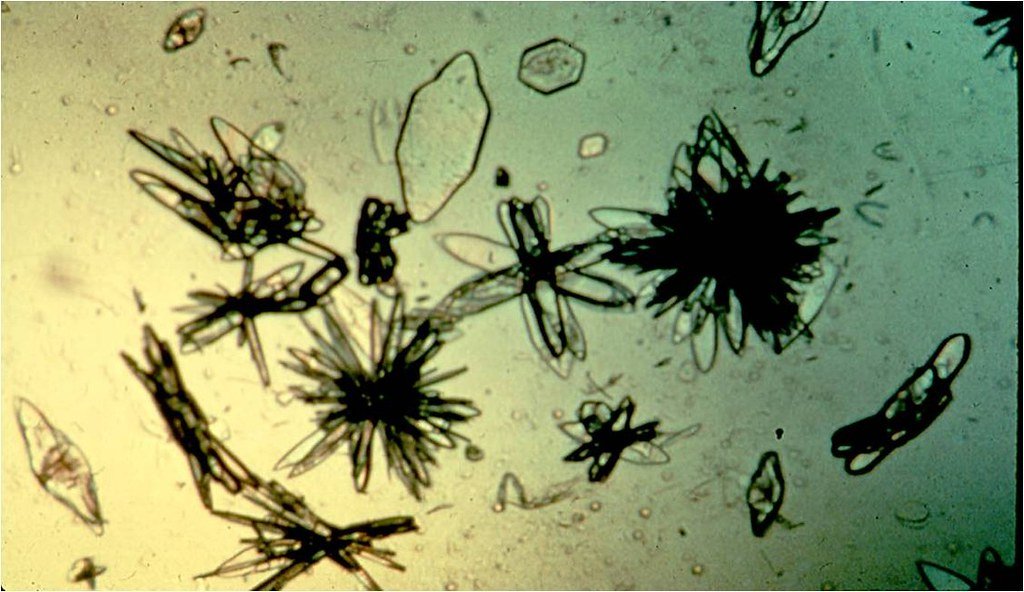
High uric acid is most familiar because of its connection with gout. When uric acid is high enough for long enough, monosodium urate crystals can form in and around joints. These crystals can trigger sudden attacks of intense pain, swelling, warmth, redness, and tenderness. The big toe is classic, but gout can also affect the ankles, knees, feet, wrists, elbows, and fingers. The CDC lists obesity, diuretics, alcohol, sugary drinks, sugary foods, red meat, and shellfish among factors that may increase uric acid and gout risk.
High uric acid is also relevant to kidney stones. Uric acid stones can form when urine is too acidic and too concentrated with uric acid. The National Kidney Foundation notes that uric acid stones are associated with factors such as gout, diabetes, obesity, metabolic syndrome, chronic kidney disease, dehydration, high uric acid levels, and a diet high in red or processed meat. Unlike some other stone types, uric acid stones can sometimes be dissolved by making urine less acidic under medical supervision.
Common reasons uric acid may be high
| Category | Examples | Why it matters |
|---|---|---|
| Kidney handling | Chronic kidney disease, dehydration, reduced urine output, some kidney conditions | If the kidneys do not remove enough uric acid, blood levels may rise. |
| Diet and alcohol | Red meat, organ meats, certain seafood, beer or liquor, high-fructose corn syrup | These can increase uric acid production or gout-flare risk in susceptible people. |
| Medicines | Thiazide or loop diuretics, low-dose aspirin, cyclosporine, tacrolimus, niacin | Some medicines reduce uric acid excretion or otherwise raise levels. Do not stop prescribed medicine without guidance. |
| Cell turnover | Certain cancers, chemotherapy, tumor lysis risk, psoriasis, blood disorders | Rapid cell breakdown releases purines, which can sharply increase uric acid. |
| Metabolic and endocrine factors | Obesity, metabolic syndrome, hypothyroidism, hyperparathyroidism, diabetic ketoacidosis, lactic acidosis | These may change uric acid production, kidney handling, or both. |
| Pregnancy-related concerns | Preeclampsia evaluation in the right clinical setting | Uric acid may be interpreted with blood pressure, urine protein, platelets, liver enzymes, kidney function, and symptoms. |
A result that is only mildly high may lead to a very different plan than a markedly high result, especially if you have symptoms, chronic kidney disease, kidney stones, or are receiving cancer treatment. In the 2020 American College of Rheumatology gout guideline, people with a first gout flare plus chronic kidney disease stage 3 or higher, serum urate above 9 mg/dL, or urolithiasis are a group in whom starting urate-lowering therapy may be considered through shared decision-making. The same guideline conditionally recommends against starting urate-lowering medication for most people who have high uric acid but no prior gout flares or tophi.
What a low uric acid result can mean
Low uric acid, sometimes called hypouricemia, is less common than high uric acid. A low result is often not the main diagnosis by itself. Instead, it is a clue that must be interpreted with your medication list, nutrition, kidney function, liver tests, urine findings, and symptoms.
Potential explanations include a very low purine or low protein intake, certain medicines, increased uric acid excretion by the kidneys, or less uric acid production. MedlinePlus Medical Encyclopedia lists possible associations such as Fanconi syndrome, hereditary metabolism conditions, HIV infection, low purine diet, SIADH, and medicines including atorvastatin, captopril, enalapril, fenofibrate, losartan, probenecid, and trimethoprim-sulfamethoxazole. Labcorp’s test information also notes that high-dose aspirin, contrast agents, allopurinol, corticosteroids, probenecid, massive vitamin C intake, poor purine or protein intake, Fanconi syndrome, Wilson disease, xanthinuria, and severe liver disease can be associated with decreased serum uric acid.
Low uric acid may matter more when it is very low, persistent, unexpected, or paired with other abnormal results. For example, if low uric acid appears alongside abnormal electrolytes, glucose in urine, protein in urine, unexplained bone issues, kidney dysfunction, or symptoms of a systemic illness, a clinician may evaluate kidney tubular function or other metabolic causes. If the result is only slightly below range and you feel well, the next step may simply be a repeat test or review of medications and supplements.
Limitations: what one uric acid result can and cannot tell you
A uric acid result is useful, but it has important limits. First, gout can occur even when the uric acid value is not flagged high at that moment. Levels can fluctuate, and a value drawn during an acute flare may not reflect the person’s usual baseline. Conversely, some people have high uric acid for years and never have gout.
Second, the test does not show where urate crystals are located. If a joint is swollen and the diagnosis is uncertain, a clinician may recommend joint-fluid analysis to look for crystals or to rule out infection. In other situations, ultrasound, dual-energy CT, kidney imaging, urinalysis, or 24-hour urine testing may be more informative than repeating a blood uric acid level alone.
Third, medications and recent behavior can affect the result. Aspirin, niacin, diuretics, allopurinol, probenecid, some blood pressure medicines, chemotherapy, high-dose vitamin C, alcohol intake, dehydration, fasting, rapid weight loss, and intense exercise may shift uric acid. MedlinePlus advises patients to tell their provider about medicines because many can affect blood and urine uric acid results, and not to stop medicines unless instructed.
Finally, a “normal” reference range is not always the same as a treatment target. For someone without gout symptoms, a value within the lab range is usually reassuring. For someone being treated for gout, the goal may be to keep serum urate below a specific threshold to reduce crystal formation and future flares. The ACR guideline supports monitoring serial serum urate and titrating urate-lowering therapy to maintain a target below 6 mg/dL for patients receiving treatment.
How to prepare for a uric acid test
Preparation depends on the ordering clinician and the lab. A standalone uric acid blood test may require little preparation, but if it is bundled with a metabolic panel, lipid panel, or other fasting tests, your instructions may differ. MedlinePlus Medical Encyclopedia states that some patients should not eat or drink for 4 hours before the blood test unless told otherwise.
- Follow the instructions on your lab order. If the order says fasting, ask whether water and medications are allowed.
- Do not stop prescribed medicines on your own. Diuretics, aspirin, blood pressure medicines, gout medicines, chemotherapy-related medicines, and supplements can all be clinically important.
- Tell the clinician and lab about relevant medicines and supplements. Include over-the-counter aspirin, niacin, vitamin C, and any gout medication.
- If a 24-hour urine uric acid test is ordered, collect exactly as instructed. Missing a urine sample or collecting outside the time window can make the result misleading.
- Avoid interpreting a result in isolation after unusual circumstances. Recent dehydration, heavy alcohol intake, rapid dieting, fasting, intense exercise, or acute illness can affect interpretation.
What to do next after a high or low uric acid result
Your next step depends on how abnormal the result is and why the test was ordered. If you have a swollen, hot, very painful joint, especially with fever or inability to bear weight, prompt medical care is important because infection and other urgent causes can mimic gout. If you have severe side or back pain, blood in urine, vomiting, fever, or chills, kidney stones or infection may need urgent evaluation.
If your uric acid is high
- Compare the value with your lab’s reference range and note whether it is mildly or markedly high.
- Review symptoms. Joint attacks, kidney-stone symptoms, or cancer-treatment context make the result more clinically urgent than an incidental mild elevation.
- Ask about related tests. Creatinine/eGFR, BUN, urinalysis, urine pH, blood glucose or A1c, lipids, liver tests, CBC, inflammatory markers, joint-fluid analysis, imaging, or 24-hour urine testing may be considered depending on the situation.
- Discuss medications. Do not stop diuretics, aspirin, or other prescribed drugs without a plan, but ask whether any medication could be contributing.
- Consider practical lifestyle steps. Hydration, limiting alcohol, reducing high-fructose drinks, moderating red and processed meats, and gradual weight management may help some people. Avoid crash dieting, which can temporarily raise uric acid.
If your uric acid is low
- Confirm whether it is truly low for your age and sex using your lab’s printed range.
- Review medicines and supplements, especially urate-lowering drugs, probenecid, high-dose vitamin C, certain blood pressure medicines, lipid medicines, antibiotics, and recent contrast exposure.
- Look for accompanying abnormalities in kidney function, liver tests, electrolytes, urinalysis, or nutrition markers.
- Ask whether repeat testing is appropriate if the result is unexpected or inconsistent with your history.
Ordering and cost note
Uric acid is commonly available through physician-ordered labs and many direct-to-consumer lab services. If you are paying out of pocket, compare the total checkout cost rather than the headline test price alone, including any required physician authorization fee, draw fee, service fee, or collection-site fee. Availability and ordering rules can vary by state and by collection network.
FAQs about high and low uric acid
Is high uric acid the same as gout?
No. High uric acid increases the possibility of gout, but it does not prove that joint pain is gout. Gout is a crystal-related inflammatory arthritis. The diagnosis depends on the pattern of symptoms, examination, and sometimes joint-fluid crystal analysis or imaging.
Can uric acid be normal during a gout flare?
Yes. A single level can be misleading during an acute flare. If gout remains suspected, clinicians may repeat the level after the flare settles or use other diagnostic methods.
What foods raise uric acid?
Foods and drinks most often discussed include organ meats, red meat, some seafood such as anchovies, sardines, shellfish, trout, and tuna, alcohol, and drinks or sweets containing high-fructose corn syrup. Plant foods that contain purines do not appear to carry the same risk profile as red and processed meats for uric acid stones, according to the National Kidney Foundation.
Should everyone with high uric acid take allopurinol?
No. Treatment depends on symptoms and risk factors. The American College of Rheumatology conditionally recommends against starting urate-lowering therapy for most people with asymptomatic hyperuricemia—high uric acid without prior gout flares or tophi. People with established gout, recurrent flares, tophi, kidney stones, chronic kidney disease, or very high levels may need a different discussion with their clinician.
What is the uric acid goal if I already have gout?
For patients receiving urate-lowering therapy, the ACR recommends a treat-to-target approach guided by repeat serum urate levels, with a target below 6 mg/dL. Your clinician may individualize the plan based on flare frequency, tophi, kidney function, other medicines, and medication tolerance.
Can dehydration raise uric acid?
Yes. Dehydration can concentrate the blood and urine and may contribute to higher uric acid or stone risk. Hydration advice should be individualized if you have heart failure, advanced kidney disease, or a fluid restriction.
Does low uric acid mean something dangerous?
Usually not by itself, especially if it is only slightly low and other tests are normal. But very low, persistent, or unexplained uric acid may warrant medication review and evaluation for kidney tubular, liver, endocrine, nutritional, or inherited causes.
Which test is better: blood uric acid or urine uric acid?
They answer different questions. Blood uric acid shows the circulating level at the time of the draw. Urine uric acid, often collected over 24 hours, helps evaluate how much uric acid is being excreted and can be useful in kidney-stone evaluation.