Medical & affiliate disclosure: CTX Stat provides educational laboratory information and is not a substitute for professional medical advice, diagnosis, or treatment. CTX Stat may receive compensation from some outbound provider links when an affiliate program is active; provider comparisons and rankings are based on consumer fit, effective cost, access, policies, and reputation—not commission.
Quick take
A high or positive H. pylori test usually means the test found evidence of Helicobacter pylori, a bacterium that can live in the stomach lining and is associated with chronic gastritis, peptic ulcers, and, in some people, increased stomach cancer risk. The exact meaning depends on the test type. A positive urea breath test, stool antigen test, stool PCR test, or stomach biopsy test generally suggests an active infection. A high blood antibody result is different: it can reflect past exposure and may remain positive after successful treatment.
A low or negative H. pylori test means the test did not detect H. pylori by that method. That is reassuring when the right test was used and preparation instructions were followed, but it does not always rule out infection. Proton pump inhibitors, bismuth products, antibiotics, and testing too soon after treatment can suppress H. pylori and create a false-negative result. The American College of Gastroenterology emphasizes that people treated for H. pylori need proof of eradication using a stool antigen test, urea breath test, or gastric biopsy—not a blood antibody test.
What H. pylori testing looks for
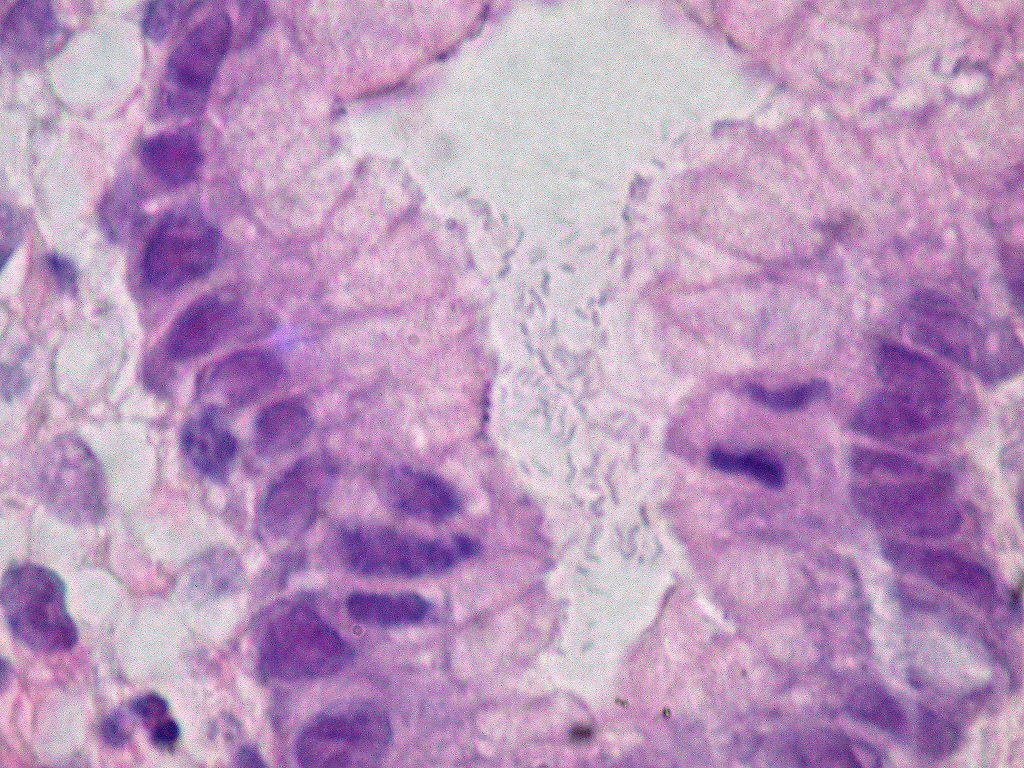
Helicobacter pylori, often shortened to H. pylori, is a stomach bacterium. Many people with H. pylori never develop obvious symptoms, but in others it can irritate the stomach lining, contribute to gastritis, and cause or worsen stomach or duodenal ulcers. The National Institute of Diabetes and Digestive and Kidney Diseases lists H. pylori infection and nonsteroidal anti-inflammatory drugs, such as ibuprofen or naproxen, as the most common causes of peptic ulcers.
H. pylori tests are used for two main reasons: to find out whether active infection may be contributing to symptoms, and to confirm that treatment worked. Common symptoms that may lead a clinician to consider testing include persistent upper abdominal discomfort, burning pain, nausea, bloating, early fullness, frequent burping, or a history of ulcer disease. Testing may also be considered in certain higher-risk situations, such as a history of peptic ulcer, some forms of gastric lymphoma, atrophic gastritis, gastric intestinal metaplasia, or family or geographic risk factors for stomach cancer.
Not every person with indigestion needs the same workup. Age, symptom pattern, medication use, bleeding risk, anemia, weight loss, trouble swallowing, vomiting, family history, and prior endoscopy findings can change the best next step. H. pylori testing is one part of evaluating digestive symptoms; it is not a complete diagnosis by itself.
What does a high, low, positive, negative, or equivocal H. pylori result mean?
H. pylori reports can be confusing because different laboratories use different words. Some reports say detected or not detected. Others say positive, negative, high, low, or equivocal. Blood antibody reports may show a number, index value, units, or an antibody class such as IgG, IgA, or IgM.
| Result wording | Common meaning | Important caveat |
|---|---|---|
| Positive / detected | Evidence of H. pylori was found. | For breath, stool, PCR, or biopsy tests, this usually suggests active infection. For antibody blood tests, it may be past or current exposure. |
| High | The measured signal was above the lab’s cutoff. | “Higher” does not reliably measure how severe the infection is or how much stomach damage is present. |
| Negative / not detected / low | No H. pylori evidence was found by that test. | False negatives can occur if certain medicines were used or if test-of-cure was done too early. |
| Equivocal / borderline / indeterminate | The result was too close to the cutoff to call clearly positive or negative. | Repeat testing or a different test type may be needed. |
A key point: high does not mean “more dangerous” in a simple linear way. Most H. pylori tests are designed to classify results as present or absent, not to stage disease. A very high antibody value, for example, does not prove a larger bacterial burden, an ulcer, or cancer. Likewise, a low negative result does not explain symptoms by itself; it only means that H. pylori was not detected under the conditions of that test.
Lab-professional tip
Before interpreting a “high low H. pylori test,” identify the specimen and method: breath, stool antigen, stool PCR, blood antibody, or biopsy. The same word—positive, high, low, or negative—can mean different things depending on the method.
How result meaning differs by H. pylori test type
The most useful interpretation comes from matching the result to the test method. The MedlinePlus Medical Test guide explains that H. pylori can be tested using breath, stool, and tissue samples, and that testing can be used both to diagnose infection and to find out whether treatment cured it.
Urea breath test
The urea breath test checks whether H. pylori’s urease activity is present in the stomach. During the test, you breathe into a collection container, swallow a urea-containing pill or liquid, and provide another breath sample. If H. pylori is present, the bacteria break down urea and produce labeled carbon dioxide that can be detected in exhaled breath. A positive or high breath test usually means active H. pylori infection. A negative or low breath test means the test did not detect that activity.
Breath testing is commonly used for both initial diagnosis and test-of-cure. It is noninvasive and does not require a stool sample. However, it is sensitive to preparation problems. The Mayo Clinic notes that breath testing detects carbon molecules released after H. pylori interacts with the urea substance, and that the same tests used for diagnosis can be used after treatment to see whether infection is gone.
Stool antigen test
A stool antigen test looks for proteins from H. pylori in a stool sample. A positive stool antigen result usually indicates active infection. A negative stool antigen result means H. pylori antigen was not detected in that sample. Stool antigen testing is widely used because it is noninvasive, can be done at many laboratories, and is appropriate for confirming eradication when timed correctly.
Stool antigen testing is different from broad “gut health” panels sold for wellness purposes. A standard clinical stool antigen test is targeted to H. pylori. Some laboratories also offer stool PCR, which detects H. pylori genetic material and may also identify mutations associated with antibiotic resistance. Availability and insurance coverage vary.
Stool PCR or molecular test
Stool PCR testing looks for H. pylori DNA rather than antigen. A detected result supports active infection, while a not detected result means the assay did not find H. pylori genetic material. Some stool PCR assays can also provide information about likely antibiotic resistance, such as clarithromycin resistance. This can be helpful when prior treatment failed or when clinicians want more targeted therapy. PCR tests may cost more and may not be available through every laboratory.
Blood antibody test: IgG, IgA, or IgM
Blood antibody tests measure the immune system’s response to H. pylori rather than detecting the organism directly. This is where many “high” and “low” result questions arise. A report may show H. pylori IgG, IgA, or IgM as high, positive, borderline, or negative.
A high H. pylori IgG antibody result means your immune system has made antibodies to H. pylori at some point. It does not reliably prove that the infection is active today. Antibodies can persist after treatment, and antibody tests cannot confirm cure. ARUP Consult states that serologic testing is not recommended for diagnosing active H. pylori infection because IgG, IgM, or IgA antibodies may remain long after successful treatment.
A low or negative antibody result means antibodies were not detected above the lab’s cutoff. Depending on the clinical situation, that may make current or past infection less likely, but antibody tests are not the preferred way to evaluate active infection when stool antigen or urea breath testing is available.
Endoscopy biopsy tests
If an upper endoscopy is done, a clinician may take small tissue samples from the stomach lining. Biopsy-based testing may include histology, rapid urease testing, culture, or molecular testing. A positive biopsy-based result supports active infection in the sampled tissue. A negative result means H. pylori was not found in those samples, but sampling location, recent medication use, bleeding, and patchy bacterial distribution can affect results.
Endoscopy is more invasive than breath or stool testing, so it is usually reserved for specific clinical reasons, such as alarm symptoms, ulcer evaluation, bleeding, persistent symptoms, older age at symptom onset, prior treatment failure, or the need to look for other upper digestive conditions.
False positives, false negatives, and conflicting results
H. pylori results can conflict. A common example is a positive blood antibody test with a negative stool antigen or breath test. In that situation, the antibody result may reflect prior exposure, while the stool or breath test may be more relevant to whether active infection is present now. Another common scenario is a negative breath or stool test collected while taking acid-suppressing medicine, bismuth, or antibiotics; that raises concern for a false negative.
| Situation | Why it matters | Possible next step to discuss |
|---|---|---|
| Positive blood antibody, negative breath or stool | Antibodies can remain after past infection. | Ask whether active-infection testing is needed or whether prior treatment explains the antibody result. |
| Negative breath or stool test while on a PPI | Acid suppression can reduce bacterial activity or load and lead to false negatives. | Ask whether repeat testing after holding the medication is appropriate. |
| Positive test after treatment | May indicate persistent infection, reinfection, or testing too early in some cases. | Review timing, adherence, prior antibiotics, and whether resistance-informed therapy is needed. |
| Equivocal or borderline result | The signal is near the lab cutoff. | Repeat testing or use a different method. |
Medication timing is one of the most important practical details. The American College of Gastroenterology highlights that eradication testing should be done at least 4 weeks after antibiotics and after being off proton pump inhibitors or potassium-competitive acid blockers for at least 2 weeks; bismuth and antibiotics can also interfere with testing. Your clinician may allow temporary alternatives such as antacids or H2 blockers during the waiting period, depending on your situation.
Do not stop prescription medication on your own if it was prescribed for bleeding risk, severe reflux, ulcer disease, Barrett’s esophagus, or another important reason. Instead, ask the ordering clinician how to prepare safely for the test.
What happens after a positive H. pylori result?
A positive active-infection test usually leads to treatment unless there is a specific reason to delay. Treatment is not a single antibiotic. H. pylori regimens combine acid suppression with multiple antibiotics and, often, bismuth. The 2024 ACG guideline update discusses optimized bismuth quadruple therapy for 14 days as a recommended option for many treatment-naïve adults and for some people whose prior clarithromycin-based treatment failed. The same guideline update recommends against routine clarithromycin triple therapy unless susceptibility testing shows clarithromycin sensitivity.
From a patient perspective, the practical issues are adherence and follow-up. H. pylori regimens can involve several pills per day and side effects such as nausea, metallic taste, diarrhea, dark stools from bismuth, or yeast symptoms. Missing doses can reduce the chance of eradication and may contribute to treatment failure. If side effects are severe, contact the prescribing clinician promptly rather than stopping the regimen without guidance.
After treatment, symptoms may improve quickly, slowly, or not at all. Persistent symptoms do not automatically mean treatment failed; ulcers and gastritis may take time to heal, and symptoms can have more than one cause. Conversely, feeling better does not prove eradication. That is why test-of-cure matters.
Why test-of-cure is important
Test-of-cure means checking that H. pylori is gone after treatment. ACG guidance emphasizes proof of eradication for all treated patients using fecal antigen testing, urea breath testing, or gastric biopsy. Blood antibody tests should not be used for this purpose because antibody levels can remain elevated after the bacteria have been eradicated.
A typical sequence is: finish the treatment course, wait at least 4 weeks after antibiotics, avoid interfering acid-suppressing or bismuth medications for the recommended time if medically safe, then complete a stool antigen or breath test. If the test remains positive, clinicians may review the original regimen, missed doses, antibiotic allergies, prior macrolide or fluoroquinolone exposure, and whether susceptibility testing is available.
When a “low” H. pylori result still deserves follow-up
A low or negative result often means H. pylori is unlikely, but follow-up may still be appropriate if symptoms are persistent, severe, or accompanied by warning signs. Seek urgent medical care for vomiting blood, black tarry stools, fainting, severe or worsening abdominal pain, chest pain, unexplained weight loss, progressive trouble swallowing, persistent vomiting, or signs of dehydration. These symptoms need evaluation beyond an H. pylori result.
If your result is negative but your symptoms continue, possible next steps may include reviewing medication use, repeating H. pylori testing with correct preparation, testing for other causes of dyspepsia, checking for anemia or bleeding, evaluating gallbladder or pancreatic causes when symptoms fit, or considering endoscopy depending on age and risk factors.
Cost and access basics
H. pylori testing costs vary by test type, insurance status, collection location, and whether the test is ordered through a clinician, a health system, or a consumer-directed lab service. Breath tests and stool antigen tests are often less invasive than endoscopy-based testing. Endoscopy can be much more expensive because it may include facility, anesthesia, pathology, and physician fees.
When comparing self-pay prices, look at the effective total cost, not just the advertised lab price. The total may include a provider review fee, specimen collection fee, shipping fee, lab processing fee, taxes, or a separate visit charge. Also check whether the service is available in your state, whether a clinician order is included, where the sample must be collected, how results are delivered, and whether follow-up care is available if the result is positive. A low sticker price is less useful if it does not include required fees or if you still need a separate visit to obtain treatment.
If you have insurance, ask whether the test is covered when ordered for your indication and whether you must use a specific laboratory. Some plans may cover stool antigen or breath testing more readily than antibody testing because current guidelines favor active-infection tests for diagnosis and test-of-cure.
How to read your H. pylori report step by step
- Find the method. Look for words such as breath, urea, stool antigen, PCR, IgG, IgA, IgM, rapid urease, histology, culture, or biopsy.
- Find the final interpretation. Detected, positive, or high usually means evidence was found; not detected, negative, or low means it was not found.
- Check the reference range or cutoff. Numeric values are interpreted against that lab’s cutoff, not against another lab’s online example.
- Review medications before testing. PPIs, PCABs, bismuth, and antibiotics can affect active-infection tests.
- Note whether this was before or after treatment. Post-treatment testing has stricter timing requirements.
- Match the result to symptoms and risk factors. H. pylori may be important, but it may not explain every digestive symptom.
FAQs about high and low H. pylori test results
Does a high H. pylori result mean I have an ulcer?
No. A high or positive H. pylori result means the test found evidence of the bacterium or an immune response to it, depending on the method. It does not prove that you have an ulcer. Ulcers are diagnosed based on symptoms, medical history, and sometimes endoscopy or imaging-related evaluation. H. pylori is a major cause of peptic ulcers, but not everyone with H. pylori has an ulcer.
Can H. pylori cause cancer?
Chronic H. pylori infection is a recognized risk factor for some stomach cancers and gastric MALT lymphoma. The National Cancer Institute explains that H. pylori infection can increase risk for certain stomach cancers, while also noting that most infected people do not develop cancer. A positive test should be taken seriously, but it is not a cancer diagnosis.
Is a blood test ever useful?
Blood antibody testing can show exposure, but it is generally less useful for determining active infection and should not be used to confirm cure. In modern practice, stool antigen, urea breath testing, or biopsy-based testing is usually preferred when the goal is to determine whether H. pylori is currently present.
Why is my IgG high but IgM negative?
H. pylori antibody patterns do not work like a simple timeline for many acute infections. A high IgG with negative IgM can occur after past exposure and does not reliably prove active infection. If the clinical question is whether H. pylori is present now, ask whether a stool antigen or urea breath test is more appropriate.
Can I test for H. pylori while taking omeprazole, pantoprazole, or another PPI?
PPIs can interfere with breath and stool antigen testing and may increase the chance of a false-negative result. Many protocols recommend avoiding PPIs for about 2 weeks before active-infection testing when medically safe. Follow the instructions from your clinician or lab, and do not stop a prescribed medication without asking if you have a significant medical reason to take it.
Can antibiotics affect my result?
Yes. Antibiotics can suppress or partially treat H. pylori, which may make active-infection tests falsely negative. For test-of-cure, ACG guidance recommends waiting at least 4 weeks after completing antibiotics before checking eradication.
If my H. pylori test is positive, should my household be tested?
Household exposure can matter, and recent guideline discussions include testing certain household members of adults with H. pylori infection using non-serologic testing. Whether that applies depends on symptoms, risk factors, local practice, and clinician judgment. Household members should not start antibiotics without their own medical evaluation.
What if treatment fails?
A positive test after properly timed treatment may mean persistent infection. Common reasons include antibiotic resistance, missed doses, vomiting doses, wrong regimen for local resistance patterns, or testing issues. Your clinician may choose a different regimen, avoid antibiotics you already used, consider susceptibility testing, or refer you to gastroenterology.
Can I use supplements instead of antibiotics?
Supplements, probiotics, dietary changes, and “gut health” products should not be considered proven substitutes for guideline-based H. pylori eradication therapy. Some may help with side effects or general digestive comfort, but they do not replace antibiotics when active H. pylori infection requires treatment. Ask your clinician before combining supplements with treatment because interactions and side effects are possible.
Bottom line
For the question “what does a high or low H. pylori test mean?”, the answer starts with the test type. A high or positive breath, stool antigen, stool PCR, or biopsy result usually points to active infection. A high blood antibody result may only show past exposure. A low or negative result is reassuring only when the correct test was used, preparation instructions were followed, and timing was appropriate. If you were treated, confirm eradication with a recommended test-of-cure rather than relying on symptoms or antibody levels.
Source Notes
- American College of Gastroenterology: 2024 H. pylori guideline summary
- National Institute of Diabetes and Digestive and Kidney Diseases
- MedlinePlus: Helicobacter pylori tests
- Mayo Clinic: H. pylori diagnosis and treatment
- ARUP Consult: Helicobacter pylori testing
- National Cancer Institute: H. pylori and cancer