Medical & affiliate disclosure: CTX Stat provides educational laboratory information and is not a substitute for professional medical advice, diagnosis, or treatment. CTX Stat may receive compensation from some outbound provider links when an affiliate program is active; provider comparisons and rankings are based on consumer fit, effective cost, access, policies, and reputation—not commission.
Quick take: Blood tests can help identify treatable contributors to hair loss—especially iron deficiency, anemia, thyroid disease, vitamin D deficiency, and hormone patterns suggesting androgen excess. But blood work is only one part of a hair-loss evaluation. The pattern of loss, scalp exam, timeline, medications, nutrition, recent illness, pregnancy history, and sometimes scalp biopsy often matter just as much as lab results.
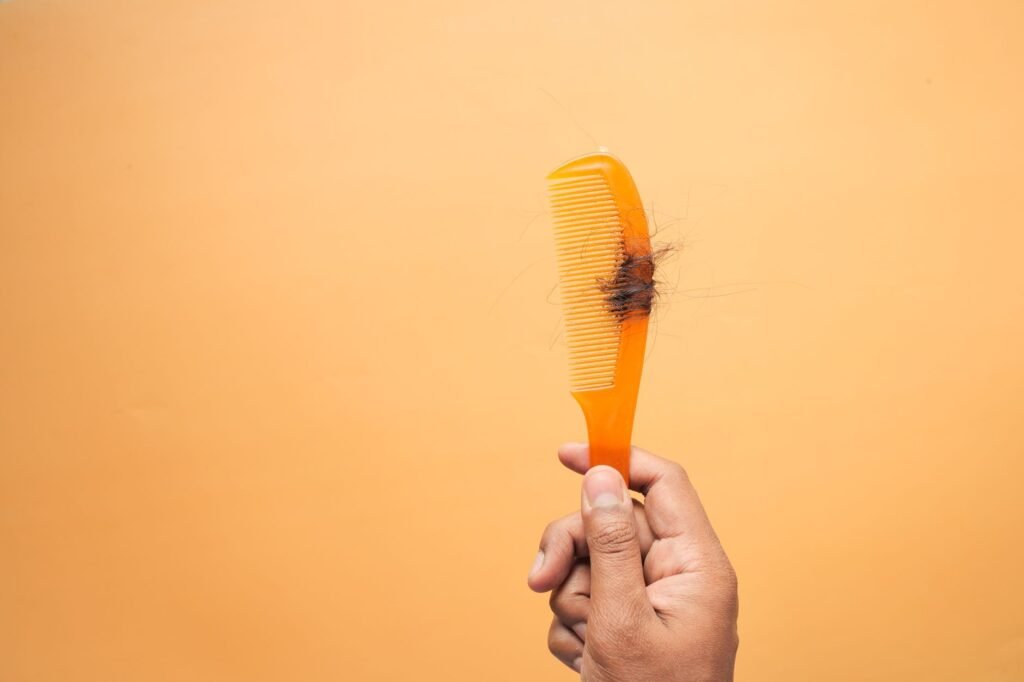
Hair loss is common, distressing, and often confusing because many different conditions can look similar early on. Some people shed handfuls of hair in the shower. Others notice a widening part, a receding hairline, circular bald patches, scalp itching, breakage, or thinning after pregnancy, illness, weight loss, or a medication change. Because the causes are so varied, the best blood tests for hair loss are not the same for everyone.
Dermatologists generally begin with the story and scalp exam: where the hair is thinning, how quickly it started, whether hair is shedding from the root or breaking, whether the scalp is inflamed or scarred, and whether there are clues elsewhere in the body. The American Academy of Dermatology notes that if a dermatologist suspects disease, vitamin deficiency, hormone imbalance, or infection, blood testing or scalp biopsy may be needed. AAD: Hair loss diagnosis and treatment
This guide explains which lab tests are commonly used, what they can and cannot tell you, and how to think about next steps without assuming that a single abnormal number explains everything.
When blood tests help in a hair-loss workup
Blood tests are most helpful when the hair-loss pattern or history suggests a systemic contributor. Examples include diffuse shedding after a major illness, fatigue or heavy menstrual bleeding, symptoms of thyroid disease, a restrictive diet, rapid weight loss, irregular periods, acne, excess facial hair, or signs of autoimmune disease. In diffuse alopecia, DermNet specifically lists laboratory workup to identify treatable causes, including complete blood count and ferritin for anemia and iron deficiency. DermNet: Diffuse alopecia
Blood tests are less likely to provide the whole answer when the exam strongly suggests a local scalp disorder, traction from hairstyles, hair-shaft breakage, inherited pattern hair loss, or scarring alopecia. Even then, labs may be ordered to look for overlapping contributors, establish a treatment baseline, or evaluate associated symptoms.
Important limitation: Normal blood tests do not rule out hair loss. Many people with androgenetic alopecia, alopecia areata, traction alopecia, medication-related shedding, or scarring alopecia have normal CBC, thyroid, ferritin, and vitamin results. If shedding persists or there is redness, scaling, pain, pustules, or loss of follicle openings, a scalp-focused evaluation is essential.
Common blood tests for hair loss
The table below summarizes labs clinicians commonly consider. It is not a universal checklist. Testing should be tailored to symptoms, sex assigned at birth, age, pregnancy status, medications, exam findings, and medical history.
| Blood test | Why it may be ordered | What an abnormal result may suggest | Important cautions |
|---|---|---|---|
| Complete blood count (CBC) | Checks for anemia, infection clues, and blood-cell abnormalities | Iron deficiency anemia, anemia of chronic disease, B12/folate-related anemia, inflammation, or other blood disorders | A normal CBC does not rule out low iron stores; ferritin or iron studies may still be needed when suspicion is high. |
| Ferritin | Estimates stored iron; often used in diffuse shedding | Low iron stores, which can contribute to shedding in some people | Ferritin can rise with inflammation, liver disease, or infection, so it must be interpreted with context. |
| Iron panel: serum iron, TIBC/transferrin, transferrin saturation | Clarifies iron status when ferritin or CBC is unclear | Iron deficiency, inflammation-related changes, or iron overload patterns | Some clinicians prefer morning collection or fasting for iron studies; follow lab instructions. |
| TSH, often with free T4 | Evaluates thyroid function when symptoms, history, or diffuse shedding suggest thyroid disease | Hypothyroidism or hyperthyroidism, both of which can affect hair growth cycles | Biotin supplements can interfere with some thyroid immunoassays; ask whether to stop biotin before testing. |
| 25-hydroxy vitamin D | Assesses vitamin D status, sometimes checked in diffuse shedding or alopecia areata workups | Vitamin D deficiency or insufficiency | The relationship between vitamin D and specific hair-loss outcomes is not always straightforward; treatment should target documented deficiency. |
| Vitamin B12 and folate | Considered with anemia, neuropathy symptoms, vegan diets, malabsorption, or certain medications | B12 or folate deficiency contributing to anemia or poor general health | Not every person with hair loss needs broad vitamin testing. |
| Zinc | Considered with poor intake, malabsorption, chronic diarrhea, bariatric surgery, or suggestive skin findings | Zinc deficiency | Excess zinc can cause copper deficiency; avoid high-dose supplementation unless directed. |
| Total and/or free testosterone | Used when androgen excess is suspected, especially with acne, hirsutism, irregular periods, infertility, or rapid progression | PCOS, ovarian/adrenal androgen excess, medication effects, or less commonly androgen-secreting tumors | Female pattern hair loss can occur with normal androgen levels. |
| DHEA-S | Helps evaluate adrenal androgen contribution when symptoms suggest androgen excess | Adrenal hyperandrogenism, PCOS-related androgen excess, or rare adrenal tumors | Interpretation depends on age, sex, medications, and assay method. |
| ANA, ESR/CRP, or autoimmune markers | Selected when lupus, inflammatory disease, or scarring alopecia is suspected | Autoimmune or inflammatory disease clues | Positive screening tests can occur without disease; results need clinical correlation. |
| Syphilis or other infection testing | Used when exam or risk history suggests an infectious cause of patchy hair loss | Infection that requires specific treatment | Testing is not routine for every hair-loss case. |
Which tests fit which hair-loss pattern?
Diffuse shedding
Diffuse shedding means hair seems to come out from all over the scalp rather than from one sharply defined patch. A common cause is telogen effluvium, a shift of more hairs than usual into the shedding phase. It can occur two to three months after fever, surgery, childbirth, severe stress, rapid weight loss, major illness, blood loss, medication changes, or nutritional deficiency. The AAD distinguishes hair shedding from hair loss and identifies telogen effluvium as the medical term for excessive shedding after a triggering event. AAD: Hair shedding
For diffuse shedding, clinicians often start with CBC, ferritin or iron studies, TSH with or without free T4, and sometimes vitamin D, B12, folate, zinc, CMP, or inflammatory markers depending on the person. The American Family Physician review emphasizes that there are no routine tests for all hair loss and that laboratory testing depends on history and physical exam, including CBC and TSH when indicated. AAFP: Hair loss—common causes and treatment
Pattern thinning at the part, temples, crown, or hairline
Pattern hair loss, also called androgenetic alopecia, usually has a recognizable distribution: widening part or central scalp thinning in many women, and bitemporal recession or crown thinning in many men. Blood tests are often normal. A clinician may still order ferritin, thyroid testing, or vitamin D if shedding overlaps with pattern thinning or if symptoms suggest a second contributor.
Hormone testing is not automatically required for everyone with pattern hair loss. It becomes more relevant when there are signs of androgen excess: irregular menstrual cycles, new or worsening acne, increased facial or body hair, infertility, deepening voice, increased muscle mass, or rapid onset of severe thinning. The Merck Manual notes that women with significant hair loss plus abnormal menses, acne, hirsutism, or other evidence of virilization should have appropriate hormone levels measured, such as testosterone and DHEA-S. Merck Manual Professional: Alopecia
Patchy hair loss
Round or oval bald patches can occur with alopecia areata, tinea capitis, traction, trichotillomania, syphilis, and scarring inflammatory conditions. Blood tests may be less central than the scalp exam, dermoscopy, fungal testing, or biopsy. If alopecia areata is suspected, some clinicians consider thyroid testing or vitamin D testing based on symptoms, personal history, or family history of autoimmune disease, but routine broad panels may not change management in every case.
Scarring, painful, itchy, or inflamed hair loss
Redness, scale, tenderness, pustules, burning, loss of follicle openings, or shiny scarred patches are warning signs for scarring alopecia or infection. Blood tests may evaluate inflammation, autoimmune disease, or infection, but scalp biopsy is often more important when scarring alopecia is possible. Merck notes that scalp biopsy is indicated when alopecia persists and the diagnosis is in doubt. Merck Manual Professional: Alopecia
How to interpret common hair-loss blood tests
CBC: looking for anemia and blood-cell clues
A CBC measures hemoglobin, hematocrit, red blood cell indices, white blood cells, and platelets. In hair-loss evaluation, the main question is often whether anemia is present. Iron deficiency anemia may show low hemoglobin and small red blood cells, but early iron deficiency can exist before anemia appears. That is why ferritin or iron studies may be ordered even when the CBC is normal.
If anemia is found, the next step is not simply to buy a hair supplement. The cause matters. Heavy menstrual bleeding, gastrointestinal blood loss, pregnancy, low dietary intake, malabsorption, chronic kidney disease, inflammation, and B12 or folate deficiency require different evaluation and treatment.
Ferritin and iron studies: low stores can matter
Ferritin is commonly discussed in hair-loss forums because it reflects stored iron. Low ferritin can support iron deficiency as a contributor to diffuse shedding, particularly in people with heavy periods, pregnancy or postpartum history, blood donation, low iron intake, gastrointestinal symptoms, or recent blood loss. DermNet lists CBC and ferritin among laboratory tests used to identify anemia and iron deficiency in diffuse alopecia. DermNet: Diffuse alopecia
Ferritin is not perfect. It is an acute-phase reactant, meaning it can rise during inflammation or infection. Someone may have iron-restricted physiology even when ferritin is not obviously low, or an apparently “normal” ferritin may not fully explain persistent shedding. Conversely, not every low-normal ferritin proves that iron is the only cause of hair loss.
Iron treatment should be guided by a clinician. Too much iron can be harmful, and unexpected iron deficiency in men or postmenopausal women deserves medical evaluation for blood loss or absorption problems.
Thyroid tests: TSH and free T4
Both hypothyroidism and hyperthyroidism can contribute to diffuse hair shedding or changes in hair texture. TSH is usually the first screening test. Free T4 helps clarify whether thyroid hormone levels are low, normal, or high when TSH is abnormal or when the clinical situation requires more detail.
Symptoms that make thyroid testing more relevant include fatigue, cold or heat intolerance, weight change, constipation or diarrhea, palpitations, tremor, dry skin, menstrual changes, neck swelling, and personal or family history of thyroid disease. AAFP notes that a family history of hypothyroidism may warrant laboratory testing for that condition. AAFP: Hair loss—common causes and treatment
Biotin warning: High-dose biotin, often marketed for hair and nails, can interfere with some lab immunoassays, including certain thyroid tests. Tell your clinician and the lab about biotin or “hair, skin, and nails” supplements before testing.
Vitamin D, B12, folate, and zinc
Vitamin and mineral tests are most useful when there is a plausible deficiency risk: limited diet, vegan diet without supplementation, malabsorption, inflammatory bowel disease, bariatric surgery, chronic diarrhea, limited sun exposure, darker skin living at high latitude, certain medications, or symptoms beyond hair loss.
Vitamin D is commonly checked in hair-loss workups, especially when alopecia areata or diffuse shedding is being considered. However, a low vitamin D result does not automatically prove it caused the hair loss. Treating documented deficiency is still important for overall health, but expectations should be realistic: correcting a deficiency may reduce one contributor without reversing genetic or scarring hair loss.
Zinc deserves similar caution. Both deficiency and excess can cause problems. High-dose zinc supplements can impair copper absorption and create new health issues, so zinc replacement should be targeted rather than taken indefinitely “just in case.”
Hormone testing: testosterone, DHEA-S, prolactin, and related labs
Hormone testing is most useful when the history suggests hyperandrogenism or a broader endocrine condition. Tests may include total testosterone, free testosterone or calculated free testosterone, DHEA-S, androstenedione, prolactin, LH/FSH, 17-hydroxyprogesterone, pregnancy testing, or metabolic tests when PCOS is suspected. Which tests are appropriate depends on age, menstrual pattern, pregnancy status, contraceptive use, medication use, and symptoms.
In women, pattern hair loss can occur because hair follicles are sensitive to androgens even when measured androgen levels are in the reference range. That is why a normal testosterone result does not rule out female pattern hair loss. Conversely, very high androgen levels, rapidly progressive hair loss, virilizing symptoms, or sudden severe acne deserve prompt medical evaluation.
Autoimmune and inflammatory tests
ANA, ESR, CRP, thyroid antibodies, and other autoimmune tests are not routine screening tests for every person with hair loss. They are more appropriate when symptoms or exam findings suggest lupus, connective tissue disease, thyroid autoimmunity, or inflammatory scalp disease. Examples include photosensitive rash, joint swelling, mouth ulcers, Raynaud phenomenon, unexplained fevers, scarring patches, scalp pain, or inflammatory scale.
These tests can be difficult to interpret. A positive ANA can occur in people without autoimmune disease, and a negative screening test does not rule out every inflammatory scalp condition. When scarring alopecia is possible, biopsy and dermatology assessment often provide more useful information than repeated broad blood panels.
Preparation, cost, and ordering considerations
Do you need to fast?
Many common hair-loss labs do not always require fasting. CBC, ferritin, TSH, free T4, vitamin D, B12, and many androgen tests are often collected without fasting. However, fasting may be requested if your order includes glucose, insulin, lipids, or certain iron studies. Morning collection may be preferred for some hormone tests because levels can vary during the day.
If you take thyroid medication, hormonal contraception, anti-androgens, testosterone therapy, isotretinoin, anticoagulants, iron, biotin, or high-dose supplements, ask whether timing matters. Do not stop prescription medication unless your clinician tells you to.
How much do blood tests for hair loss cost?
Costs vary widely depending on whether testing is ordered through a clinician, billed to insurance, purchased as self-pay, or bundled into a direct-to-consumer panel. The most consumer-relevant number is the effective total cost: the test price plus any required provider review fee, draw fee, processing fee, membership fee, shipping fee, or follow-up requirement.
Before paying, check:
- whether the listed price includes the blood draw;
- whether a clinician order is included or billed separately;
- whether the lab location is convenient and available in your state;
- whether insurance will be billed or the test is self-pay only;
- whether results include interpretation or only raw numbers;
- whether repeat testing is included if a specimen problem occurs; and
- whether the test panel includes unnecessary add-ons that increase cost without changing care.
For many people, a focused set of labs ordered after a clinical exam is more useful than a large “hair loss panel” purchased before anyone has looked at the scalp. If you are comparing self-pay options, compare the same tests side by side and include mandatory fees rather than comparing headline prices alone.
What to do after you get results
If a result is clearly abnormal
An abnormal result should lead to a specific plan, not guesswork. Low ferritin may require iron replacement and evaluation for why iron is low. Abnormal TSH may require repeat testing, free T4, thyroid antibodies, medication review, or thyroid treatment. High androgen levels may require evaluation for PCOS, adrenal or ovarian sources, medication effects, or rarely tumors. Low vitamin D, B12, folate, or zinc should be treated according to degree of deficiency and cause.
Hair response is slow. Even after a correctable trigger is treated, visible improvement may take months because follicles cycle gradually. A shedding trigger that occurred in March may not become obvious until May or June, and recovery may not be visible until later in the year.
If all blood tests are normal
Normal labs are common and do not mean the hair loss is imaginary. Ask your clinician what diagnosis best fits the pattern. Useful next steps may include a pull test, dermoscopy/trichoscopy, review of hairstyles and chemical treatments, medication review, fungal testing, pregnancy/postpartum review, or scalp biopsy if diagnosis remains unclear.
For suspected androgenetic alopecia, treatment is often based on pattern and exam rather than abnormal blood tests. For suspected alopecia areata, treatment depends on extent and activity. For suspected scarring alopecia, early diagnosis matters because the goal is often to stop progression before permanent follicle loss occurs.
When to seek prompt care
Do not wait months for routine lab work if you have scalp pain, redness, pus, crusting, rapidly expanding bald patches, sudden severe shedding, hair loss with fever or systemic symptoms, signs of virilization, or hair loss in a child. These situations may require urgent dermatology or medical evaluation.
FAQs about blood tests for hair loss
What blood tests are commonly ordered for hair loss?
Common tests include CBC, ferritin or iron studies, TSH with or without free T4, vitamin D, and selected nutrient tests such as B12, folate, or zinc when risk factors are present. Hormone tests such as testosterone and DHEA-S are usually reserved for people with symptoms suggesting androgen excess.
Can blood tests diagnose alopecia?
Sometimes they identify a contributor, but they usually do not diagnose the exact hair-loss type by themselves. Alopecia is a broad term for hair loss. The diagnosis often depends on pattern, scalp findings, hair-pull results, dermoscopy, fungal testing, medication history, and sometimes biopsy.
Is ferritin the most important test for hair loss?
Ferritin is important when iron deficiency is plausible, especially in diffuse shedding. It is not the only important test, and it does not replace the scalp exam. Ferritin also needs careful interpretation because inflammation can raise it.
Should I test DHT for hair loss?
DHT testing is not routinely needed for typical androgenetic alopecia. Many people with pattern hair loss have normal circulating androgen levels because follicle sensitivity matters. Clinicians more commonly test testosterone, free testosterone, and DHEA-S when symptoms suggest androgen excess.
Which thyroid test is best for hair loss?
TSH is commonly used as the first thyroid screening test. Free T4 is often added when TSH is abnormal or when more detail is needed. Additional thyroid tests depend on symptoms, history, pregnancy status, medications, and prior thyroid disease.
Do hair-loss supplements affect blood tests?
Yes, some can. Biotin is the best-known example because it can interfere with certain immunoassays, including some thyroid and hormone tests. Iron, zinc, vitamin D, and B12 supplements can also change measured levels over time. Tell your clinician what you take and the dose.
Can stress-related hair loss show up on blood work?
Not usually. Telogen effluvium after stress, illness, surgery, childbirth, or weight loss may have normal blood tests. Labs are used to look for treatable contributors, but the timing and trigger history are often central to the diagnosis.
How soon should hair improve after correcting a deficiency?
Hair grows slowly. Shedding may take several months to settle after the trigger is corrected, and visible density changes can take longer. If shedding continues, worsens, or is accompanied by scalp symptoms, follow up rather than assuming the deficiency was the only cause.