Medical & affiliate disclosure: CTX Stat provides educational laboratory information and is not a substitute for professional medical advice, diagnosis, or treatment. CTX Stat may receive compensation from some outbound provider links when an affiliate program is active; provider comparisons and rankings are based on consumer fit, effective cost, access, policies, and reputation—not commission.
Easy bruising can be harmless, but it can also be a clue that blood vessels, platelets, clotting proteins, medications, liver function, or another health condition deserves a closer look. The most common blood tests for easy bruising are a complete blood count (CBC) with platelet count, a peripheral blood smear, prothrombin time with INR (PT/INR), activated partial thromboplastin time (aPTT), and sometimes fibrinogen or thrombin time. If the history suggests a bleeding disorder, clinicians may add von Willebrand factor testing, clotting factor assays, platelet function studies, liver and kidney tests, and iron studies.
Quick Take
- Bruises form when small blood vessels leak blood under the skin. A typical bruise after a bump is common; unexplained, frequent, unusually large, or widespread bruising deserves medical review.
- First-line tests usually screen platelets and clotting time. CBC/platelet count checks whether platelet numbers or other blood cells are abnormal; PT/INR and aPTT evaluate major clotting pathways.
- Normal screening tests do not rule out all causes. Mild von Willebrand disease, platelet function disorders, factor XIII deficiency, medication effects, and fragile blood vessels may have normal routine results.
- Medication history matters. Aspirin, NSAIDs, anticoagulants, antiplatelet drugs, corticosteroids, some antidepressants, alcohol use, and supplements such as ginkgo or fish oil can contribute to bruising or bleeding risk.
- Urgent symptoms need prompt care. Rapidly spreading bruising, pinpoint red-purple spots, heavy bleeding, head injury, fainting, blood in stool or urine, or bruising while on blood thinners should not wait for routine lab shopping.
Why blood tests are used for easy bruising
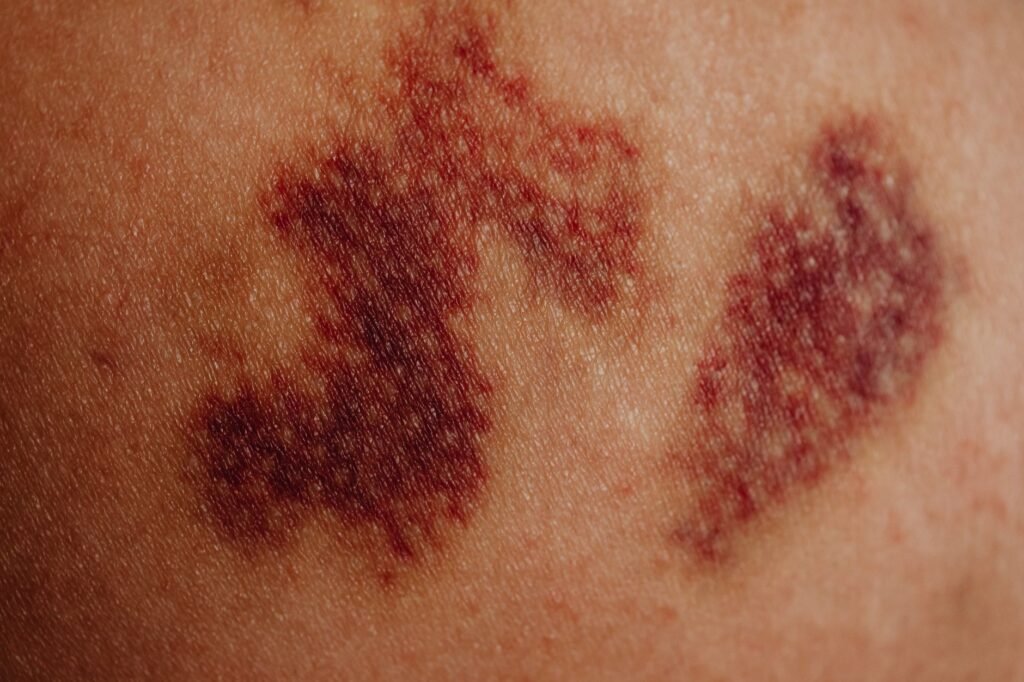
A bruise, also called a contusion or ecchymosis, happens when blood leaks from damaged small vessels and becomes trapped under the skin. MedlinePlus describes a bruise as blood trapped under the skin after small vessels are crushed without the skin breaking. Many bruises follow a clear injury and fade over about two weeks, although deeper bruises can last longer.
Easy bruising becomes more clinically important when it is frequent, disproportionate to minor bumps, located in unusual areas, associated with nosebleeds or gum bleeding, accompanied by heavy menstrual bleeding, or new after starting a medication. Mayo Clinic notes that easy bruising is common with aging but can sometimes signal a blood-clotting condition or blood disease, especially when bruises are large, unexplained, or occur with other bleeding symptoms.
Blood clotting depends on several systems working together. Platelets stick to damaged blood vessels and help form an early plug. Clotting factors—proteins made largely by the liver—then build a fibrin mesh that stabilizes the clot. Blood vessel strength, connective tissue, medications, nutrition, inflammation, and immune activity can all influence the final result. That is why there is no single “easy bruising test.” Clinicians usually combine a symptom history, medication review, physical exam, and targeted labs.
Bleeding into the skin can appear as larger bruises, flat purple patches called purpura, or tiny red-purple dots called petechiae. MedlinePlus emphasizes that bleeding into the skin or mucous membranes, aside from an ordinary bruise, should be checked by a health care provider. Petechiae, widespread purpura, or bruising with fever or serious illness can be more urgent than isolated bruises on the shins after minor trauma.
Common blood tests for easy bruising
The tests below are commonly used in the evaluation of easy bruising. The exact panel depends on age, symptoms, medications, pregnancy status, personal and family bleeding history, and exam findings.
| Test | What it checks | Why it may be used for easy bruising | Important limitations |
|---|---|---|---|
| CBC with platelet count | Red cells, white cells, hemoglobin, hematocrit, and platelet number | Looks for low platelets, anemia from blood loss, or broader blood-cell abnormalities | A normal platelet count does not prove platelets function normally |
| Peripheral blood smear | Blood cells viewed under a microscope | Can show platelet clumping, abnormal platelet size, immature cells, or red-cell changes | Requires expert review; may not identify mild functional disorders |
| PT/INR | Extrinsic and common clotting pathways; often used to monitor warfarin | Can be prolonged with warfarin effect, vitamin K deficiency, liver disease, or certain factor deficiencies | May be normal in platelet problems, von Willebrand disease, and many mild disorders |
| aPTT or PTT | Intrinsic and common clotting pathways | Can be prolonged with hemophilia A or B, some von Willebrand disease patterns, heparin effect, inhibitors, or factor deficiencies | May be normal in mild hemophilia, many VWD cases, platelet disorders, and vessel-wall causes |
| Fibrinogen or thrombin time | Final steps of clot formation and fibrinogen availability/function | May be added when a clotting disorder, liver disease, severe inflammation, or disseminated clotting problem is considered | Not always included in a basic first panel |
| Liver panel and metabolic tests | Liver enzymes, bilirubin, albumin, kidney markers, and related chemistry values | Liver disease can reduce clotting-factor production; kidney disease can affect platelet function | Normal chemistry tests do not exclude all bleeding disorders |
| Von Willebrand factor tests | VWF amount, VWF activity, and often factor VIII activity | Used when bruising is accompanied by nosebleeds, heavy menstrual bleeding, gum bleeding, surgical bleeding, or family history | Levels can fluctuate; repeat testing may be needed if suspicion remains |
| Clotting factor assays | Specific factor levels such as VIII, IX, XI, VII, or XIII | Used after abnormal PT/aPTT or a strong bleeding history | Usually ordered selectively, often by or with a hematologist |
| Platelet function testing | How well platelets activate, adhere, and aggregate | Helpful when platelet count is normal but symptoms suggest platelet dysfunction | Many medications and specimen-handling factors can affect results |
CBC with platelet count
A complete blood count is often the starting point because it answers several questions at once: Are platelets low? Is hemoglobin low, suggesting anemia or blood loss? Are white cells or red cells abnormal in a way that points beyond a simple bruising issue? The National Heart, Lung, and Blood Institute describes CBC testing as a core blood test used in platelet-disorder diagnosis because it shows platelet count and other blood cells.
A low platelet count, called thrombocytopenia, can make bruising, petechiae, nosebleeds, gum bleeding, or heavier bleeding more likely. Causes range from recent viral illness and medications to immune thrombocytopenia, liver or spleen disease, pregnancy-related conditions, bone marrow disorders, and more. A high platelet count can also be relevant, because some platelet disorders involve too many platelets that do not work normally.
Peripheral blood smear
A smear adds visual context to the CBC. Platelet clumping can falsely lower an automated platelet count. Very large platelets may suggest increased platelet turnover or inherited platelet conditions. Abnormal white cells, fragmented red cells, or immature cells can change the urgency and direction of evaluation. The smear is not a stand-alone answer, but it can prevent over-interpreting a machine-generated number.
PT/INR and aPTT
PT/INR and aPTT are classic clotting-time tests. The Merck Manual Consumer Version explains that many people with excessive bleeding require blood tests, including platelet count and PT/PTT tests that measure clotting-factor activity. In professional guidance, Merck lists initial tests for excessive bleeding as CBC with platelet count, peripheral smear, PT/INR, and aPTT.
PT/INR is especially important for people taking warfarin, but it is not only a warfarin test. A prolonged PT/INR may also reflect vitamin K deficiency, liver disease, or deficiencies in clotting factors in the PT pathway. aPTT may be prolonged by heparin, factor VIII or IX deficiency, factor XI deficiency, some inhibitors, lupus anticoagulant patterns, or some cases of von Willebrand disease through its effect on factor VIII. Interpretation depends heavily on medication exposure and clinical context.
Fibrinogen and thrombin time
Fibrinogen is the protein converted into fibrin, the structural mesh of a stable clot. Thrombin time evaluates the conversion of fibrinogen to fibrin. These tests may be added when basic clotting tests are abnormal, bleeding is more severe, liver disease is suspected, or the clinician is evaluating rare fibrinogen disorders. The NHLBI von Willebrand disease report lists CBC/platelet count, PTT, PT, and optionally fibrinogen or thrombin time as initial hemostasis tests when a bleeding disorder is suspected.
Von Willebrand factor testing
Von Willebrand disease is a common inherited bleeding disorder and a frequent reason for bruising plus mucosal bleeding symptoms such as nosebleeds, gum bleeding, heavy menstrual bleeding, or prolonged bleeding after dental work. Initial VWD testing commonly includes von Willebrand factor antigen, a VWF activity assay, and factor VIII activity. ARUP Consult summarizes the initial workup as evaluation of VWF quantity and function along with factor VIII measurement.
VWD testing is a good example of why one normal result may not end the evaluation. VWF levels can vary with stress, inflammation, hormones, pregnancy, blood type, exercise, and illness. If symptoms are convincing, clinicians may repeat testing when the person is well, review prior surgical or dental bleeding, and consider hematology referral.
Clotting factor assays and mixing studies
If PT or aPTT is prolonged, the next question is whether the issue looks like a factor deficiency, a medication effect, or an inhibitor. A mixing study combines patient plasma with normal plasma to see whether clotting time corrects. Correction can suggest a factor deficiency; failure to correct may suggest an inhibitor, although real-world interpretation is more nuanced. Specific factor assays measure individual clotting proteins. The CDC notes that clotting factor tests are required to diagnose hemophilia and determine type and severity.
Platelet function testing
Some people bruise or bleed despite a normal platelet count. In that situation, the issue may be how platelets function rather than how many platelets are present. Platelet function testing may include platelet aggregation studies, platelet function analyzer testing, release studies, or flow cytometry for selected inherited conditions. ARUP Consult notes that basic coagulation tests are part of the initial evaluation, while specialized platelet testing is used when a functional platelet disorder is suspected.
These tests are sensitive to aspirin, NSAIDs, antiplatelet drugs, some antidepressants, alcohol, recent illness, and sample handling. Do not stop prescribed medication just to “clean up” the test unless the ordering clinician tells you to do so. In some situations, the medication effect is exactly what the clinician needs to understand.
How result patterns are interpreted
Blood-test interpretation is pattern-based. A single high or low value rarely explains everything without symptoms, medication history, and exam findings.
| General result pattern | Possible direction of evaluation | What may happen next |
|---|---|---|
| Low platelet count | Thrombocytopenia, medication effect, immune process, infection, liver/spleen issue, bone marrow condition, pregnancy-related cause | Repeat CBC, smear review, medication review, liver tests, viral testing, or hematology referral depending on severity |
| Normal platelet count but bruising plus nosebleeds, gum bleeding, or heavy periods | Von Willebrand disease or platelet function disorder | VWF panel, platelet function testing, iron studies, bleeding-history assessment |
| Prolonged PT/INR | Warfarin effect, vitamin K deficiency, liver disease, factor VII or common-pathway issue | Medication review, liver panel, vitamin K context, factor assays if needed |
| Prolonged aPTT | Heparin effect, hemophilia A/B, factor XI deficiency, inhibitor, lupus anticoagulant pattern, some VWD cases | Mixing study, factor assays, lupus anticoagulant testing, VWF testing |
| Both PT and aPTT prolonged | More global clotting problem, severe liver disease, vitamin K deficiency, disseminated clotting problem, anticoagulant effect | Prompt clinical correlation; additional coagulation and liver testing |
| Routine tests normal | Benign bruising, medication/supplement effect, skin fragility, VWD, platelet function disorder, mild factor deficiency, connective tissue condition | Reassurance if low-risk, or specialty testing if history is strong |
Normal results are often reassuring, especially when bruising is mild, occurs on exposed areas such as forearms or shins, follows minor bumps, and there are no other bleeding symptoms. However, normal PT/aPTT and platelet count do not rule out all bleeding disorders. ARUP’s prolonged clotting-time guidance notes that normal PT and aPTT can be seen in conditions such as vascular abnormalities, von Willebrand disease, qualitative platelet disorders, mild factor deficiencies, factor XIII deficiency, fibrinolytic disorders, and some anticoagulant situations.
Symptoms and history that change the testing plan
Clinicians usually ask questions that help separate ordinary bruising from a bleeding tendency. Useful details include:
- When bruising started and whether it is getting worse
- Whether bruises are large, painful, raised, or occur without remembered injury
- Locations, especially trunk, back, face, ears, abdomen, or many areas at once
- Presence of petechiae, purpura, nosebleeds, gum bleeding, heavy menstrual bleeding, blood in urine or stool, or prolonged bleeding from cuts
- Bleeding after surgery, childbirth, dental extraction, circumcision, or injury
- Family history of bleeding disorders, transfusions, hysterectomy for bleeding, or “easy bruising”
- Use of aspirin, ibuprofen, naproxen, anticoagulants, antiplatelet drugs, steroids, SSRIs/SNRIs, chemotherapy, herbal supplements, or alcohol
- Recent infection, fever, weight loss, night sweats, new fatigue, pregnancy, liver disease, kidney disease, autoimmune disease, or nutritional concerns
For example, an older adult with thin skin and forearm bruises after minor bumps may need a different workup than a teenager with heavy periods, frequent nosebleeds, and a family history of surgical bleeding. A person taking anticoagulants may need medication-specific safety assessment, while someone with new petechiae and fever may need urgent evaluation.
When easy bruising should be checked urgently
Seek urgent care now—not just routine lab testing—if bruising occurs with severe bleeding, black or bloody stool, vomiting blood, blood in urine, sudden widespread petechiae or purpura, severe headache after head injury, confusion, fainting, shortness of breath, chest pain, rapidly enlarging painful swelling, or signs of shock. Also seek prompt advice for concerning bruising while taking warfarin, heparin, apixaban, rivaroxaban, dabigatran, clopidogrel, aspirin therapy, or other blood-thinning medication.
How to prepare for blood tests for easy bruising
Most blood tests used for bruising—CBC, platelet count, PT/INR, aPTT, fibrinogen, and VWF tests—do not require fasting. If your clinician also orders glucose, lipid, iron, or other chemistry testing, follow the instructions for the full panel.
The most important preparation is an accurate medication and supplement list. Include prescription drugs, over-the-counter pain relievers, aspirin-containing products, anticoagulants, antiplatelet drugs, steroids, antidepressants, antibiotics, herbal supplements, vitamins, protein powders, and alcohol intake. Do not stop prescribed blood thinners or antiplatelet drugs without direct medical guidance; stopping them can increase the risk of stroke, clot, heart attack, or device-related complications in some people.
If you are having platelet function or von Willebrand testing, ask whether you should avoid strenuous exercise immediately before the draw and whether any nonessential over-the-counter medicines should be held. For example, aspirin and NSAIDs can affect platelet function. The right approach depends on why the test is being ordered and whether stopping a medicine is safe for you.
Bring or upload prior lab results if you have them. Trends can matter: a platelet count that is technically normal but has fallen sharply from your baseline may be interpreted differently from a stable count. Prior PT/INR, aPTT, hemoglobin, liver tests, and past VWF results can reduce unnecessary repeat testing.
What blood tests can miss
Blood tests are powerful, but they do not evaluate every cause of bruising equally well. Some bruising is caused by fragile skin and blood vessels rather than a clotting problem. Aging, sun damage, corticosteroid exposure, and connective tissue conditions can make blood vessels easier to injure. In these cases, routine clotting tests may be normal.
Medication effects can also be hard to capture with a single lab result. Aspirin can impair platelet function without changing the platelet count. Direct oral anticoagulants may or may not predictably prolong routine PT/aPTT depending on the drug, dose timing, and assay. Supplements and alcohol can add to bleeding tendency in ways that are not obvious on a basic CBC.
Some mild inherited bleeding disorders require specialty testing. The American Society of Hematology VWD guidelines, developed with ISTH, NHF, and WFH partners, emphasize structured diagnosis of von Willebrand disease rather than relying on one screening value alone. If bruising has been lifelong, there is a strong family history, or bleeding has occurred after procedures, a normal initial panel may lead to more—not less—specific testing.
Cost and access considerations
The effective cost of blood tests for easy bruising depends on more than the listed test price. A CBC, PT/INR, and aPTT are usually common, widely available tests. VWF panels, platelet function studies, factor assays, and mixing studies may be more expensive, may require a reference laboratory, and may have stricter specimen-handling requirements. Some platelet function tests must be drawn at specific locations or times because the sample must be processed quickly.
When comparing self-pay or cash options, look at the total cost to the patient: the test price, blood draw fee, ordering-provider or service fee, facility fee, repeat or reflex testing charges, and whether results include clinician review. If insurance is used, the relevant cost may be the negotiated rate, deductible, copay, coinsurance, and whether the lab is in network. For medically concerning bruising, the priority is timely clinical care; price comparison is most useful when testing is nonurgent and already ordered or clearly appropriate.
Because easy bruising can require stepwise evaluation, it is reasonable to ask the ordering clinician: Which question is this test answering? What results would change management? If this first panel is normal, what symptoms would still justify follow-up? Clear answers can prevent both under-testing and scattershot testing.
Practical next steps after results
If your results are normal and your clinician considers your bruising low risk, you may be advised to monitor, reduce avoidable trauma, review nonessential supplements, protect sun-damaged skin, and report any new bleeding symptoms. Photographing bruises with dates can help if the pattern changes.
If a platelet count is low, follow-up depends on how low it is, whether you have active bleeding, and whether other blood cells are abnormal. Mild isolated thrombocytopenia may be repeated; severe thrombocytopenia or thrombocytopenia with symptoms can require urgent evaluation.
If PT/INR or aPTT is prolonged, the next step may be medication review, repeat testing to confirm the result, mixing studies, liver testing, vitamin K assessment, lupus anticoagulant testing, or clotting factor assays. If VWF testing is borderline, repeat testing or hematology referral may be appropriate, especially if the personal or family bleeding history is strong.
If anemia or low iron is found, the clinician may look for sources of blood loss, including heavy menstrual bleeding or gastrointestinal bleeding, rather than assuming bruising alone explains the finding. Blood tests answer part of the question; the symptom pattern determines what to do next.
FAQs about blood tests for easy bruising
What is the first blood test for easy bruising?
A CBC with platelet count is often one of the first tests because it checks platelet number and other blood cells. It is commonly paired with PT/INR and aPTT when a bleeding tendency is possible.
Can easy bruising be caused by low iron?
Low iron itself is not the classic cause of bruising, but iron deficiency can be a clue to blood loss, such as heavy menstrual bleeding or gastrointestinal bleeding. If bruising occurs with fatigue, heavy periods, shortness of breath on exertion, or low hemoglobin, iron studies may be part of the workup.
Can normal CBC results still mean I have a bleeding disorder?
Yes. A CBC can show platelet count, anemia, and other blood-cell patterns, but it does not fully test platelet function, von Willebrand factor activity, all clotting factors, or blood vessel/connective tissue causes.
Which test checks for leukemia when someone bruises easily?
A CBC with differential and peripheral smear can show patterns that raise concern for leukemia or another bone marrow disorder, such as abnormal white cells, anemia, low platelets, or immature cells. Bruising alone does not mean leukemia, but bruising with fatigue, fever, infections, weight loss, night sweats, bone pain, or multiple abnormal blood counts needs prompt medical evaluation.
What blood test checks for hemophilia?
Screening may include aPTT, but hemophilia is diagnosed with specific clotting factor assays, especially factor VIII for hemophilia A and factor IX for hemophilia B. The CDC states that clotting factor tests are required to diagnose the type and severity of hemophilia.
What blood tests check for von Willebrand disease?
Typical initial tests include von Willebrand factor antigen, VWF activity, and factor VIII activity. Additional subtype testing may follow if initial results are abnormal or the bleeding history is strong.
Should I stop aspirin or blood thinners before testing?
Do not stop aspirin, anticoagulants, or antiplatelet medicines unless the prescribing clinician tells you to. These medicines can affect bruising and lab interpretation, but stopping them without guidance can be dangerous.
Are at-home blood tests appropriate for easy bruising?
Some basic labs may be available through consumer-ordered testing, but unexplained or concerning bruising is best evaluated with a clinician because test selection and interpretation depend on symptoms, medications, physical findings, and urgency. Specialty coagulation and platelet function tests often require careful specimen handling and are not ideal for casual screening.
Why would a doctor refer me to a hematologist?
Referral is common when bruising is severe, unexplained, associated with other bleeding, linked to abnormal screening labs, or suggestive of an inherited or acquired bleeding disorder. Hematologists can order and interpret specialty testing such as factor assays, VWF panels, platelet aggregation studies, and inhibitor testing.
Source Notes
- MedlinePlus — Bruises
- Mayo Clinic: Easy bruising—why does it happen?
- MedlinePlus Medical Encyclopedia: Bleeding into the skin
- National Heart, Lung, and Blood Institute
- Merck Manual Consumer Version: Bruising and bleeding
- NHLBI: Diagnosis, evaluation and management of von Willebrand disease
- ARUP Consult: Von Willebrand disease testing
- CDC: Diagnosing hemophilia
- ARUP Consult: Functional platelet disorders
- American Society of Hematology: VWD clinical practice guidelines
- Merck Manual Professional Edition: Excessive bleeding
- NHLBI: Bleeding disorders—diagnosis