
Medical & affiliate disclosure: CTX Stat provides educational laboratory information and is not a substitute for professional medical advice, diagnosis, or treatment. CTX Stat may receive compensation from some outbound provider links when an affiliate program is active; provider comparisons and rankings are based on consumer fit, effective cost, access, policies, and reputation—not commission.
Quick take
- A cortisol blood test measures cortisol in your blood, usually from a vein in your arm. Cortisol is a hormone made by the adrenal glands and regulated by the brain’s pituitary-adrenal system.
- Timing is central to interpretation. Cortisol is normally highest in the early morning and lower later in the day, so an “8 a.m. cortisol” is not interpreted the same way as an afternoon cortisol.
- The test can help evaluate possible adrenal insufficiency, Cushing syndrome, pituitary-adrenal problems, and steroid-related adrenal suppression. It is often paired with ACTH or followed by stimulation/suppression testing.
- One blood cortisol result rarely gives a complete diagnosis. Stress, illness, sleep schedule, pregnancy, estrogen therapy, steroid medications, and collection time can all affect results.
- Do not stop prescribed steroid medicines just to “get a clean result” unless your clinician tells you how to do so safely. Stopping steroids abruptly can be dangerous for some people.
What does a cortisol blood test measure?
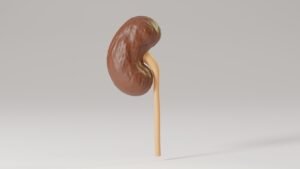
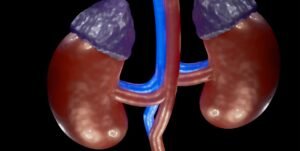
A cortisol blood test measures the amount of cortisol circulating in your blood at the time the sample is collected. Cortisol is a glucocorticoid hormone produced by the adrenal glands, which sit on top of the kidneys. It helps regulate blood pressure, blood sugar, inflammation, immune activity, and the body’s response to physical stress.
Cortisol production is controlled by a signaling pathway often called the hypothalamic-pituitary-adrenal axis. In simplified terms, the brain releases signals that prompt the pituitary gland to make adrenocorticotropic hormone, or ACTH. ACTH then tells the adrenal glands to produce cortisol. Because ACTH and cortisol are linked, clinicians commonly order cortisol and ACTH together when they are trying to determine whether a problem begins in the adrenal glands, pituitary gland, or another part of the system. MedlinePlus notes that ACTH testing is usually done with a cortisol blood test because ACTH helps control cortisol production. MedlinePlus: ACTH test
Unlike many routine blood tests, cortisol is strongly affected by the clock. In people with a typical day-night schedule, cortisol generally rises in the early morning, peaks around waking hours, and declines later in the day. The Endocrine Society’s Cushing syndrome guideline describes this daily rhythm and explains why late-night testing can be useful when clinicians are checking for loss of the normal nighttime cortisol drop. Endocrine Society guideline on Cushing syndrome diagnosis
Why a clinician may order a cortisol blood test
A cortisol blood test is not a general “stress score.” It is a medical test used when a clinician has a reason to evaluate adrenal or pituitary-adrenal function. Common reasons include symptoms, medical history, medication exposure, or follow-up of a known endocrine condition.
Possible low cortisol or adrenal insufficiency
Low cortisol can occur when the adrenal glands do not make enough cortisol, when ACTH signaling from the pituitary is inadequate, or after exposure to glucocorticoid medicines that suppress the body’s own cortisol production. Clinicians may consider testing when symptoms and history suggest adrenal insufficiency, such as persistent fatigue, weakness, low blood pressure, dizziness on standing, unexplained weight loss, salt craving, nausea, abdominal pain, or darkening of the skin in some forms of primary adrenal insufficiency.
The National Institute of Diabetes and Digestive and Kidney Diseases states that the ACTH stimulation test is the test used most often to diagnose adrenal insufficiency. A morning cortisol blood test may be an early clue, but borderline results often need confirmatory testing. NIDDK: diagnosing adrenal insufficiency and Addison’s disease
Possible high cortisol or Cushing syndrome
High cortisol over time can be associated with Cushing syndrome. Features that may prompt evaluation include easy bruising, facial rounding, purple stretch marks, thinning skin, muscle weakness, high blood pressure, high blood sugar, unexplained weight gain in the trunk, osteoporosis, or menstrual changes. However, many of these features are common and can have non-endocrine causes, so testing must be interpreted in context.
For suspected Cushing syndrome, a single random cortisol blood test is usually not the preferred screening test. The Endocrine Society guideline recommends initial testing with one of several validated approaches, such as late-night salivary cortisol, 24-hour urinary free cortisol, or dexamethasone suppression testing, depending on the person and clinical setting. Endocrine Society guideline on Cushing syndrome diagnosis
Monitoring known adrenal, pituitary, or medication-related problems
Cortisol testing may also be used after pituitary or adrenal surgery, during evaluation of pituitary disease, when tapering long-term glucocorticoid therapy, or in specialized endocrine testing protocols. In these situations, the exact timing, medication instructions, and interpretation thresholds can be different from a simple outpatient morning cortisol.
Cortisol blood test vs saliva and urine tests
Cortisol can be measured in blood, saliva, or urine. These tests answer related but different questions. Blood testing gives a point-in-time measurement of serum cortisol. Saliva testing can be useful for late-night cortisol patterns because it can often be collected at home near bedtime. A 24-hour urine free cortisol test measures cortisol excreted over an entire day and is commonly used in Cushing syndrome evaluation.
| Test type | What it measures | Common use | Important limitation |
|---|---|---|---|
| Blood cortisol | Cortisol in a blood sample at one collection time | Morning evaluation for possible adrenal insufficiency; paired ACTH testing; endocrine follow-up | Highly dependent on time of day, acute stress, illness, and certain medications |
| Late-night salivary cortisol | Free cortisol in saliva near bedtime or late night | Screening for loss of normal nighttime cortisol suppression in suspected Cushing syndrome | Shift work, irregular sleep, tobacco, sample contamination, and collection errors can affect results |
| 24-hour urinary free cortisol | Free cortisol excreted in urine over 24 hours | Evaluation of cortisol overproduction over a full day | Incomplete urine collection, kidney function, high fluid intake, and cyclic cortisol patterns can complicate interpretation |
| Dexamethasone suppression test | Cortisol response after taking dexamethasone | Testing whether cortisol suppresses normally when the body receives a steroid signal | Requires exact medication timing and can be affected by drugs that alter dexamethasone metabolism |
Testing.com summarizes that cortisol may be measured in blood, saliva, or urine and that blood cortisol samples are often collected early in the morning when levels are typically highest. Testing.com: cortisol test overview
How to prepare for a cortisol blood test
Preparation depends on why the test is being ordered. Always follow the instructions from the ordering clinician or lab, especially if the test is part of a stimulation or suppression protocol. For a routine morning cortisol, preparation usually focuses on correct timing and medication review.
Confirm the collection time
If your order says AM cortisol, the blood draw is commonly scheduled around 7 a.m. to 9 a.m. Some labs and clinicians specify 8 a.m. because morning cortisol interpretation is best standardized. Labcorp’s test information, for example, notes that blood may be drawn at 8 a.m. and 4 p.m. when evaluating baseline daily variation, and it provides separate morning and afternoon reference intervals. Labcorp: cortisol test information
If you work nights, sleep during the day, recently traveled across time zones, or have an irregular sleep schedule, tell your clinician before the test. Your “morning” biology may not match the lab’s default morning reference range.
Review steroid medicines before testing
Glucocorticoid medicines can strongly affect cortisol testing. This includes oral prednisone, methylprednisolone, dexamethasone, hydrocortisone, steroid injections, some inhalers, nasal sprays, topical steroid creams used heavily or long-term, and certain eye drops. Some medications suppress your own cortisol production; others may interfere with measurement or make interpretation difficult.
Do not stop a prescribed steroid suddenly unless your clinician gives specific instructions. If your body has become dependent on steroid replacement or has suppressed adrenal function, abrupt stopping can be unsafe. Instead, ask whether you should take or hold a dose before the draw, and get the instruction in writing if possible.
Ask about biotin and supplements
High-dose biotin, sometimes marketed for hair, skin, and nails, can interfere with some immunoassay-based lab tests. Labcorp’s cortisol test information specifically notes possible interference when the sample is collected from a person consuming high-dose biotin. Labcorp: cortisol test information If you take biotin or high-dose supplements, tell the ordering clinician and the lab before collection.
Illness, stress, exercise, and sleep
Cortisol is a stress-response hormone. Acute illness, surgery, injury, severe pain, intense exercise, poor sleep, and major emotional stress can affect levels. This does not mean the test is useless, but it does mean the result must be interpreted in the clinical situation. If the test is elective and you are acutely ill, ask whether it should be postponed.
What happens during the blood draw
A health professional usually collects blood from a vein in your arm using a small needle. You may feel a brief pinch. Afterward, you can usually return to normal activities unless you were given different instructions. Bruising, soreness, or lightheadedness can occur, but serious problems from a routine venipuncture are uncommon. MedlinePlus describes this standard blood draw process for cortisol testing. MedlinePlus: cortisol test
How to read cortisol blood test results
Cortisol results are commonly reported in micrograms per deciliter (mcg/dL or µg/dL) in the United States, though some labs use nmol/L. The most important first step is to compare your value with the reference interval printed on your own report for the exact collection time, specimen type, and method used.
Reference intervals are not universal. As one example, Labcorp lists an AM serum cortisol reference interval of 6.2–19.4 µg/dL and a PM interval of 2.3–11.9 µg/dL for its assay. Those numbers are useful as an illustration of the morning-to-afternoon difference, not as a substitute for the range on your own report. Labcorp: cortisol test information
| Result pattern | What it may suggest | Common next step |
|---|---|---|
| Low 8 a.m. cortisol | Possible adrenal insufficiency, pituitary ACTH deficiency, medication effect, or steroid-related suppression | Repeat morning cortisol, ACTH level, electrolytes, and often ACTH stimulation testing |
| Borderline morning cortisol | Indeterminate; may not confirm or exclude adrenal insufficiency | ACTH stimulation test or specialist-guided testing, especially if symptoms or risk factors are present |
| High morning cortisol | May reflect physiologic stress, illness, pregnancy/estrogen effects, medication effects, or cortisol excess; morning blood cortisol alone is not usually diagnostic for Cushing syndrome | Clinical review and, if Cushing syndrome is suspected, validated screening such as late-night salivary cortisol, 24-hour urine free cortisol, or dexamethasone suppression testing |
| Afternoon or random cortisol | Harder to interpret without timing context because cortisol normally declines throughout the day | Clarify collection time and consider repeating at the intended time if the result does not answer the clinical question |
Low cortisol: what it can mean
A low morning cortisol may raise concern for adrenal insufficiency, especially if symptoms and risk factors fit. Primary adrenal insufficiency means the adrenal glands themselves cannot produce enough cortisol. Secondary or central adrenal insufficiency means the adrenal glands are not receiving enough ACTH stimulation from the pituitary or hypothalamus. Long-term or repeated glucocorticoid use can also suppress the body’s own cortisol production.
The Endocrine Society’s primary adrenal insufficiency guideline states that a corticotropin stimulation test is preferred to confirm diagnosis when possible. It also notes that, when stimulation testing is not feasible, a very low morning cortisol with ACTH can be used as a preliminary test until confirmatory testing is available. Endocrine Society guideline on primary adrenal insufficiency
Seek urgent medical attention if symptoms suggest possible adrenal crisis, such as severe weakness, repeated vomiting, dehydration, confusion, fainting, or very low blood pressure, especially in someone with known adrenal insufficiency or recent steroid withdrawal. NIDDK describes adrenal crisis as a serious complication of adrenal insufficiency that requires prompt treatment. NIDDK: diagnosing adrenal insufficiency and Addison’s disease
High cortisol: what it can mean
A high cortisol result does not automatically mean Cushing syndrome. Cortisol can rise with acute illness, pain, lack of sleep, depression, alcohol use disorder, intense exercise, pregnancy, estrogen-containing medications, and other physiologic stressors. Some of these situations can create “pseudo-Cushing” patterns that resemble cortisol excess but are not caused by an autonomous cortisol-producing tumor.
If Cushing syndrome is a serious concern, clinicians usually do not rely on a single morning serum cortisol. Instead, they look for failure of normal cortisol regulation. That may involve late-night salivary cortisol, 24-hour urinary free cortisol, or dexamethasone suppression testing. NIDDK describes several tests used in Cushing syndrome evaluation, including 24-hour urinary free cortisol, late-night salivary cortisol, and low-dose dexamethasone suppression testing. NIDDK: Cushing syndrome
Limitations: why one cortisol result may not be enough
Cortisol testing is powerful when ordered and timed correctly, but it is not a simple wellness marker. Interpretation depends on the reason for testing, time of collection, symptoms, medications, and the lab method.
Collection time can make a normal result look abnormal
A cortisol value that is appropriate for 4 p.m. may look low compared with an 8 a.m. reference range. Conversely, a morning cortisol may be expected to be higher than an afternoon level. If your result seems surprising, check the collection time printed on the report and confirm whether the correct reference range was applied.
Binding proteins affect total serum cortisol
Most routine blood cortisol tests measure total serum cortisol, which includes cortisol bound to proteins. Changes in cortisol-binding globulin can alter total cortisol without always reflecting the same change in biologically active free cortisol. Pregnancy and estrogen therapy can increase cortisol-binding globulin, which may raise total cortisol values. Low protein states can have the opposite effect. This is one reason clinicians may choose saliva, urine, or dynamic testing in specific situations.
Medication effects are common
Steroids are the most important medication category to discuss, but they are not the only one. Some drugs can affect cortisol production, cortisol-binding proteins, or dexamethasone metabolism if a suppression test is being done. Bring an up-to-date list of prescriptions, over-the-counter medicines, supplements, injections, and topical products to the clinician interpreting your result.
Assay differences matter
Different labs may use different instruments and reference intervals. A result from one lab should not always be compared directly with a result from another lab as though the methods are identical. When monitoring a known condition, clinicians often prefer consistent timing and, when practical, consistent laboratory methods.
How much does a cortisol blood test cost?
The cost of a cortisol blood test depends on how it is ordered, whether insurance is used, where the specimen is collected, and whether additional clinician, draw, processing, or platform fees apply. The lab’s billed price is not always the same as the amount paid by insurance or the amount a self-pay consumer sees at checkout.
If a clinician orders the test for a medically necessary reason, insurance may cover part or all of the cost, but deductibles, copays, coinsurance, and network rules still matter. Medicare and many insurers use fee schedules for laboratory reimbursement; CMS maintains the Clinical Laboratory Fee Schedule for Medicare payment policy, though your personal out-of-pocket cost can differ from the Medicare allowed amount. CMS: Clinical Laboratory Fee Schedule
| Cost item to check | Why it matters |
|---|---|
| Base cortisol test price | The advertised price may cover only the lab assay. |
| Required clinician or authorization fee | Some direct-order services include this; others add it at checkout. |
| Blood draw or collection fee | Collection centers may charge separately, especially for third-party orders. |
| Timing availability | A morning cortisol needs an early appointment; not every collection site has convenient morning slots. |
| State restrictions | Direct access testing is not available in the same way in every state. |
| Follow-up testing | ACTH, stimulation testing, salivary cortisol, urine cortisol, or endocrinology visits may cost more than the initial screen. |
Practical next steps after you get results
- Check the collection time. Confirm whether the sample was drawn at the time your clinician intended.
- Use the reference range on your own report. Do not apply a morning range to an afternoon sample.
- List medications and supplements. Include steroid pills, injections, inhalers, creams, nasal sprays, hormone therapy, and biotin.
- Ask what question the test was meant to answer. Screening for adrenal insufficiency, screening for Cushing syndrome, and monitoring after treatment require different interpretation.
- Ask whether follow-up testing is needed. Borderline or unexpected results commonly need repeat testing, ACTH measurement, ACTH stimulation testing, late-night salivary cortisol, 24-hour urine cortisol, or dexamethasone suppression testing.
- Seek urgent care for severe symptoms. If you have known adrenal insufficiency or recent steroid withdrawal and develop severe vomiting, dehydration, fainting, confusion, or very low blood pressure, treat it as urgent.
Frequently asked questions
Is a cortisol blood test the same as a stress test?
No. Although cortisol is involved in the stress response, a cortisol blood test is not a general measure of everyday stress. It is a medical test used to evaluate adrenal and pituitary-adrenal function in a specific clinical context.
What time should a cortisol blood test be done?
Many cortisol blood tests are drawn in the early morning, often around 7 a.m. to 9 a.m., because cortisol is normally highest then. Some evaluations require afternoon, late-night, or multiple timed samples. Follow the time on the order.
Do I need to fast?
Fasting is not always required for a routine cortisol blood test, but instructions vary by lab and by the reason for testing. If other labs are being drawn at the same time, those tests may require fasting.
Can I take my steroid medication before a cortisol test?
Ask the clinician who ordered the test. Steroid medicines can strongly affect cortisol results, but stopping them suddenly can be unsafe. You need individualized instructions on whether to take, hold, or adjust a dose before testing.
Does a high cortisol blood test mean I have Cushing syndrome?
Not by itself. A single high blood cortisol can occur for many reasons, including illness, stress, medication effects, pregnancy, and timing. Suspected Cushing syndrome usually requires specific screening tests such as late-night salivary cortisol, 24-hour urinary free cortisol, or dexamethasone suppression testing.
Does a low cortisol blood test mean I have Addison’s disease?
Not always. A low morning cortisol can suggest adrenal insufficiency, but the cause may be primary adrenal disease, pituitary signaling problems, medication effects, or other factors. ACTH testing and often ACTH stimulation testing are used to clarify the diagnosis.
Can biotin affect cortisol results?
High-dose biotin can interfere with some lab immunoassays. Tell your clinician and the lab if you take biotin-containing supplements, especially high-dose products marketed for hair, skin, or nails.
Why would my clinician order ACTH with cortisol?
ACTH helps signal the adrenal glands to make cortisol. Measuring ACTH and cortisol together can help determine whether an abnormal cortisol pattern is more consistent with an adrenal gland problem or a signaling problem from the pituitary-hypothalamic system.
Educational note
This article is for general education and does not diagnose, treat, or replace care from a licensed health professional. Cortisol testing can be complex. Review your result with the clinician who ordered it, especially if you use steroid medication, have symptoms of adrenal insufficiency, or are being evaluated for Cushing syndrome.
Source Notes
- MedlinePlus — Adrenocorticotropic Hormone Acth
- Endocrine Society Clinical Practice Guideline — Diagnosis of Cushing’s Syndrome
- NIDDK — Diagnosis of Adrenal Insufficiency & Addison’s Disease
- Testing.com: cortisol test overview
- MedlinePlus — Cortisol Test
- Endocrine Society Clinical Practice Guideline — Primary Adrenal Insufficiency
- NIDDK — Cushing’s Syndrome
- CMS — Clinical Laboratory Fee Schedule Clfs