
Medical & affiliate disclosure: CTX Stat provides educational laboratory information and is not a substitute for professional medical advice, diagnosis, or treatment. CTX Stat may receive compensation from some outbound provider links when an affiliate program is active; provider comparisons and rankings are based on consumer fit, effective cost, access, policies, and reputation—not commission.
Quick take: A mercury blood test measures the amount of mercury in your blood, usually reported as micrograms per liter (µg/L) or nanograms per milliliter (ng/mL). A low mercury result is generally expected and is not a deficiency. A high mercury result means your recent mercury exposure is above the lab’s reference range and should be interpreted with your exposure history, symptoms, pregnancy status, occupation, fish intake, and sometimes confirmatory testing. Blood testing is most useful for recent exposure and for methylmercury exposure from fish; urine testing is often more useful for elemental mercury vapor or inorganic mercury exposure. CDC/ATSDR notes that blood, urine, hair, and nails can all be used as biomarkers, but they answer different exposure questions.
What a mercury blood test measures
A mercury blood test measures mercury circulating in the bloodstream at the time the sample is collected. Most consumer and clinical “mercury, blood” tests report total mercury, meaning the result includes mercury from more than one chemical form. That matters because the source, health concern, and best follow-up test may differ depending on whether the exposure is mostly methylmercury from fish, elemental mercury vapor from a spill or workplace, or inorganic mercury compounds from certain industrial or product sources. The ATSDR Toxicological Profile for Mercury explains that total mercury in blood and urine can document mercury exposure, but total testing alone does not reliably identify the exact form of mercury. (atsdr.<a href=”https://www.cdc.goviosh/ershdb/emergencyresponsecard_29750021.html” class=”ctx-inline-source” rel=”noopener”>cdc</a>.gov)
For many adults in the United States, the most common reason for a mildly elevated blood mercury result is eating fish or shellfish that contain methylmercury. Methylmercury forms in water and sediment and accumulates in fish tissue, especially in larger, longer-lived predatory fish. The FDA and EPA emphasize that fish can still be part of a healthy diet; the practical goal is usually to choose lower-mercury fish more often and avoid high-mercury options when appropriate, especially during pregnancy and childhood. (<a href=”https://www.fda.gov/food/consumers/questions-answers-fdaepa-advice-about-eating-fish-those-who-might-become-or-are-pregnant-or” class=”ctx-inline-source” rel=”noopener”>fda</a>.gov)
Blood mercury is not the best test for every mercury concern. If the suspected source is a broken mercury device, occupational mercury vapor, a school or home spill, certain industrial processes, or inorganic mercury compounds, a clinician or occupational-health professional may order urine mercury instead of, or in addition to, blood mercury. ATSDR’s ToxFAQs for metallic mercury states that urine testing is the best way to check exposure to metallic mercury because most metallic mercury leaves the body in urine.
What counts as a high or low mercury blood test?
There is no single universal “safe versus unsafe” cutoff that applies to every person and exposure scenario. Your lab report should be interpreted using the reference interval printed on that specific report, the units, the test method, and your clinical context. Large reference laboratories commonly list adult whole-blood reference values around less than 10 µg/L or less than 10 ng/mL; these units are numerically equivalent for mercury because 1 ng/mL equals 1 µg/L. Mayo Clinic Laboratories lists a blood mercury reference value of <10 ng/mL and notes that normal whole-blood mercury is usually below that level. ARUP Laboratories lists a whole-blood mercury reference interval of ≤10.0 µg/L.
| Blood mercury result | General interpretation | What it may mean next |
|---|---|---|
| Below the lab’s reporting limit or very low | Usually expected | Mercury is not an essential nutrient, so “low” is not treated as a deficiency. |
| Within the lab’s reference range | No elevation detected by that lab’s criteria | Does not rule out every past exposure; blood reflects recent exposure more than remote exposure. |
| Above the reference range but mildly elevated | Recent exposure is higher than expected | Commonly reviewed with fish intake, supplements, occupational history, hobbies, and possible sample contamination. |
| Clearly elevated, especially with symptoms or pregnancy | Needs prompt clinical interpretation | May require repeat testing, urine or speciated testing, exposure removal, public-health/occupational input, or toxicology consultation. |
| Very high or associated with neurologic, kidney, breathing, or severe gastrointestinal symptoms | Potential mercury toxicity or significant exposure | Seek urgent medical advice; in the U.S., Poison Control is available at 1-800-222-1222. |
Reference ranges are not the same as toxicity thresholds. For example, a value just above a lab’s reference interval can be important because it identifies above-expected exposure, but it does not automatically mean mercury poisoning. Conversely, symptoms, pregnancy, a known acute spill, or a workplace exposure can make a result clinically important even before a dramatic number appears. A CDC health-care-provider document notes that the 95th percentile of blood mercury in the U.S. population was below 5 µg/L and describes 50 µg/L or greater as a threshold associated with symptoms of toxicity, while reference laboratory interpretive comments describe significant exposure at higher levels depending on mercury form.
Why units and test type matter
Before comparing your number with anything online, confirm the unit. Blood mercury may be reported as µg/L, mcg/L, ng/mL, nmol/L, or sometimes as part of a heavy-metals panel. A result of 8 µg/L and 8 ng/mL are equivalent, but 8 nmol/L is not equivalent. Also confirm whether the specimen was whole blood, serum, plasma, urine, or hair. Most interpretive ranges discussed in this guide refer to whole blood unless stated otherwise.
| Test type | Best suited for | Main limitation |
|---|---|---|
| Whole-blood mercury | Recent exposure; methylmercury exposure from fish; some acute exposures | Total mercury does not identify the exact mercury form by itself. |
| Urine mercury | Elemental mercury vapor and inorganic mercury exposure, including many occupational exposures | Not very useful for methylmercury from fish. |
| Hair mercury | Longer-term methylmercury exposure patterns, often in public-health or research contexts | External contamination and nonstandard testing can complicate interpretation. |
| Speciated mercury testing | Separating methylmercury from inorganic mercury when source identification matters | May not be available through every routine lab and may require clinician coordination. |
ATSDR explains that blood and hair are more strongly correlated with methylmercury exposure, while urine is more strongly correlated with inorganic mercury and elemental mercury vapor exposure. That is why two people with the same total blood mercury value may need different follow-up depending on whether one eats high-mercury fish and the other had a workplace vapor exposure.
Common reasons for a high mercury blood test
Fish and seafood intake is the most common explanation for many mild-to-moderate elevations in people without occupational exposure. Nearly all fish contain at least traces of methylmercury, but levels vary widely. Larger predatory fish tend to have more. FDA/EPA advice places fish into “Best Choices,” “Good Choices,” and “Choices to Avoid” categories and recommends that people who are pregnant, may become pregnant, or are breastfeeding eat 2 to 3 servings per week from the “Best Choices” list, or 1 serving from the “Good Choices” list, rather than avoiding fish entirely.
Locally caught fish can also matter. Lakes, rivers, reservoirs, and coastal areas may have local fish advisories for mercury and other contaminants such as PCBs or PFAS. If you frequently eat fish caught by family or friends, check your state or tribal fish advisory. The FDA/EPA advice notes that if no local advisory is available, people should limit locally caught fish and avoid other fish that week for higher-risk groups.
Workplace exposure is another important cause. Jobs that may involve mercury vary by era and setting but can include certain industrial, laboratory, mining, recycling, dental, manufacturing, and fluorescent-lamp or device-handling activities. OSHA guidance for inorganic mercury and mercury vapor includes periodic urine sampling for workers exposed above permissible limits, illustrating why occupational evaluation often relies on urine as well as exposure monitoring.
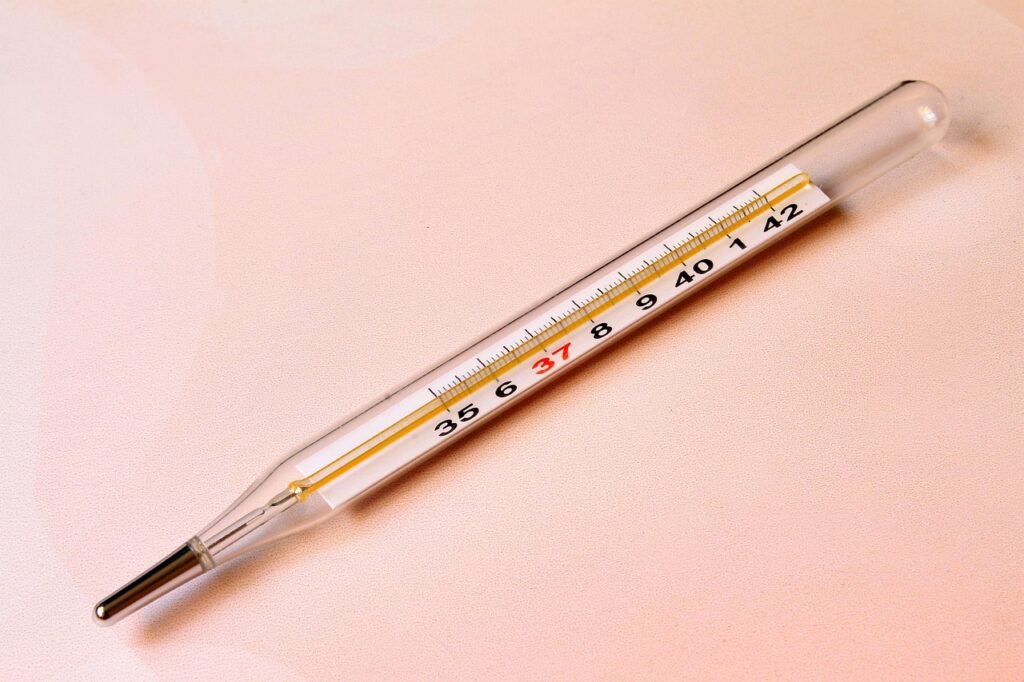
Household or accidental exposure may occur after a mercury-containing thermometer, barometer, thermostat, antique device, or other product breaks, especially if liquid mercury is vacuumed, heated, or spread into cracks where it can vaporize. Poison Control advises contacting a poison center for exposure questions and notes that help is free, confidential, and available 24/7 in the United States.
Products, supplements, or cultural remedies can occasionally contribute to exposure. Skin-lightening products, imported cosmetics, folk remedies, and unregulated supplements have been implicated in some mercury exposures. If a blood result is unexpectedly high, bring a list or photos of supplements, creams, remedies, workplace materials, hobbies, and recent spill events to the clinician reviewing the result.
Sample contamination is possible, especially for trace-metal testing. ARUP’s test directory warns that elevated results may be caused by skin-related or collection-related contamination, including use of tubes not certified as trace-element free, and recommends confirmation with a second properly collected specimen when contamination is suspected.
Symptoms that may matter with a high result
Many people with mildly elevated blood mercury have no symptoms. When symptoms occur, they depend on the mercury form, dose, timing, and person’s susceptibility. Possible concerns include neurologic symptoms such as tingling, tremor, coordination problems, vision or hearing changes, mood or memory changes, and in severe organic mercury exposure, dysarthria, ataxia, or constricted visual fields. Kidney effects are more associated with inorganic mercury, and inhaled elemental mercury vapor can irritate or injure the lungs at high exposure levels. ATSDR summarizes neurologic and renal effects as consistently observed health concerns across mercury forms.
Seek urgent help if a high result is accompanied by severe neurologic symptoms, shortness of breath after a mercury vapor exposure, severe vomiting or diarrhea after ingestion of a mercury compound, confusion, seizures, or a known substantial spill in an enclosed space. In the U.S., Poison Control can be reached at 1-800-222-1222; emergency symptoms should be handled through emergency medical services.
What does a low mercury blood test mean?
A low mercury result usually means mercury was not detected or was detected at a low level. This is generally reassuring. Unlike iron, calcium, magnesium, or selenium, mercury is not required for normal body function. There is no “mercury deficiency,” and a low result does not need treatment.
However, a low blood mercury result does not always answer every exposure question. Blood mercury is dynamic and more affected by recent exposure than by remote exposure. ATSDR notes that blood and urine levels change more with recent exposure history, while hair and nails can provide a longer-term exposure measure. If the concern is a past exposure months ago, a clinician may decide that blood testing is less informative than a detailed exposure history or a different specimen type.
How to prepare for a mercury blood test
Most mercury blood tests do not require fasting. The most important preparation is to avoid contamination and to provide a useful exposure history. Use the collection site and tube specified by the ordering lab, because trace-metal tests often require special collection materials. Do not stop eating fish or change your diet before testing unless your clinician specifically asks you to; otherwise, the result may not reflect your usual exposure.
- Bring a list of fish and seafood you commonly eat, including tuna type, sushi, swordfish, shark, king mackerel, bigeye tuna, marlin, orange roughy, or other large predatory fish.
- Note how often you eat locally caught fish and where it was caught.
- List jobs, hobbies, spills, broken devices, antiques, imported products, skin creams, remedies, and supplements that could involve mercury.
- Tell the clinician if you are pregnant, trying to become pregnant, breastfeeding, or testing a child, because follow-up thresholds may be more conservative.
What to do if your mercury result is high
The first step is to verify the result and context. Review the lab’s unit, reference interval, specimen type, and whether the test was total mercury or speciated mercury. Then compare the result with your likely exposure source. A mildly elevated total blood mercury in a frequent high-mercury-fish eater is approached differently from an elevated result after a workplace vapor exposure or an accidental spill.
- Contact the ordering clinician. Ask whether the level is mildly elevated or concerning for toxicity, and whether symptoms or pregnancy status change the urgency.
- Identify and reduce the likely exposure. For fish-related exposure, this usually means switching to lower-mercury fish rather than eliminating seafood completely. For spills or workplace exposure, follow poison-control, environmental-health, or occupational-health guidance.
- Consider repeat or confirmatory testing. Repeat blood testing may be useful after exposure reduction. Urine mercury may be more appropriate if elemental or inorganic exposure is suspected. Speciated testing can help distinguish methylmercury from inorganic mercury when the source is unclear.
- Avoid unproven detox programs. Chelation and “detox” regimens can cause harm and are not appropriate for every elevated result. Decisions about chelation should be made by clinicians experienced in toxicology, especially for symptomatic or high-level exposures. CDCIOSH emergency guidance states that chelation decisions should be made by experienced professionals, preferably in consultation with a regional poison center.
- Protect higher-risk people. Pregnant people, fetuses, infants, and young children are more vulnerable to methylmercury’s developmental effects, so food choices and exposure control deserve special attention. The FDA/EPA fish advice is designed specifically for people who might become or are pregnant or breastfeeding and for children ages 1 to 11.
What to do if your mercury result is normal but you are still concerned
A normal result is helpful, but it should be matched to the question being asked. If you had a recent high-fish diet and a whole-blood mercury level is normal, that generally argues against elevated recent methylmercury exposure. If you had a suspected elemental mercury vapor exposure, ask whether urine testing or environmental cleanup assessment is more appropriate. If the exposure happened months ago, ask whether any testing can still answer the question reliably.
Also remember that symptoms such as fatigue, headache, tingling, anxiety, memory changes, abdominal symptoms, or sleep problems are nonspecific. They can occur from many causes unrelated to mercury. A mercury test can be one piece of an evaluation, but it should not replace a complete medical history, medication and supplement review, neurologic exam when indicated, and appropriate testing for more common conditions.
How much does a mercury blood test cost?
Cost depends on how the test is ordered, whether it is part of a heavy-metals panel, whether a clinician visit is required, whether insurance is used, and whether the collection site charges a separate draw or service fee. If you are paying cash, compare the total price, not just the advertised test price: include physician authorization, lab draw fees, processing fees, and any required follow-up visit. If exposure is work-related, ask about occupational-health or employer-directed testing rather than self-ordering a consumer panel.
FAQs about high and low mercury blood tests
Is a mercury blood test the same as a heavy metals test?
Not always. Mercury can be ordered by itself or as part of a heavy-metals panel that may include lead, arsenic, cadmium, or other metals. Panels can be useful when the exposure source is unclear, but they can also create confusing borderline findings. The best test depends on the suspected exposure and the specimen type.
What mercury level is considered high?
A result is “high” when it exceeds the reference range on your lab report. Many whole-blood mercury reference intervals are around 10 µg/L or 10 ng/mL, but clinical concern depends on symptoms, pregnancy status, source, timing, and whether the result is total or speciated mercury. Very high levels or symptoms should be reviewed promptly.
Can eating tuna raise my mercury blood test?
Yes. Some tuna has more mercury than other types. FDA/EPA fish advice places canned light tuna among lower-mercury “Best Choices,” while albacore/white tuna is typically a “Good Choices” fish and bigeye tuna is listed among choices to avoid for higher-risk groups. People who eat tuna frequently should pay attention to type, serving size, and variety.
Should I stop eating fish if my mercury is high?
Do not make drastic diet changes without discussing the result with a clinician, especially if you are pregnant or breastfeeding. Many fish are nutritious and lower in mercury. Often the practical step is to avoid high-mercury fish and choose lower-mercury options more consistently.
How long does mercury stay in blood?
It depends on the mercury form and exposure pattern. Blood levels are generally more useful for recent exposure and can fall after the exposure is reduced. ATSDR describes blood and urine mercury as more dynamic than hair or nails, which can better reflect longer-term accumulation patterns.
Is urine or blood better for mercury testing?
Blood is often better for recent methylmercury exposure from fish. Urine is often better for metallic mercury vapor or inorganic mercury exposure. Sometimes both are needed. The best choice depends on the suspected source.
Can a high mercury blood test be caused by lab error?
It can be caused by collection or handling contamination, especially if trace-element-free tubes were not used. If a result does not match your exposure history, ask whether repeat testing with proper trace-metal collection is appropriate. ARUP specifically notes that elevated whole-blood mercury results can be due to skin or collection-related contamination.
Does a low mercury result mean something is wrong?
No. Low mercury is generally expected and desirable. Mercury is not needed by the body, so there is no mercury deficiency state.
When should I call Poison Control?
Call Poison Control at 1-800-222-1222 in the U.S. if there has been a mercury spill, accidental ingestion, vapor exposure, product exposure, or uncertainty about what to do next. Poison Control states that help is free, confidential, and available 24/7.
Bottom line
A high mercury blood test usually means recent exposure is above the expected range, but the number must be interpreted with the source, timing, symptoms, and specimen type. A low mercury result is typically normal and does not indicate deficiency. For most mild elevations, the next step is not panic or detox treatment; it is confirming the result, identifying the exposure source, reducing ongoing exposure, and using the right follow-up test if needed. For symptomatic, pregnant, pediatric, occupational, or acute-spill situations, involve a clinician, occupational-health professional, public-health agency, or Poison Control promptly.
Source Notes
- atsdr.cdc.gov — Tp46.pdf
- ncbi.nlm.nih.gov — BooksBK611019
- atsdr.<a href="https://www.cdc.goviosh/ershdb/emergencyresponsecard_29750021.html" class="ctx-inline-source" rel="noopener">cdc</a>.gov
- CDCIOSH Emergency Response Card: Elemental Mercury
- FDA — <a href="https://www.fda.gov/food/consumers/questions-answers-fdaepa-advice-about-eating-fish-those-who-might-become-or-are-pregnant-or" class="ctx-inline-source" rel="noopener">fda</a>.gov
- ATSDRCBI Bookshelf: Mercury toxicokinetics and biomarkers
- ARUP Laboratories: Mercury, Whole Blood
- Poison Control: Contact and emergency guidance