Medical & affiliate disclosure: CTX Stat provides educational laboratory information and is not a substitute for professional medical advice, diagnosis, or treatment. CTX Stat may receive compensation from some outbound provider links when an affiliate program is active; provider comparisons and rankings are based on consumer fit, effective cost, access, policies, and reputation—not commission.
Quick take
Renin is a kidney-made enzyme involved in blood pressure, salt balance, and fluid balance. A renin result is rarely interpreted by itself. Clinicians usually compare it with aldosterone, potassium, blood pressure, sodium intake, posture at the blood draw, kidney function, and medications.
- High renin often means the kidneys are sensing low blood flow, low blood volume, low sodium, or a medication effect. It may be seen with dehydration, diuretic use, heart failure, liver disease, kidney blood-flow problems, or adrenal insufficiency.
- Low renin may occur when the body is holding onto sodium and fluid or when renin is suppressed by excess mineralocorticoid effect. One important pattern is low renin with inappropriately high aldosterone, which can suggest primary aldosteronism in a person with hypertension.
- The aldosterone-renin ratio (ARR) is often more informative than renin alone when the question is whether excess aldosterone is contributing to high blood pressure.
- Do not stop blood pressure medicines on your own. Several common medications can change renin and aldosterone results, but medication changes before testing should be supervised.
Bottom line: A high or low renin result is a clue, not a diagnosis. The same number can mean different things depending on whether aldosterone is high or low, whether potassium is normal, and how the sample was collected.
What renin does
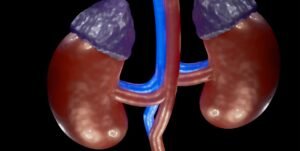
Renin is released by specialized cells in the kidneys when the body needs help maintaining circulation. For example, renin may rise when the kidneys sense lower blood pressure, reduced blood flow to the kidneys, lower blood volume, or lower sodium delivery. Renin starts a hormone chain called the renin-angiotensin-aldosterone system. This pathway can tighten blood vessels and stimulate the adrenal glands to make aldosterone, a hormone that helps the kidneys retain sodium and water and excrete potassium.
Consumer-facing references from MedlinePlus explain that renin testing is often used with aldosterone testing, especially when evaluating high blood pressure, low potassium, or suspected adrenal hormone disorders. Clinical testing references from ARUP Consult and the Endocrine Society also emphasize that renin interpretation depends heavily on collection conditions and on the aldosterone-renin relationship.
Renin activity vs direct renin: know which test you had
Renin may be reported in two common ways:
- Plasma renin activity (PRA): estimates how actively renin generates angiotensin I under test conditions. Units are often ng/mL/hour.
- Direct renin concentration (DRC): measures the amount of renin protein. Units vary by laboratory, such as mU/L or pg/mL.
These methods are not interchangeable. A result that looks “low” or “high” on one method cannot be converted casually into the other method without laboratory-specific context. This is especially important when calculating an aldosterone-renin ratio, because ARR cutoffs differ depending on whether PRA or DRC is used and on the units used by the laboratory.
What is a normal renin result?
There is no single universal normal renin number. Reference ranges vary by age, test method, posture, sodium intake, time of day, and laboratory. Some labs provide different adult ranges for upright versus supine collection. For example, a lab may expect renin to be higher after a person has been upright and lower after lying down. Pediatric ranges are often much higher than adult ranges, particularly in infancy.
Because renin is posture-sensitive and medication-sensitive, the most useful first step is to compare your result with the reference interval printed on your own report and confirm whether the report specifies plasma renin activity or direct renin concentration. If the ordering clinician was screening for primary aldosteronism, the aldosterone value, renin value, ARR, potassium level, and medication list matter more than the renin flag alone.
What a high renin result can mean
A high renin result generally means the kidneys are sending a stronger signal to raise blood pressure, preserve circulation, or restore salt and fluid balance. The reason may be appropriate and temporary, such as dehydration, or it may point to a medical condition that needs evaluation.
Common reasons renin may be high
| Possible context | Why renin may rise | What clinicians usually look at next |
|---|---|---|
| Dehydration, vomiting, diarrhea, heavy sweating, or low blood volume | The kidneys sense reduced circulating volume and activate renin to help restore pressure and fluid balance. | Symptoms, blood pressure, heart rate, electrolytes, kidney function, and recent fluid losses. |
| Low sodium intake or recent sodium restriction | Lower sodium delivery to the kidney can stimulate renin. | Diet history, urine sodium in selected cases, and whether sodium restriction was intentional before testing. |
| Diuretics, ACE inhibitors, ARBs, SGLT2 inhibitors, or mineralocorticoid receptor antagonists | Many of these medications increase renin as part of their blood-pressure or fluid-balance effect. | Medication list, timing of last doses, and whether the test was meant to be performed on or off certain medicines. |
| Renal artery stenosis or reduced kidney blood flow | The kidney may interpret reduced blood flow as low pressure and increase renin. | Blood pressure pattern, kidney function, imaging when appropriate, and specialist evaluation. |
| Heart failure, cirrhosis, or certain kidney disorders | The effective circulating volume reaching the kidneys may be reduced even when total body fluid is high. | Physical exam, swelling, liver and kidney tests, urine testing, and cardiac evaluation when indicated. |
| Adrenal insufficiency | Low aldosterone production can cause salt loss and volume depletion, increasing renin. | Aldosterone, cortisol testing, sodium, potassium, symptoms, and endocrine evaluation. |
MedlinePlus lists dehydration, cirrhosis, and Addison disease as examples of conditions associated with higher-than-normal renin. In real-world interpretation, medication effects and collection conditions are among the most common reasons a renin value is not straightforward.
High renin with high aldosterone
When both renin and aldosterone are high, the pattern can fit secondary aldosteronism. In this pattern, aldosterone is elevated because renin is driving it upward. The adrenal glands may be responding to a signal from elsewhere rather than producing aldosterone autonomously. Possible contexts include diuretic use, low blood volume, kidney blood-flow problems, heart failure, liver disease, or other causes of reduced effective circulating volume.
High renin with low aldosterone
High renin with low aldosterone can suggest that the kidneys are asking for aldosterone but the adrenal glands are not responding adequately. One possible context is adrenal insufficiency, particularly if symptoms and electrolytes fit. This pattern needs medical interpretation because acute illness, medications, potassium level, and lab method can complicate the picture.
What a low renin result can mean
Low renin means the kidney renin signal is suppressed. That may happen when the body senses enough volume or sodium, when blood pressure is high, when certain medicines suppress renin, or when aldosterone or a similar mineralocorticoid effect is driving sodium retention.
Common reasons renin may be low
| Possible context | Why renin may be low | Why it matters |
|---|---|---|
| Primary aldosteronism | Aldosterone is inappropriately high and suppresses renin through sodium and volume retention. | This is a treatable cause of hypertension and may require confirmatory testing and subtype evaluation. |
| High sodium intake before testing | Sodium repletion suppresses renin. | Dietary context may change how borderline results are interpreted. |
| Beta blockers, clonidine, alpha-methyldopa, and some NSAID use | These can lower renin and may raise the aldosterone-renin ratio artificially. | A positive ARR may need repeat testing if medication interference is plausible and it is safe to adjust therapy. |
| Low-renin essential hypertension | Some people with hypertension have suppressed renin without primary aldosteronism. | Interpretation depends on aldosterone, potassium, age, kidney function, and clinical features. |
| Advanced chronic kidney disease in some settings | Renin dynamics can change with nephron loss, although kidney ischemia can have the opposite effect. | Kidney function can increase the chance of misleading ARR results. |
Low renin with high aldosterone
This is the classic screening pattern that raises concern for primary aldosteronism, especially in someone with hypertension, resistant hypertension, low potassium, an adrenal nodule, sleep apnea, or a family history of early-onset hypertension or stroke. Primary aldosteronism occurs when aldosterone production is too high relative to the body’s needs, which suppresses renin.
The Endocrine Society’s current primary aldosteronism guideline describes screening with plasma or serum aldosterone, renin by activity or concentration, and the aldosterone-renin ratio. The guideline notes that a positive screen generally involves low or suppressed renin with aldosterone that is inappropriately high for that renin level. Exact cutoffs depend on the assay and units, so patients should not apply a generic internet cutoff to a lab report without clinician review.
Low renin with low aldosterone
Low renin with low aldosterone points away from primary aldosteronism. Depending on the clinical picture, it may be seen with high sodium intake, some medication effects, certain inherited or acquired mineralocorticoid-like states, or cortisol excess. MedlinePlus notes that low renin with low aldosterone may be seen in Cushing’s syndrome, but this is only one possible context and should not be assumed from renin alone.
How renin and aldosterone are interpreted together
The table below summarizes common patterns. It is intentionally simplified; your clinician may interpret results differently based on units, reference ranges, medications, potassium, kidney function, and the reason the test was ordered.
| Renin | Aldosterone | Common interpretation pattern | Possible next step |
|---|---|---|---|
| Low | High or inappropriately normal/high | May suggest primary aldosteronism, especially with hypertension or low potassium. | Review ARR, potassium, medications, and consider repeat or confirmatory testing. |
| High | High | May suggest secondary aldosteronism or a physiologic response to low volume, low sodium, or reduced kidney perfusion. | Assess medications, volume status, kidney blood flow, heart/liver/kidney conditions. |
| High | Low | May suggest adrenal underproduction of aldosterone in the right clinical context. | Evaluate electrolytes, cortisol/adrenal testing, symptoms, and urgent features if ill. |
| Low | Low | May reflect sodium/volume expansion, medication effects, cortisol-related states, or other mineralocorticoid-like effects. | Review blood pressure, sodium intake, medicines, potassium, and endocrine context. |
Why the aldosterone-renin ratio matters
The aldosterone-renin ratio compares aldosterone to renin. It is widely used as a screening test for primary aldosteronism because the key abnormality is not just high aldosterone; it is aldosterone that is too high for a suppressed renin state. A mildly elevated aldosterone may be more concerning when renin is very low than when renin is high for an obvious reason such as diuretic use or dehydration.
ARR is still a screening tool, not a final diagnosis. The Endocrine Society and ARUP emphasize that timing, posture, potassium status, sodium intake, kidney function, and medication exposure can cause false-positive or false-negative ARR results. Depending on the situation, a clinician may repeat testing under better-controlled conditions, correct low potassium, adjust interfering medications if safe, or proceed to confirmatory testing.
What can affect renin accuracy and interpretation?
Renin is one of the more condition-sensitive blood tests. A result can be technically accurate but clinically misleading if the conditions around the draw were not considered.
Posture and time of day
Renin changes with posture. It is often higher after standing or walking and lower after lying down. Some laboratories ask that posture be documented, and some recommend morning collection after a specified period upright or seated. If your report says “upright,” “seated,” or “supine,” use the matching reference interval.
Sodium intake
Sodium restriction tends to increase renin, while sodium loading or high sodium intake tends to suppress renin. For primary aldosteronism screening, the Endocrine Society advises avoiding dietary sodium restriction for several days before screening unless a clinician gives different instructions. People on medically necessary sodium restriction should not change sodium intake without guidance.
Potassium level
Potassium is important because low potassium can suppress aldosterone and make screening harder to interpret. If potassium is low, clinicians may correct it and repeat aldosterone-renin testing when safe and appropriate.
Medications
Many blood pressure medicines affect renin. ARUP’s aldosterone-renin ratio fact sheet lists several examples: ACE inhibitors and ARBs can significantly increase renin and may lower the ARR; beta blockers and central alpha-2 agonists can suppress renin and may raise the ARR; diuretics can raise renin; and mineralocorticoid receptor antagonists such as spironolactone can make interpretation difficult. The Endocrine Society guideline discusses medication-withdrawal strategies when safe and feasible, but this must be individualized because stopping blood pressure medication can be dangerous for some people.
Safety note: If your renin test was ordered for high blood pressure, do not stop beta blockers, diuretics, ACE inhibitors, ARBs, spironolactone, eplerenone, or other medications unless the ordering clinician specifically tells you how to do it safely.
Specimen handling
Renin testing can have strict handling requirements. Some renin activity samples require chilled processing, plasma separation, and freezing. A collection or handling problem may lead to rejection or an unreliable result. If a result conflicts strongly with the clinical picture, repeating the test may be more useful than over-interpreting a single value.
Symptoms do not map neatly to renin
High or low renin itself usually does not cause a unique symptom pattern. Symptoms come from the underlying blood pressure, potassium, sodium, fluid-balance, kidney, adrenal, heart, or liver issue. For example, low potassium may cause muscle weakness, cramps, palpitations, constipation, or fatigue. Severe hypertension may cause headaches or may cause no symptoms at all. Adrenal insufficiency can involve weakness, weight loss, low blood pressure, salt craving, nausea, abdominal pain, or skin darkening, but symptoms vary.
Seek urgent medical care for severe symptoms such as fainting, chest pain, severe shortness of breath, confusion, severe weakness, signs of stroke, very high blood pressure with symptoms, or dehydration that prevents you from keeping fluids down.
Practical next steps after a high or low renin result
- Identify the test type and units. Look for “plasma renin activity,” “PRA,” “direct renin,” or “renin concentration.”
- Compare with the correct reference range. Use the range on your report, and check whether it is posture-specific or age-specific.
- Find the paired aldosterone value. If aldosterone was not tested and the question is hypertension or possible aldosterone excess, ask whether aldosterone and ARR are needed.
- Review potassium and kidney function. Potassium, sodium, creatinine, estimated glomerular filtration rate, and sometimes urine testing add important context.
- Write down medications and supplements. Include blood pressure medicines, diuretics, NSAIDs, hormone therapy, oral contraceptives, licorice products, and over-the-counter supplements.
- Confirm the collection conditions. Note time of day, posture before the draw, recent sodium restriction, dehydration, acute illness, and whether the sample had to be repeated.
- Ask whether repeat testing is appropriate. Borderline or unexpected results are often repeated under clearer conditions rather than treated as definitive.
What follow-up tests might be ordered?
Follow-up depends on the pattern. If primary aldosteronism is suspected, clinicians may repeat aldosterone-renin testing, correct potassium, review medications, and consider confirmatory tests such as saline infusion, oral sodium loading, captopril challenge, or fludrocortisone suppression in selected patients. Imaging or adrenal vein sampling may be considered later when deciding whether aldosterone excess is coming from one adrenal gland or both.
If high renin suggests kidney blood-flow problems, evaluation may include kidney function tests, urinalysis, urine albumin-to-creatinine ratio, renal artery imaging, or referral to nephrology or hypertension specialists. If adrenal insufficiency is a concern, follow-up may include morning cortisol, ACTH, aldosterone, electrolytes, and stimulation testing. If heart failure, liver disease, or volume depletion is suspected, testing is directed toward those conditions.
Cost and ordering considerations
Renin testing is usually ordered by a clinician because interpretation depends on the clinical context and because collection instructions can be specific. Insurance coverage depends on the reason for testing, plan rules, deductible status, and whether the lab is in network. Self-pay pricing can vary because the consumer’s total cost may include the renin test, aldosterone test if ordered, specimen collection fees, clinician visit fees, and any follow-up testing.
If you are comparing cash-pay options, compare the total effective cost, not only the advertised test price. Check whether the listed price includes the lab draw, whether aldosterone and ARR are bundled or separate, whether the ordering clinician fee is included, whether the service is available in your state, and whether the collection site can meet renin handling requirements. For a medically complex result, the lowest cash price is not always the best value if the ordering pathway does not support correct preparation and follow-up interpretation.
FAQs about high and low renin
Is high renin dangerous?
High renin is not automatically dangerous by itself. It can be an appropriate response to dehydration, low sodium intake, or medication. It can also be a clue to kidney blood-flow problems, adrenal insufficiency, heart failure, liver disease, or other conditions. The level matters most when interpreted with aldosterone, blood pressure, electrolytes, kidney function, and symptoms.
Is low renin always primary aldosteronism?
No. Low renin can occur with primary aldosteronism, but it can also reflect high sodium intake, medication effects, low-renin hypertension, kidney disease patterns, or other hormone states. Low renin becomes more suspicious for primary aldosteronism when aldosterone is inappropriately high, especially in a person with hypertension or low potassium.
Can medications cause a false high or false low renin result?
Yes. Diuretics, ACE inhibitors, ARBs, SGLT2 inhibitors, and mineralocorticoid receptor antagonists can raise renin. Beta blockers, clonidine, alpha-methyldopa, and some NSAID use can suppress renin. Medication effects are one reason clinicians may repeat testing under adjusted conditions, but medication changes must be supervised.
Why was aldosterone ordered with renin?
Aldosterone and renin are linked in the same blood-pressure and salt-balance pathway. Measuring both helps distinguish patterns such as primary aldosteronism, secondary aldosteronism, adrenal underproduction, and medication or volume effects. The aldosterone-renin ratio is a common screening tool when evaluating whether aldosterone excess may be contributing to hypertension.
Can I interpret my renin result from the reference range alone?
Usually not. The reference range tells you whether the number is outside the lab’s expected interval under certain conditions, but it does not explain why. A mildly abnormal result may be less meaningful if collection conditions were not ideal, while a “normal” renin may still be inappropriate for the aldosterone level or clinical situation.
Should I repeat an abnormal renin test?
Sometimes. Repeat testing is common when results are borderline, inconsistent with symptoms, collected under unclear conditions, or affected by medications or potassium abnormalities. Your clinician may recommend repeating renin with aldosterone, potassium, and standardized posture or medication instructions.
Does low potassium mean I have low renin?
No. Low potassium and renin are related indirectly through aldosterone and kidney handling of electrolytes, but one does not predict the other reliably. Low potassium with hypertension is a reason clinicians often consider aldosterone-renin testing, because primary aldosteronism can cause potassium loss while suppressing renin.
Can stress or anxiety change renin?
Acute stress, posture, activity, hydration, sodium intake, and medications can influence the systems that regulate renin. However, renin is not used as a general stress test. If you think the blood draw conditions were unusual, tell the ordering clinician before conclusions are made.