Medical & affiliate disclosure: CTX Stat provides educational laboratory information and is not a substitute for professional medical advice, diagnosis, or treatment. CTX Stat may receive compensation from some outbound provider links when an affiliate program is active; provider comparisons and rankings are based on consumer fit, effective cost, access, policies, and reputation—not commission.
Typical methylmalonic acid test cost: among the direct-order options reviewed, a standalone serum or plasma methylmalonic acid (MMA) blood test generally costs about $93.60 to $145.90 before any temporary promotions, insurance reimbursement, or optional services. The lowest listed standalone price found was Own Your Labs at $93.60, HealthLabs listed the test at $99.00, and Ulta Lab Tests listed the MMA test at $132.95 plus its standard $12.95 specimen collection fee when that fee applies. Quest Health did not appear to offer a standalone consumer MMA test in the reviewed shop pages, but MMA is included in its Expanded Metabolism Test Panel at $369.00 plus a $6.00 physician service fee. Labcorp’s clinical test directory lists methylmalonic acid, serum or plasma, but the standalone test was not found as a Labcorp OnDemand consumer product in the reviewed OnDemand menu.
Quick Take
- Best price comparison point: compare the total checkout cost, not just the advertised test price.
- Specimen: MMA is commonly ordered as a serum or plasma blood test; urine MMA exists but is a different specimen and may be used in different clinical contexts.
- Why it is ordered: MMA helps evaluate possible vitamin B12 deficiency, especially when serum B12 is borderline or symptoms and other labs do not line up neatly.
- Major caveat: reduced kidney function can raise MMA, so creatinine or estimated glomerular filtration rate (eGFR) matters when interpreting results.
- Turnaround: standalone MMA testing is often slower than routine chemistry tests because many labs use mass spectrometry; expect several business days, depending on the provider and lab.
What the methylmalonic acid blood test measures
Methylmalonic acid is a small molecule produced during normal protein and fat metabolism. Vitamin B12 is needed for one of the pathways that helps convert methylmalonyl-CoA into succinyl-CoA. When B12-dependent metabolism is impaired, MMA can build up in blood and urine. MedlinePlus explains that high MMA can be a sign of vitamin B12 deficiency and that MMA may be measured in blood or urine.
For adult consumer lab ordering, the most relevant option is usually the serum or plasma MMA blood test. This is the version offered by many commercial ordering services and listed in major reference lab directories. For example, Labcorp’s test directory lists “Methylmalonic Acid, Serum or Plasma,” CPT 83921, with LC/MS-MS methodology and a typical 3–6 day turnaround after specimen pickup. Ulta’s listing for the methylmalonic acid test identifies the specimen as serum, the collection method as a blood draw, and the testing method as mass spectrometry.
Methylmalonic acid test cost comparison
The table below compares practical ordering facts for major consumer-facing options. Prices are public listings from provider pages reviewed for this article and can change at checkout. Promotions, bundled discounts, taxes, location-specific draw fees, and optional mobile collection can also change the final out-of-pocket amount.
| Provider / route | Listed MMA option | Advertised price | Routine required fees found | Practical estimated cost | Specimen and turnaround notes |
|---|---|---|---|---|---|
| Own Your Labs | Methylmalonic Acid, Serum or Plasma | $93.60 | Own Your Labs states that the test cost and blood draw fee are covered when you use a participating brick-and-mortar testing location; mobile or third-party phlebotomy may cost extra. | $93.60 at participating locations | Serum or plasma; LC/MS-MS; 3–6 day turnaround listed. Restrictions apply for NY, MA, MD, NJ, and RI residents. |
| HealthLabs | Methylmalonic Acid Blood Test | $99.00 | No separate routine draw fee was shown on the reviewed product page. HealthLabs states a physician or qualified professional submits or declines the order under its terms. Reflex-test pass-through fees may apply to certain tests, though MMA is typically not a reflex screen. | $99.00 based on public product listing | Blood test; product page states access to 4,500+ labs and most results in 1–3 business days. |
| Ulta Lab Tests | Methylmalonic Acid Test | $132.95 | Ulta’s FAQ states a standard specimen collection fee of $12.95 is added at checkout unless a different fee is shown for the selected site. | $145.90 with the standard $12.95 draw fee | Blood draw; serum; mass spectrometry; average 5–6 business days shown on the product listing. Not available in some direct-access states. |
| Quest Health | MMA included in Metabolism Test Panel — Expanded | $369.00 panel | Quest Health lists a $6.00 physician service fee on the expanded metabolism panel. | $375.00 for the panel, not a standalone MMA test | Panel includes B12, folate, homocysteine, MMA, and other metabolism-related markers. Quest Health lab tests are not available in Arizona, Hawaii, or Puerto Rico; individual restrictions may apply. |
| Labcorp OnDemand | No standalone MMA consumer product found in reviewed OnDemand menu | Not listed as standalone | Labcorp OnDemand products include a physician order for eligible consumer tests, but its curated menu is smaller than the full Labcorp clinical test directory. | Use clinician order or another direct-order provider if standalone MMA is needed | Labcorp’s clinical test directory does list MMA serum/plasma test 706961, which can be ordered through standard provider pathways. |
Why MMA costs more than many routine blood tests
MMA is usually more expensive than common tests such as a CBC, comprehensive metabolic panel, ferritin, or vitamin B12 because it is a specialized analyte and many laboratories use mass spectrometry methods. Mass spectrometry is valuable for measuring small molecules with specificity, but it is not the same workflow as a high-volume automated chemistry test.
Another cost factor is demand. Vitamin B12, folate, CBC, and CMP tests are ordered constantly in primary care and wellness settings, so self-pay prices are often very low. MMA is ordered more selectively, often as a follow-up test when a B12 result is borderline or when a clinician wants a more functional marker of B12 metabolism. Lower routine volume can translate into a higher direct-pay price.
Lab Tech Insight
Do not compare MMA pricing to a basic vitamin B12 test one-to-one. A B12 immunoassay is usually a high-throughput routine test. MMA is commonly performed by LC/MS-MS or another mass spectrometry method, which generally involves more specialized instrumentation, calibration, and batching. That is a major reason the MMA blood test often costs two to five times more than a standalone B12 test.
How MMA fits into a vitamin B12 workup
An MMA test is not simply a more expensive version of a vitamin B12 test. A serum B12 test measures the amount of B12 circulating in blood. MMA reflects one B12-dependent metabolic pathway. Because of that, MMA may rise when available B12 is not sufficient for normal cellular metabolism, even when serum B12 is borderline rather than clearly low.
The NIH Office of Dietary Supplements notes that serum or plasma B12 is commonly used to assess B12 status, but MMA is a sensitive marker that can help confirm deficiency when B12 is in a borderline range. NIH also notes that MMA can be higher with renal insufficiency and in older adults, which is why MMA should not be interpreted in isolation.
Clinicians commonly pair or sequence MMA with some combination of:
- Vitamin B12: the starting point in many evaluations.
- Complete blood count (CBC): checks for anemia and red blood cell size changes, although B12 deficiency can exist without classic anemia.
- Folate: helps separate B12-related patterns from folate-related macrocytosis or homocysteine changes.
- Homocysteine: can rise with B12 deficiency, folate deficiency, vitamin B6 issues, and kidney function changes, so it is less specific than many people assume.
- Creatinine and eGFR: help interpret whether reduced kidney clearance may be contributing to an elevated MMA.
- Intrinsic factor or parietal cell antibodies: sometimes used when pernicious anemia or autoimmune B12 malabsorption is being considered.
The kidney-function caveat: why a high MMA does not automatically mean low B12
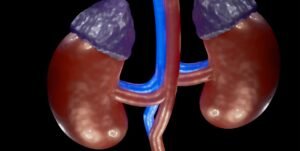
The most important interpretation caveat for MMA is kidney function. MMA is cleared in part through the kidneys, and concentrations can rise when kidney function declines. NCBI Bookshelf notes that MMA may be elevated in renal failure or volume depletion, while the NIH B12 fact sheet emphasizes that MMA rises with renal insufficiency. Mayo Clinic Laboratories’ catalog language similarly notes that kidney insufficiency, hypovolemia, and small intestinal bacterial overgrowth can contribute to mild methylmalonic acidemia or aciduria.
This matters for cost and ordering because a person buying MMA on its own may still need additional labs to interpret it responsibly. If the goal is a B12 workup, a low-cost CMP or kidney-function panel may be useful context because it includes creatinine and often reports eGFR. Without kidney context, a mildly high MMA can be hard to interpret, especially in older adults or anyone with known kidney disease.
Lab Tech Insight
When a lab professional sees a mildly elevated MMA, the next question is often not “How much B12 should this person take?” It is “What does the whole pattern show?” A borderline B12, high MMA, high homocysteine, macrocytosis on CBC, and normal kidney function point in a different direction than a high MMA with reduced eGFR and no other B12-related abnormalities.
Serum/plasma MMA vs urine MMA
Most consumers searching for methylmalonic acid test cost are looking for the blood test. Serum or plasma MMA is commonly used in adult vitamin B12 evaluation. Urine MMA testing also exists and can be used in certain metabolic or specialty contexts, including evaluation of methylmalonic acidemia and organic acid disorders. However, urine MMA is not automatically interchangeable with serum or plasma MMA for a routine adult B12 question.
If you are comparing prices, make sure the test name and specimen match. “Methylmalonic Acid, Serum or Plasma,” “MMA Blood Test,” and “Methylmalonic Acid Test” usually refer to a blood draw. “Methylmalonic Acid, Urine” or “organic acids” panels may involve a urine sample and a different price structure. Ordering the wrong specimen type can create unnecessary cost and may not answer the clinical question your healthcare professional is trying to evaluate.
Preparation and specimen factors that can affect ordering
Many MMA listings state no special preparation, but instructions vary by ordering provider and laboratory. Ulta’s MMA listing says no preparation is required. Own Your Labs’ shop listing includes a fasting note for basal values and says to avoid biotin supplementation for 72 hours before testing. Labcorp’s directory lists serum or plasma as acceptable specimens, requires separation from cells within one hour, and rejects certain tube types because citrate can interfere with the assay.
For a consumer, the most practical preparation steps are:
- Read the preparation instructions on your actual lab requisition, not just a general article.
- Bring a photo ID and the lab order or requisition number if your provider requires it.
- Ask the collection site whether an appointment is needed, especially for specialty tests.
- Do not stop prescribed medications or supplements solely to “clean up” a lab result unless your clinician tells you to.
- If you take high-dose biotin, check whether your ordering provider or lab has a hold-time recommendation.
MMA does not usually require shipping by the patient when collected at a patient service center. The blood sample is drawn, processed, and transported under the laboratory’s specimen-handling process. At-home finger-stick or micro-sampling is not the standard route for the serum/plasma MMA options compared here.
Ordering options: which route makes sense?
Use a standalone direct-order MMA test if you already know that MMA is the exact lab you want to bring to a healthcare professional or you are repeating a previously defined lab under guidance. Own Your Labs, HealthLabs, and Ulta Lab Tests are examples of services where a standalone MMA blood test was publicly listed.
Use a panel if the bundled markers are genuinely relevant. Quest Health’s expanded metabolism panel is much more expensive than standalone MMA, but it includes other markers such as B12, folate, homocysteine, glucose, A1c, thyroid-related hormones, and other metabolism-related tests. A panel can be convenient when the included biomarkers match the clinical question, but it is not the cheapest way to buy MMA alone.
Use your clinician’s order if you have symptoms, abnormal results, neurologic concerns, anemia, kidney disease, pregnancy, a history of gastrointestinal surgery, suspected malabsorption, or a complex medication history. A clinician can order MMA through Labcorp, Quest, a hospital lab, or another reference lab and can pair it with the right related tests. Insurance may cover some medically necessary testing, but the final cost depends on your plan, deductible, network, diagnosis coding, and lab billing.
State restrictions and availability
Direct-access lab testing is not equally available in every state. Own Your Labs states that New York residents cannot order from its service and that Massachusetts, Maryland, New Jersey, and Rhode Island residents are limited to at-home SiPhox kits; it also says these resident restrictions apply even if the person intends to test outside the state. Ulta’s FAQ says it does not offer services in New York, New Jersey, and Rhode Island, and a newer Ulta educational page also lists Hawaii as unavailable for its direct-access service. Quest Health’s help center states that its lab tests are not currently available in Arizona, Hawaii, or Puerto Rico, and individual tests can have additional age, state, or sex restrictions.
Because these rules can change and can be test-specific, treat the checkout screen and the provider’s current terms as the source of truth. If an online ordering service blocks your state, do not enter inaccurate address information to bypass the restriction. A clinician-ordered lab through your usual medical care may still be available even when a direct-to-consumer pathway is not.
How to avoid overpaying for an MMA test
- Compare total cost. Include the test price, required draw fee, physician or order fee, and any panel minimum.
- Do not buy a large panel just for MMA. If only MMA is needed, a standalone listing is usually cheaper.
- Check whether B12 and kidney-function labs are already available. If you recently had a CBC, CMP, B12, folate, or homocysteine, those results may reduce duplicate testing.
- Confirm specimen type. Serum/plasma MMA and urine MMA are not the same purchase.
- Look at turnaround time. A cheaper test is less useful if timing is critical and the provider’s average processing time is much longer than you need.
- Know cancellation rules. HealthLabs’ terms, for example, describe a 20% cancellation fee under certain cancellation conditions. Other providers have their own refund policies.
What high or normal MMA results can mean
A high MMA can fit with vitamin B12 deficiency, but it can also be influenced by reduced kidney function, age, hydration status, and less common metabolic conditions. In infants and children, markedly abnormal MMA patterns can relate to rare inherited metabolic disorders, which is a different clinical situation than routine adult B12 assessment.
A normal MMA makes clinically significant B12-related metabolic impairment less likely, but it does not replace medical assessment. Symptoms such as fatigue, tingling, weakness, dizziness, memory changes, pale skin, or shortness of breath can have many causes. A normal MMA does not rule out iron deficiency, thyroid disease, diabetes, kidney disease, inflammatory conditions, medication effects, sleep disorders, or neurologic problems.
Reference ranges also vary by laboratory. Labcorp’s directory lists a serum/plasma reference range of 0–378 nmol/L for its assay. NIH discusses MMA values using micromoles per liter, with values greater than 0.271 micromol/L suggesting possible B12 deficiency in the appropriate context. These units are related but not always displayed the same way across reports, so compare your result only with the reference interval printed on your lab report.
Frequently asked questions
How much does a methylmalonic acid test cost?
Standalone direct-order serum or plasma MMA blood tests reviewed for this article generally ranged from about $93.60 to $145.90 after the routine draw fee when applicable. Panel-based options can cost substantially more because they include other biomarkers. Always verify the final checkout total before purchasing.
Is an MMA test the same as a vitamin B12 test?
No. Vitamin B12 testing measures circulating B12. MMA testing measures a metabolite that can rise when B12-dependent metabolism is impaired. Clinicians often use MMA when B12 is borderline or when symptoms and basic labs need clarification.
Do I need to fast for a methylmalonic acid blood test?
Not always. Some MMA listings say no preparation is required, while others include fasting or supplement instructions. Follow the instructions on the requisition from the provider you actually use.
Can kidney problems make MMA high?
Yes. Reduced kidney function can raise MMA and make a result look more concerning for B12 deficiency than it would otherwise. Creatinine and eGFR are important context for interpretation.
Can I order an MMA blood test without my own doctor?
In many states, yes, through online lab-ordering services that arrange the order and send you to a participating collection site. Availability depends on the provider, your state, your age, and the specific test. If direct access is unavailable, a healthcare professional can order MMA through standard laboratory channels.
Why is methylmalonic acid more expensive than vitamin B12?
MMA is a more specialized test and is often measured by mass spectrometry. Vitamin B12 is a routine, high-volume immunoassay at many labs, which helps keep self-pay prices lower.
Should I order MMA alone or with homocysteine?
That depends on the clinical question. MMA is more specific to B12-related metabolism than homocysteine, but homocysteine can add context when interpreted with B12, folate, kidney function, and CBC results. Homocysteine can also rise for reasons unrelated to B12.
Practical next steps
If you are shopping for an MMA blood test, start by deciding whether you need standalone serum/plasma MMA or a broader B12utrition workup. Then compare the total checkout price, required draw fee, specimen type, turnaround time, and state availability. If you already have abnormal B12, anemia, neurologic symptoms, kidney disease, or complex health history, bring the question to a healthcare professional rather than relying on a single self-ordered result. MMA is most useful when it is interpreted as part of a pattern, not as a stand-alone answer.