Medical & affiliate disclosure: CTX Stat provides educational laboratory information and is not a substitute for professional medical advice, diagnosis, or treatment. CTX Stat may receive compensation from some outbound provider links when an affiliate program is active; provider comparisons and rankings are based on consumer fit, effective cost, access, policies, and reputation—not commission.
The A1C blood test, also called hemoglobin A1C, HbA1c, glycated hemoglobin, or glycohemoglobin, is a blood test that estimates your average blood sugar over the past 2 to 3 months. It is commonly used to screen for prediabetes and type 2 diabetes, help diagnose diabetes when results are confirmed appropriately, and monitor long-term glucose control in people already living with diabetes.
Quick take
- What it measures: the percentage of hemoglobin in red blood cells that has glucose attached to it.
- Typical preparation: fasting is usually not required for an A1C-only test, unless other tests are ordered at the same time.
- Common result ranges: below 5.7% is generally considered normal, 5.7% to 6.4% is in the prediabetes range, and 6.5% or higher is in the diabetes range when confirmed by appropriate testing.
- Important limitation: anemia, pregnancy, kidney failure, liver disease, recent blood loss or transfusion, and some hemoglobin variants can make A1C less reliable for some people.
What is an A1C blood test?
An A1C test measures how much glucose is attached to hemoglobin, the oxygen-carrying protein inside red blood cells. Because red blood cells circulate for roughly several months, A1C provides a longer-term view of blood sugar than a single finger-stick glucose or fasting glucose result. The National Institute of Diabetes and Digestive and Kidney Diseases explains that the test reflects average blood glucose over the past 3 months and is reported as a percentage.
The key idea is simple: when blood glucose is higher, more glucose attaches to hemoglobin. A higher A1C percentage usually means blood sugar has been higher on average over the recent past. The Centers for Disease Control and Prevention describes the A1C test as a simple blood test used for diabetes and prediabetes testing.
Why is an A1C test ordered?
A clinician may order an A1C test for several reasons:
- Screening: to look for prediabetes or type 2 diabetes in people with risk factors.
- Diagnosis: to help diagnose prediabetes or diabetes, usually with repeat or confirmatory testing when symptoms are absent.
- Monitoring: to follow long-term glucose control in someone already diagnosed with diabetes.
- Treatment review: to evaluate whether nutrition changes, physical activity, medications, or other parts of a diabetes plan are affecting average glucose.
The U.S. Preventive Services Task Force recommends screening nonpregnant adults ages 35 to 70 who have overweight or obesity for prediabetes and type 2 diabetes, with referral to effective preventive interventions when prediabetes is found. Some people may need earlier or more frequent testing based on risk factors, symptoms, pregnancy status, or a clinician’s assessment.
How to prepare for an A1C blood test
For an A1C-only test, you usually do not need to fast. You can typically eat and drink normally before the blood draw, unless your clinician or the lab gives different instructions. MedlinePlus notes that no special preparations are usually needed for a hemoglobin A1C test.
When fasting may still matter
If your order includes other tests, such as fasting glucose, a lipid panel, or a comprehensive metabolic panel, you may be told to fast because of those additional tests—not because of A1C itself. Always follow the instructions on your lab order.
What happens during the test?
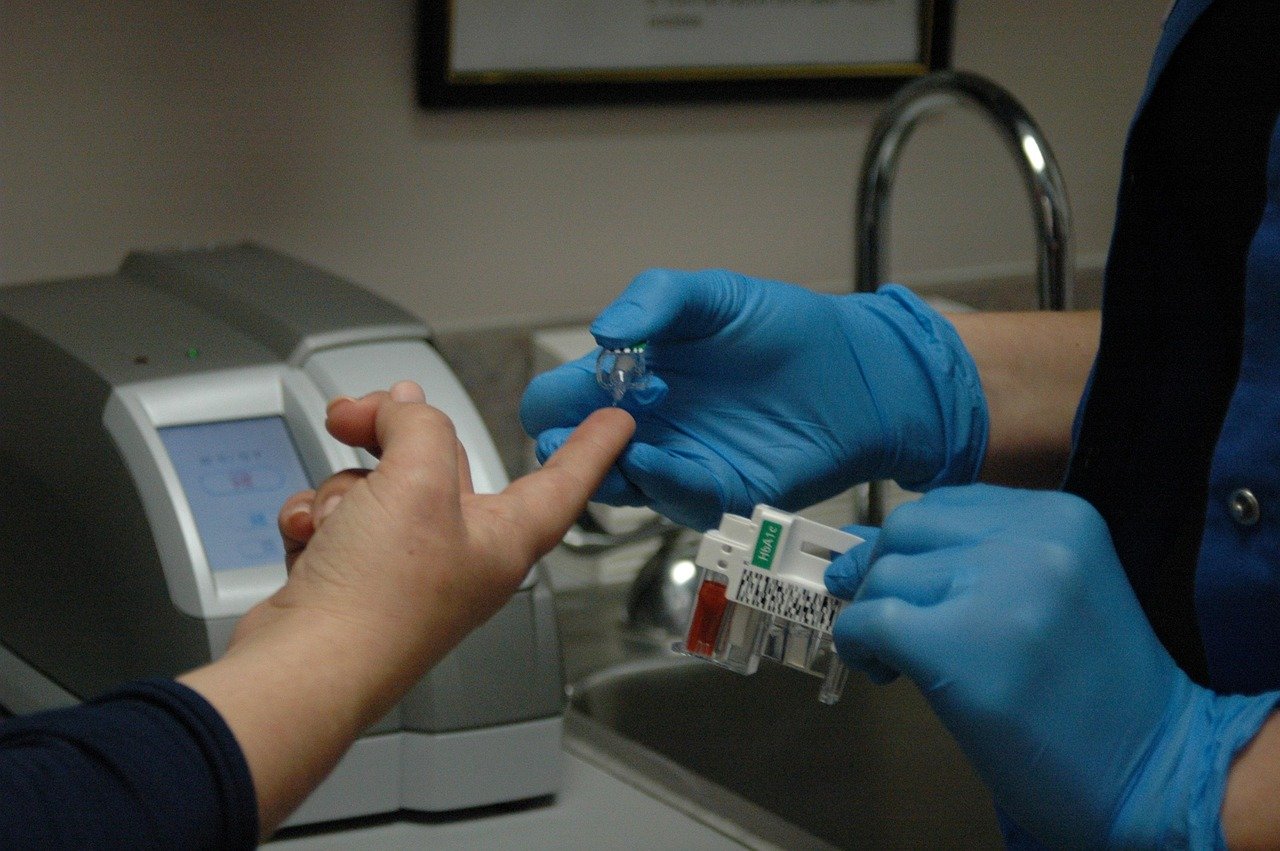
Most A1C tests use a small blood sample drawn from a vein in your arm. Some clinics also use point-of-care finger-stick A1C testing. Laboratory-based venous testing is commonly used for diagnosis and monitoring, while point-of-care testing may be used in some clinical settings for faster treatment decisions. If a result will be used to diagnose diabetes, ask whether the method is appropriate for diagnostic use and whether repeat testing is needed.
How to read A1C results
A1C is reported as a percentage. The following cutoffs are commonly used for adults who are not pregnant:
| A1C result | Common interpretation | What it may mean |
|---|---|---|
| Below 5.7% | Normal range | Average glucose is not in the prediabetes or diabetes range by A1C criteria. |
| 5.7% to 6.4% | Prediabetes range | Higher risk for developing type 2 diabetes; follow-up and prevention planning are important. |
| 6.5% or higher | Diabetes range | May support a diabetes diagnosis when confirmed by repeat A1C or another accepted diabetes test. |
These ranges are consistent with guidance from the CDC and the American Diabetes Association Standards of Care in Diabetes—2026. If you do not have clear symptoms of diabetes, a result in the diabetes range is generally confirmed with repeat testing or another accepted test, such as fasting plasma glucose or an oral glucose tolerance test.
A1C and estimated average glucose
Some lab reports include estimated average glucose, or eAG, which converts A1C into the same mg/dL units used by many glucose meters. The American Diabetes Association eAG/A1C calculator uses the formula: eAG = 28.7 × A1C − 46.7.
| A1C | Estimated average glucose |
|---|---|
| 6% | About 126 mg/dL |
| 7% | About 154 mg/dL |
| 8% | About 183 mg/dL |
| 9% | About 212 mg/dL |
| 10% | About 240 mg/dL |
eAG is an estimate, not a replacement for daily glucose monitoring when monitoring is part of your diabetes care plan. A1C can miss day-to-day highs and lows because it is an average.
What can affect A1C accuracy?
A1C is useful, but it is not perfect for every person. Anything that changes red blood cell lifespan or the relationship between hemoglobin and glucose can make A1C less accurate or harder to interpret.
| Factor | Why it matters |
|---|---|
| Recent blood loss or transfusion | Can change the mix and age of red blood cells, which may distort A1C. |
| Severe anemia or hemolysis | Can shorten red blood cell survival and may make A1C appear lower than expected. |
| Kidney failure or liver disease | May affect A1C interpretation and overall glucose assessment. |
| Pregnancy | A1C may be less reliable for certain pregnancy-related screening and diagnostic decisions. |
| Hemoglobin variants, such as some sickle cell traits or other hemoglobinopathies | Some variants can interfere with certain A1C methods or change interpretation. |
| Discordance with home glucose or CGM data | If A1C does not match repeated glucose readings, clinicians may consider alternate tests or method interference. |
The National Glycohemoglobin Standardization Program maintains detailed information about assay interferences and factors that affect HbA1c interpretation. The ADA also advises using plasma glucose criteria rather than A1C in conditions where the relationship between A1C and glycemia is altered, including some hemoglobin variants, pregnancy, G6PD deficiency, HIV, and conditions that change red blood cell turnover.
A1C vs. fasting glucose, random glucose, and glucose tolerance testing
A1C is only one way to evaluate glucose metabolism. A fasting plasma glucose test measures your blood sugar after fasting. A random plasma glucose test measures glucose at a single point in time and may be used when symptoms are present. An oral glucose tolerance test measures how your body responds after drinking a glucose-containing liquid.
These tests can sometimes disagree. For example, a person may have an A1C in the prediabetes range but a fasting glucose in the normal range, or the reverse. When results do not fit symptoms, risk factors, or home glucose data, clinicians may repeat testing or use a different test type.
How often should A1C be tested?
Testing frequency depends on why the test is being done. If A1C is used for screening and results are normal, timing for repeat screening depends on age, risk factors, and clinical judgment. The CDC notes that people with diabetes commonly have A1C tested at least twice a year, and sometimes more often depending on their management plan or other health conditions.
If you are using A1C to monitor diabetes, your personal A1C goal should be set with a clinician. The CDC describes a goal of 7% or less as common for many people with diabetes, but the ADA emphasizes individualized goals based on factors such as age, pregnancy status, other health conditions, hypoglycemia risk, and treatment burden.
Self-pay A1C test cost considerations
If you are paying cash for an A1C blood test, compare the effective total cost, not just the listed test price. A low test price may still have an added provider service fee, physician-order fee, processing fee, or separate charge depending on the ordering route.
The table below uses ordinary cost to the patient factors: listed test price, mandatory provider-charged fee shown on the provider page, collection route, and resulting effective cost for an A1C-focused listing. It is not a medical recommendation, and it does not include insurance billing, coupons, subscription pricing, state restrictions, or optional add-ons.
| Provider | A1C listing reviewed | Provider fee shown | Effective self-pay cost shown | Collection / ordering notes |
|---|---|---|---|---|
| Discounted Labs | $45 A1c – Hemoglobin (Hgb) | $10 lab processing fee charged by Discounted Labs | $55 | Online order; lab requisition and blood draw at a participating location. Source |
| Labcorp OnDemand | $39 Diabetes Risk (HbA1c) Test | No mandatory add-on fee shown on the cited product page | $39 | Online order; blood collection through Labcorp. Source |
| Private MD Labs | $49 Hemoglobin A1c with calculated mean plasma glucose | No mandatory add-on fee shown on the cited product page | $49 | Online order; Quest Diagnostics and Labcorp locations are listed as available through the provider. Source |
| Request A Test | $39 or $45 Hemoglobin A1C options shown | $4 service fee charged by Request A Test | $43 to $49 | Online order; choice of listed laboratory options. Source |
Before ordering, confirm that the test is available in your state, that the collection location is convenient, whether fasting is required because of any bundled tests, and whether results are intended for personal tracking or for follow-up with a clinician. If you want to compare current A1C test listings side by side, use the tool.
What to do after you get your result
Use your A1C result as a starting point for an informed conversation, not as a stand-alone diagnosis. A normal result may still need repeat screening later if risk factors are present. A prediabetes-range result is a reason to discuss lifestyle, weight, medication risk-benefit questions, and follow-up timing. A diabetes-range result usually needs confirmation if you do not have classic symptoms.
If you already have diabetes, compare the result with your individualized target and with other data you use, such as finger-stick readings, continuous glucose monitor summaries, medication changes, weight changes, illness, steroid use, or pregnancy status. If the A1C is unexpectedly high or low compared with your daily readings, ask whether a repeat A1C, fasting glucose, fructosamine, glycated albumin, or another approach is appropriate.
FAQs about the A1C blood test
Do I need to fast for an A1C blood test?
Usually no. Fasting is not typically required for an A1C-only test. If other tests are ordered at the same time, follow the fasting instructions for those tests.
Can A1C diagnose diabetes?
Yes, A1C can be used as one accepted test for diagnosing prediabetes and diabetes in many nonpregnant adults. If you do not have classic symptoms, a diabetes-range result is generally confirmed with repeat A1C or another diabetes test.
What is a normal A1C?
For many nonpregnant adults, an A1C below 5.7% is considered normal by standard diagnostic criteria. Your clinician may interpret your result differently if you have conditions that affect red blood cells, hemoglobin, pregnancy, kidney disease, or other factors.
Is A1C the same as blood sugar?
No. A glucose test measures blood sugar at a specific moment. A1C estimates average blood sugar over the past 2 to 3 months.
Why might my A1C and glucose meter readings not match?
A1C is a long-term average, while a meter or CGM shows shorter-term readings. Differences can also occur because of anemia, recent blood loss, pregnancy, kidney disease, hemoglobin variants, or other conditions that affect A1C accuracy.
How often should people with diabetes get an A1C test?
Many people with diabetes have A1C checked at least twice per year, and some need it more often depending on medication changes, pregnancy, health status, and whether glucose targets are being met.
Can I order an A1C blood test myself?
In many states, consumer lab services allow online ordering of A1C testing with a blood draw at a participating lab. Availability, ordering rules, fees, and follow-up options vary by provider and location.
Source Notes
- National Institute of Diabetes and Digestive and Kidney Diseases
- CDC — Centers for Disease Control and Prevention
- USPSTF: Prediabetes and Type 2 Diabetes Screening Recommendation
- MedlinePlus — Hemoglobin A1c Hba1c Test
- American Diabetes Association: Standards of Care in Diabetes—2026, Diagnosis and Classification
- American Diabetes Association: eAG/A1C Conversion Calculator
- NGSP: Factors that Interfere with HbA1c Test Results