Medical & affiliate disclosure: CTX Stat provides educational laboratory information and is not a substitute for professional medical advice, diagnosis, or treatment. CTX Stat may receive compensation from some outbound provider links when an affiliate program is active; provider comparisons and rankings are based on consumer fit, effective cost, access, policies, and reputation—not commission.
Quick take
- What it measures: A renin blood test measures renin activity or renin concentration in blood. Renin is made by the kidneys and helps regulate blood pressure, blood volume, sodium, potassium, and aldosterone.
- Why it is ordered: It is most often used in the evaluation of high blood pressure that is difficult to control, high blood pressure with low potassium, possible primary aldosteronism, renovascular hypertension, adrenal disorders, and some salt-wasting conditions.
- Usually paired with aldosterone: Renin is commonly interpreted together with an aldosterone test and, when appropriate, an aldosterone-to-renin ratio.
- Preparation matters: Time of day, posture, salt intake, potassium level, pregnancy, kidney function, and medications can all affect the result. Do not stop blood pressure medicines or diuretics unless the ordering clinician specifically tells you to.
- Results are not diagnostic by themselves: A high or low renin result narrows the possibilities, but interpretation depends on aldosterone, potassium, blood pressure pattern, medications, and the lab’s method and reference range.
What is renin?
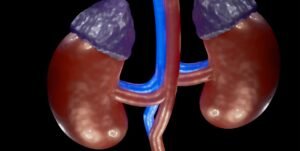
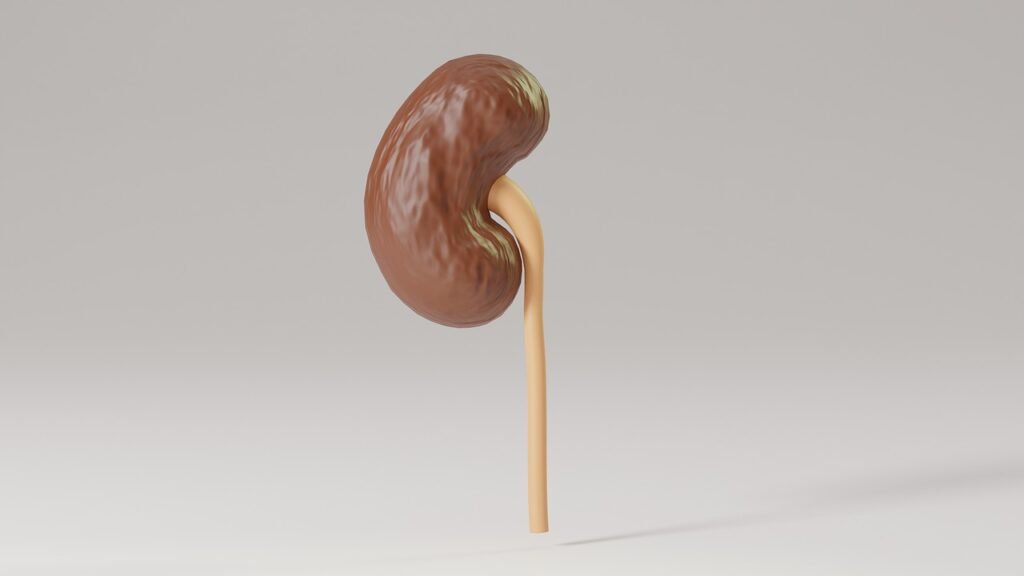
Renin is an enzyme-like hormone produced by specialized cells in the kidneys. Its main job is to help the body respond when blood pressure, blood flow to the kidneys, or sodium delivery to the kidney tubules is low. Renin starts a chain reaction called the renin-angiotensin-aldosterone system, often shortened to RAAS.
In simplified terms, renin helps convert angiotensinogen into angiotensin I. Angiotensin I is then converted into angiotensin II, a powerful blood-vessel constrictor that also stimulates the adrenal glands to release aldosterone. Aldosterone tells the kidneys to retain sodium and water and excrete more potassium. This is one reason renin and aldosterone are so closely linked in blood pressure and potassium evaluation. Mayo Clinic Laboratories summarizes this pathway in its clinical information for plasma renin activity testing, noting that renin from the kidney helps generate angiotensin I and that angiotensin II stimulates aldosterone release from the adrenal cortex.
Because the RAAS responds to volume, salt, kidney blood flow, posture, and medications, a renin result is not like a simple “positive” or “negative” test. It is a physiologic measurement that must be interpreted in context.
What does a renin blood test measure?
A renin blood test measures renin in a blood sample, but labs may report renin in different ways. The two broad categories are:
- Plasma renin activity, or PRA: This measures how much angiotensin I is generated over time under laboratory conditions. It reflects the functional activity of renin in the sample.
- Direct renin concentration, or DRC: This measures the concentration of renin protein using an immunoassay method.
Many U.S. lab reports use plasma renin activity, often in units such as ng/mL/hour. Some systems use direct renin concentration in units such as mU/L or pg/mL. The two are not interchangeable without method-specific interpretation. If your report says “PRA,” “renin activity,” or “plasma renin activity,” it is not the same measurement as a direct renin concentration test.
Major reference laboratories describe plasma renin activity as useful in evaluating primary aldosteronism and secondary aldosteronism, and Labcorp notes that PRA is affected by posture, time of day, dietary salt intake, kidney function, and several medication classes. MedlinePlus also emphasizes that renin and aldosterone levels often move together and can be influenced by sitting or standing position, stress level, time of day, and medicines.
| Term on report | What it generally means | Why it matters |
|---|---|---|
| Renin activity / PRA | Functional activity of renin, commonly reported as angiotensin I generated per hour | Often used with aldosterone to calculate an aldosterone-to-renin ratio |
| Direct renin concentration / DRC | Amount of renin protein measured by immunoassay | Can be used for aldosterone-renin interpretation, but cutoffs differ from PRA |
| Aldosterone-to-renin ratio / ARR | A calculated relationship between aldosterone and renin | Used as a screening tool for primary aldosteronism in appropriate patients |
Why might a renin blood test be ordered?
A renin blood test is most often ordered when a clinician is trying to understand whether a blood pressure or potassium problem is related to the kidneys, adrenal glands, or RAAS signaling. It is commonly ordered with an aldosterone test rather than alone.
High blood pressure that is difficult to control
MedlinePlus explains that renin testing may be used when a person has high blood pressure, especially if it does not respond well to standard blood pressure medicines. In this setting, the goal is not simply to confirm that blood pressure is high. The goal is to look for potentially treatable causes, such as primary aldosteronism or renovascular disease.
High blood pressure with low potassium
Low potassium, called hypokalemia, can occur for many reasons, including diuretics, gastrointestinal losses, and endocrine disorders. When high blood pressure and low potassium occur together, clinicians often consider disorders involving aldosterone and renin. Symptoms of low potassium can include muscle weakness, muscle cramps, fatigue, constipation, excessive thirst, and heart rhythm symptoms, although some people have no obvious symptoms.
Screening for primary aldosteronism
Primary aldosteronism is a condition in which the adrenal glands make too much aldosterone relative to the body’s needs. It can cause high blood pressure and sometimes low potassium. The Endocrine Society’s primary aldosteronism guideline recommends screening appropriate people with hypertension using aldosterone plus renin, with calculation of the aldosterone-to-renin ratio. The guideline also notes that screening is generally performed in the morning with the person seated, while avoiding dietary sodium restriction for the few days before screening, and that potassium should be measured to help interpret aldosterone accurately.
Possible renovascular hypertension
If blood flow to one or both kidneys is reduced, the kidneys may respond as though the body needs higher blood pressure, leading to increased renin and aldosterone activity. This can happen with renal artery stenosis or other causes of reduced kidney perfusion. A renin result alone does not diagnose renovascular hypertension, but it may be part of a broader evaluation.
Other adrenal, kidney, or salt-balance disorders
Renin can also be used in selected evaluations of adrenal insufficiency treatment, congenital adrenal hyperplasia, salt-wasting disorders, severe volume depletion, pregnancy-related physiology, and rare renin-producing tumors. These are less common reasons for testing and usually require specialist interpretation.
How to prepare for a renin blood test
Preparation is one of the most important parts of renin testing. Small differences in posture, timing, salt intake, potassium level, and medication use can change results enough to affect interpretation.
Follow the ordering clinician’s instructions exactly
Do not stop blood pressure medicines, diuretics, hormone therapy, birth control pills, anti-inflammatory medicines, or supplements unless the clinician who ordered the test tells you to. Stopping blood pressure medicine can be unsafe. In some cases, clinicians intentionally test while a person remains on medications, then interpret the result with those limitations in mind. In other cases, they may switch medications or repeat testing later if it is safe.
Ask about medications that can affect renin
Medication effects are a major reason renin results can be confusing. Labcorp lists diuretics, spironolactone, ACE inhibitors, angiotensin receptor blockers, and some calcium channel blockers among drugs that tend to increase plasma renin activity. It lists beta-blockers, clonidine, alpha-methyldopa, and nonsteroidal anti-inflammatory drugs among drugs that tend to decrease it. The Endocrine Society guideline also describes situations where interfering medications may need to be withdrawn before repeat screening when safe and feasible.
| Factor | Typical effect or concern | What to ask before testing |
|---|---|---|
| Posture | Renin is usually higher after standing or sitting upright than after lying down | Should I be seated, upright for a certain time, or drawn after lying down? |
| Time of day | Renin and aldosterone vary through the day | Should the sample be drawn in the morning? |
| Salt intake | Low sodium intake can raise renin; high sodium intake can suppress renin | Should I keep my usual diet or avoid sodium restriction? |
| Potassium level | Low potassium can affect aldosterone interpretation | Will potassium be checked at the same time? |
| Medications | Many blood pressure and kidney-related medicines alter renin | Should any medication be continued, changed, or temporarily held? |
Posture and timing
Posture can be documented on the lab request or result because renin rises when the body has been upright. For some renin-aldosterone evaluations, blood is drawn in the morning with the person seated. Some collection instructions specify that the patient should be ambulatory or upright before collection; others specify a seated draw. Mayo Clinic Laboratories’ specimen instructions for one plasma renin activity test call for collection from a seated patient using a chilled EDTA tube and rapid processing, illustrating how specific lab requirements can be.
Fasting
Many renin tests do not require fasting, but fasting instructions can vary depending on what other tests are ordered at the same time. If aldosterone, electrolytes, kidney function tests, glucose, lipids, or other blood work are being collected together, follow the instructions for the full lab order.
Salt and potassium
Unless instructed otherwise, do not dramatically change your salt intake right before the test. Sudden sodium restriction can raise renin and may make the result harder to interpret. The Endocrine Society specifically advises avoiding dietary sodium restriction during the few days before primary aldosteronism screening. If your potassium is low, your clinician may correct it and repeat testing because potassium status can influence aldosterone interpretation.
What happens during the blood draw?
A renin blood test is collected from a vein, usually in the arm. The blood draw itself typically takes only a few minutes. You may feel a brief sting when the needle goes in, and mild bruising or soreness can occur afterward.
The behind-the-scenes handling can be more specialized than for routine blood work. Depending on the laboratory method, the sample may need to be collected into an EDTA tube, chilled, spun quickly in a centrifuge, separated, and frozen. Mayo Clinic Laboratories, for example, lists chilled EDTA collection and immediate freezing for its plasma renin activity specimen requirements. These handling steps are one reason renin testing may not be available at every draw site or may require appointment scheduling.
Turnaround time varies by laboratory. Some reference laboratories report results within a few business days after the performing lab receives the specimen, while consumer-facing ordering sites may estimate roughly a week. Delays can occur if the sample needs to be transported to a specialty lab, if collection requirements were not met, or if confirmatory or repeat testing is needed.
How to interpret renin blood test results
Renin results should be interpreted with the reference range printed on your own report. Normal ranges vary by laboratory method, posture, age, sodium status, and whether the test measured PRA or direct renin concentration. For example, Mayo Clinic Laboratories publishes different adult PRA reference ranges for sodium-depleted upright and sodium-replete upright states, and MedlinePlus notes that normal values vary among labs and that posture affects results.
What a low renin result can mean
Low or suppressed renin means the kidney is not signaling strongly through the renin pathway at the time of the blood draw. That can happen when the body senses adequate or expanded circulating volume, when sodium intake is high, when kidney renin production is reduced, or because of certain medications.
One important pattern is low renin with inappropriately high aldosterone. This pattern can suggest primary aldosteronism in the right clinical setting. The Endocrine Society guideline describes a positive screening pattern in most circumstances as suppressed renin with aldosterone that is high relative to renin, plus an elevated aldosterone-to-renin ratio, while emphasizing that thresholds depend on assay, units, medications, pretest probability, and local laboratory cut points.
Low renin can also be seen with beta-blockers, clonidine, alpha-methyldopa, nonsteroidal anti-inflammatory drugs, high salt intake, some kidney function changes, or other causes of volume expansion. It does not automatically mean primary aldosteronism.
What a high renin result can mean
High renin suggests the kidneys are receiving or generating signals consistent with lower effective blood volume, lower sodium delivery, lower kidney perfusion, or medication effects. Possible explanations include diuretic use, salt restriction, dehydration, renovascular disease, some kidney disorders, heart failure physiology, adrenal insufficiency or under-replacement in selected cases, and rare renin-producing tumors.
A pattern of high renin with high aldosterone can be consistent with secondary aldosteronism, where aldosterone is high because renin is driving it. A pattern of high renin with low aldosterone may raise questions about adrenal aldosterone production, medication effects, salt-wasting disorders, or other endocrine issues, depending on the clinical scenario.
Why aldosterone is usually measured at the same time
Renin and aldosterone are a pair. A renin result is often most useful when paired with aldosterone because the relationship between the two helps distinguish adrenal-driven from kidney-driven or volume-driven causes.
| General pattern | Possible interpretation | Common next step |
|---|---|---|
| Low renin + high aldosterone | May suggest primary aldosteronism if preparation and units support interpretation | Calculate ARR; consider repeat or confirmatory testing |
| High renin + high aldosterone | May suggest secondary aldosteronism, diuretic effect, salt restriction, or reduced kidney perfusion | Review medications, sodium status, kidney evaluation, and blood pressure history |
| High renin + low aldosterone | May suggest adrenal aldosterone production issues or medication-related effects in the right context | Check electrolytes, cortisol/adrenal evaluation if indicated, and specialist input |
| Low renin + low aldosterone | May occur with high sodium intake, some medications, kidney-related suppression, or other low-renin hypertension states | Interpret with blood pressure, potassium, kidney function, and medication list |
About the aldosterone-to-renin ratio
The aldosterone-to-renin ratio, or ARR, is a screening calculation, not a final diagnosis. It can be falsely high if renin is suppressed by medications such as beta-blockers, and it can be falsely low if renin is raised by diuretics, ACE inhibitors, or angiotensin receptor blockers. The Endocrine Society guideline gives example screening thresholds, including PRA at or below 1 ng/mL/hour with aldosterone above method-specific cutoffs and an elevated ARR, but it explicitly cautions that no single cut point is perfect and that local assay cutoffs and clinical context matter.
Limitations of the test
- It is highly context-dependent. A “normal” result may not rule out disease if preparation, medication effects, or potassium abnormalities interfered.
- Different methods give different numbers. PRA and direct renin concentration should not be interpreted using the same cutoffs.
- Specimen handling matters. Improper temperature, delayed processing, or the wrong tube can lead to rejection or unreliable results.
- Medication safety comes first. Some people cannot safely stop antihypertensive therapy just to optimize testing.
- Screening is not confirmation. Abnormal renin-aldosterone screening may require repeat testing, confirmatory testing, imaging, adrenal vein sampling, or specialist evaluation depending on the suspected condition.
Cost and ordering considerations
The cost of a renin blood test depends on whether it is ordered through insurance, a clinician’s office, a hospital outpatient department, a direct-to-consumer lab marketplace, or a reference laboratory account. It may also depend on whether aldosterone, electrolytes, kidney function tests, or a full aldosterone-renin ratio panel are ordered at the same time.
The CPT code commonly associated with plasma renin activity testing is 84244, as shown by Mayo Clinic Laboratories and Walk-In Lab. CPT coding is not a guarantee of coverage or a final bill; your plan’s allowed amount, deductible, coinsurance, network status, and whether the test is considered medically necessary all matter. CMS also notes that listing a test code or payment amount on the Medicare Clinical Laboratory Fee Schedule does not imply that Medicare will cover the test.
For self-pay examples, public online lab-ordering pages have listed plasma renin activity around the mid-$80s to mid-$90s before or with added fees. For example, Ulta Lab Tests displayed a Plasma Renin Activity Test at $83.95, while Walk-In Lab displayed a Renin Activity Plasma Test at $95.00 plus a $6.00 per-order physician fee, for an effective listed total of $101.00 before any optional add-ons. These examples can change, may vary by state or draw-site availability, and may not include additional tests your clinician needs.
If you are comparing options, compare the effective total cost: test price, mandatory provider or physician-order fees, draw fees, shipping or processing fees if any, whether aldosterone must be purchased separately, and whether the ordering pathway includes review by a licensed clinician. Also confirm that the draw site can meet renin specimen handling requirements, especially chilled or frozen processing when required.
Practical next steps after you get results
- Read the units and method first. Identify whether your result is plasma renin activity or direct renin concentration. Do not compare your number with a cutoff meant for a different method.
- Check whether aldosterone and potassium were measured. Renin alone is often incomplete. Aldosterone and potassium help determine whether the result fits a meaningful pattern.
- Write down your test conditions. Note the time of draw, whether you were seated, standing, or lying down, your usual salt intake, and any recent medication changes.
- Review medications with the ordering clinician. Ask whether your current medicines could have raised or lowered renin and whether repeat testing is needed.
- Ask what diagnosis is being evaluated. The next step differs depending on whether the concern is primary aldosteronism, renovascular hypertension, adrenal insufficiency, medication monitoring, or another condition.
- Do not self-treat potassium or blood pressure based only on renin. Potassium supplements, salt changes, and blood pressure medication changes can be risky without clinical supervision.
Questions to bring to your appointment
- Was my renin test plasma renin activity or direct renin concentration?
- Was aldosterone measured at the same time, and was an ARR calculated?
- Were my potassium and kidney function results normal?
- Could my blood pressure medicines, diuretics, NSAIDs, birth control, or supplements have affected the result?
- Do I need repeat testing under standardized posture, time-of-day, sodium, or medication conditions?
- If primary aldosteronism is possible, what confirmatory testing or referral is appropriate?
FAQs about the renin blood test
Is a renin blood test used to diagnose high blood pressure?
Not by itself. Blood pressure is diagnosed by blood pressure measurements. A renin blood test helps evaluate why high blood pressure may be occurring, especially when it is resistant to treatment, occurs with low potassium, starts at a younger age, or raises concern for an adrenal or kidney-related cause.
Do I need an aldosterone test with renin?
Often, yes. Renin is commonly ordered with aldosterone because the relationship between the two can be more informative than either result alone. The aldosterone-to-renin ratio is a common screening tool for primary aldosteronism in appropriate patients.
Do I need to fast before a renin blood test?
Many renin tests do not require fasting, but instructions vary by lab and by the other tests ordered at the same visit. Follow the instructions on your lab order. If you are unsure, ask whether you should fast, keep your usual salt intake, and arrive at a particular time of day.
Can blood pressure medication affect renin results?
Yes. Diuretics, ACE inhibitors, angiotensin receptor blockers, mineralocorticoid receptor antagonists, beta-blockers, clonidine, NSAIDs, and other medicines can alter renin or the aldosterone-to-renin ratio. Do not stop any medication unless your clinician tells you to do so.
What does low renin mean?
Low renin can occur for several reasons, including high sodium intake, expanded blood volume, medication effects, kidney-related changes, or primary aldosteronism when aldosterone is inappropriately high. The meaning depends on aldosterone, potassium, blood pressure history, medications, and test conditions.
What does high renin mean?
High renin can occur with low salt intake, diuretic use, dehydration, reduced kidney blood flow, some kidney disorders, heart failure physiology, adrenal insufficiency-related issues, or rare renin-producing tumors. It is usually interpreted with aldosterone and other labs.
Can I order a renin blood test myself?
In some states and through some online lab-ordering services, consumers may be able to purchase plasma renin activity testing through a clinician-authorized ordering pathway. Availability varies. Because interpretation is complex and preparation matters, it is usually best to involve the clinician who is evaluating your blood pressure, potassium, kidney, or adrenal concern.
When should I seek urgent care?
Seek urgent medical care for severe symptoms such as chest pain, shortness of breath, fainting, severe weakness, confusion, symptoms of stroke, very high blood pressure with symptoms, or signs of a serious heart rhythm problem. A renin result is not meant to guide emergency decisions without clinical evaluation.