Medical & affiliate disclosure: CTX Stat provides educational laboratory information and is not a substitute for professional medical advice, diagnosis, or treatment. CTX Stat may receive compensation from some outbound provider links when an affiliate program is active; provider comparisons and rankings are based on consumer fit, effective cost, access, policies, and reputation—not commission.
Quick take: The most commonly used blood tests for prediabetes are hemoglobin A1C, fasting plasma glucose, and the 2-hour oral glucose tolerance test. Each test looks at blood sugar from a different angle, so it is possible for one test to be normal while another falls in the prediabetes range. A single borderline result is a reason to follow up, not a reason to self-diagnose.
What prediabetes means
Prediabetes means blood glucose is higher than expected but not high enough to meet laboratory criteria for diabetes. It is sometimes described as “borderline diabetes,” but that phrase can be misleading. Prediabetes is not a harmless label; it signals increased risk for type 2 diabetes and is also associated with higher cardiometabolic risk. At the same time, it is a window of opportunity because lifestyle changes and, for some people, medication can reduce the chance of progression.
The Centers for Disease Control and Prevention notes that more than 2 in 5 American adults have prediabetes, and many do not know it. That is why blood testing matters: symptoms are often absent, and risk cannot be reliably judged by appearance, body weight, or how a person feels.
Prediabetes testing is usually done in a primary care setting, at a laboratory after a clinician order, or through certain direct-access lab services where allowed. The tests below are blood tests; urine glucose, home glucose meter readings, and continuous glucose monitor patterns may provide clues in some situations but are not the standard way to diagnose prediabetes.
The main blood tests for prediabetes
Authoritative clinical references, including the American Diabetes Association Standards of Care and the National Institute of Diabetes and Digestive and Kidney Diseases, describe three recommended blood testing methods for identifying prediabetes: A1C, fasting plasma glucose, and the 2-hour oral glucose tolerance test.
| Test | What it measures | Fasting needed? | Common use |
|---|---|---|---|
| Hemoglobin A1C | Percentage of hemoglobin with glucose attached; reflects average blood glucose over roughly the past 2 to 3 months | No | Convenient screening and follow-up test |
| Fasting plasma glucose | Blood glucose at one point in time after no caloric intake, usually overnight | Yes, typically at least 8 hours | Common screening test, often ordered with other metabolic labs |
| 2-hour oral glucose tolerance test | Blood glucose response 2 hours after drinking a 75-gram glucose solution | Yes, before the first blood draw | More involved test; can identify impaired glucose tolerance that fasting glucose or A1C may miss |
Hemoglobin A1C
The A1C test is popular because it does not require fasting and is less affected by what you ate yesterday than a single glucose measurement. It estimates longer-term glycemic exposure by measuring the percentage of red blood cell hemoglobin that has glucose attached. According to the NIDDK overview of A1C testing, healthcare professionals use A1C to help diagnose prediabetes and diabetes and to monitor diabetes over time.
For screening, an A1C in the prediabetes range suggests that average glucose has been running above normal. However, A1C is not a direct glucose measurement. It depends partly on red blood cell lifespan and hemoglobin chemistry, which is why certain medical conditions can make it less reliable.
Fasting plasma glucose
Fasting plasma glucose, often abbreviated FPG, measures glucose in the liquid portion of blood after an overnight fast. The ADA defines fasting for this purpose as no caloric intake for at least 8 hours. This test is straightforward and widely available, and it is often bundled with other blood work such as a comprehensive metabolic panel or lipid panel.
Fasting glucose is especially useful for detecting impaired fasting glucose, a pattern in which the liver releases or maintains too much glucose during fasting. It may not catch everyone with abnormal glucose handling after meals, which is one reason another test may be used if risk is high or results do not match the clinical picture.
2-hour oral glucose tolerance test
The oral glucose tolerance test, or OGTT, is a more time-consuming test. After a fasting blood draw, you drink a measured glucose solution, and blood is drawn again at set intervals, commonly at 2 hours for prediabetes and diabetes evaluation. The ADA diagnostic criteria specify a 75-gram glucose load for the standard adult OGTT used in this context.
OGTT can detect impaired glucose tolerance, meaning blood sugar rises higher or stays elevated longer than expected after a glucose challenge. This may be important when A1C or fasting glucose is normal but suspicion remains because of risk factors, a history of gestational diabetes, or symptoms that require medical evaluation. The tradeoff is convenience: the test requires fasting, a glucose drink, and time at the collection site.
Prediabetes and diabetes result ranges
The following ranges are commonly used for nonpregnant adults. Laboratories may display reference intervals differently, and clinicians interpret results in context. Pregnancy has separate screening and diagnostic pathways, especially for gestational diabetes.
| Test | Normal range | Prediabetes range | Diabetes range |
|---|---|---|---|
| A1C | Below 5.7% | 5.7% to 6.4% | 6.5% or higher |
| Fasting plasma glucose | Below 100 mg/dL | 100 to 125 mg/dL | 126 mg/dL or higher |
| 2-hour OGTT glucose | Below 140 mg/dL | 140 to 199 mg/dL | 200 mg/dL or higher |
These cutoffs are screening and diagnostic thresholds, not a complete health assessment. For example, an A1C of 5.6% and an A1C of 5.7% are numerically close, even though one is just below and one just inside the prediabetes range. Likewise, a fasting glucose of 124 mg/dL is closer to the diabetes threshold than a fasting glucose of 101 mg/dL. Trend, repeat testing, risk factors, and other metabolic markers all matter.
When results are in the diabetes range, diagnosis usually requires confirmation if there is no unequivocal hyperglycemia. The ADA explains that, in the absence of clear symptoms or crisis-level hyperglycemia, diagnosis requires two abnormal results, either from the same sample using different tests or from repeat testing. Prediabetes results are also commonly followed up, especially when the value is borderline, unexpected, or inconsistent with another test.
Which test is most useful?
There is no single best prediabetes test for every person. Each test has advantages and blind spots.
| Situation | Test that may be useful | Why |
|---|---|---|
| You want a convenient screening test and cannot easily fast | A1C | No fasting is required, and it reflects longer-term glucose exposure |
| You are already getting morning metabolic labs | Fasting plasma glucose | Easy to add when fasting blood work is already planned |
| A1C and fasting glucose do not match risk factors or symptoms | Repeat testing or OGTT | Different tests can detect different patterns of dysglycemia |
| There is a history of gestational diabetes | Clinician-selected testing, often including glucose-based testing | Past gestational diabetes increases future type 2 diabetes risk and may warrant closer follow-up |
| A condition may make A1C unreliable | Fasting plasma glucose or OGTT | Plasma glucose criteria are preferred when A1C does not accurately reflect glycemia |
A practical approach is to start with the test your clinician recommends based on your risk, timing, medications, and medical history. If the result is normal but concern remains, asking whether another test or repeat testing is appropriate is reasonable. The NIDDK notes that some people can have a normal fasting glucose with an A1C in the prediabetes range, or the reverse. That mismatch does not automatically mean the lab is wrong; it often reflects the fact that the tests measure different aspects of glucose regulation.
Who should consider screening?
The U.S. Preventive Services Task Force recommends screening for prediabetes and type 2 diabetes in asymptomatic adults ages 35 to 70 who have overweight or obesity, and offering or referring people with prediabetes to effective preventive interventions. Clinicians may also screen outside that exact group when risk factors are present, such as a history of gestational diabetes, polycystic ovary syndrome, high blood pressure, abnormal cholesterol, family history of type 2 diabetes, or belonging to a population with higher diabetes risk.
If you have symptoms such as excessive thirst, frequent urination, unexplained weight loss, blurry vision, or recurrent infections, the question is no longer routine prediabetes screening. Those symptoms warrant prompt medical evaluation for diabetes or other causes.
How to prepare for prediabetes blood tests
Preparation depends on the test.
- A1C: No fasting is needed. You can usually eat and drink normally unless you are having other fasting labs at the same visit.
- Fasting plasma glucose: Follow the lab’s fasting instructions, usually no calories for at least 8 hours. Water is typically allowed and encouraged unless you were told otherwise.
- OGTT: You usually need to fast before the first blood draw and remain at the collection site during the test. Do not eat, drink caloric beverages, smoke, or exercise during the waiting period unless the laboratory gives different instructions.
Ask the ordering clinician whether to take usual medications before testing. Do not stop prescribed medication on your own. Some medicines can affect glucose levels, but the decision to hold or continue them depends on why you take them and the risk of missing a dose.
Try to test when you are in your usual state of health. Acute illness, recent surgery, major stress, steroid medication, and unusual changes in eating or activity can temporarily affect glucose. If a result seems surprising, context is one reason clinicians may repeat it.
Limitations, false clues, and common sources of confusion
A1C can be misleading in some conditions
A1C assumes a fairly predictable red blood cell lifespan. The ADA recommends using plasma glucose criteria rather than A1C when the relationship between A1C and actual glycemia may be altered, including some hemoglobin variants, pregnancy, glucose-6-phosphate dehydrogenase deficiency, HIV, and conditions that change red blood cell turnover. Recent blood loss, transfusion, some anemias, advanced kidney disease, and certain hemoglobin disorders may also complicate interpretation.
If your A1C does not fit your fasting glucose, symptoms, or home readings, ask whether a glucose-based test is more appropriate. This is not about choosing the “better” number; it is about choosing the measurement that best reflects your physiology.
Fasting glucose is a snapshot
Fasting plasma glucose captures one moment. It can vary from day to day based on sleep, stress hormones, illness, recent activity, alcohol use, medications, and how closely fasting instructions were followed. A single mildly elevated fasting glucose often leads to repeat testing or A1C comparison rather than an immediate conclusion.
OGTT is sensitive but less convenient
OGTT can reveal post-challenge glucose problems, but it requires more time and stricter preparation. Results can be affected if you do not fast correctly, cannot finish the glucose drink, vomit, walk around significantly during the test, or are acutely ill. Some people feel nauseated or lightheaded after the glucose drink.
Home glucose devices are not the same as diagnostic lab tests
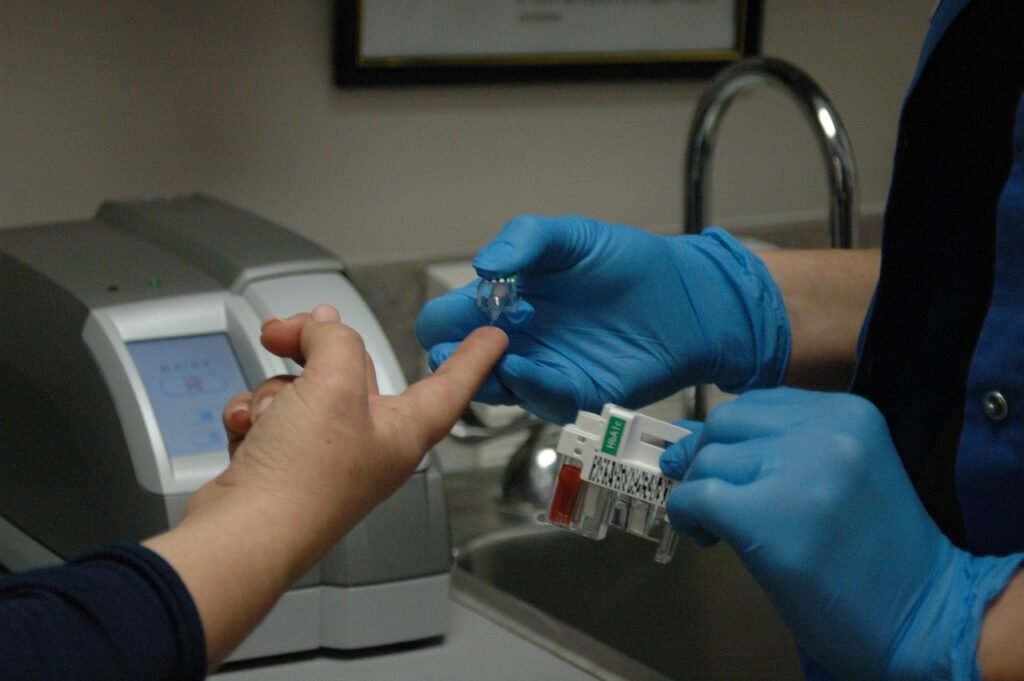
Fingerstick meters and continuous glucose monitors can be helpful for people who are instructed to monitor glucose, but they are not interchangeable with standardized diagnostic laboratory testing. Device accuracy, calibration, sensor lag, and testing conditions can all affect readings. If personal device data raises concern, bring the information to a healthcare professional and ask what confirmatory lab testing makes sense.
Cost and ordering considerations
The cost of prediabetes blood testing depends on how the test is ordered, whether insurance is used, the laboratory, and whether other services are billed. In a primary care setting, screening may be covered when it meets preventive-care criteria, but coverage varies by plan, diagnosis code, network status, deductible, and whether the visit itself creates a separate charge. People paying cash may see a posted lab price, a clinician-ordering or authorization fee, a draw fee, or a service fee depending on the ordering pathway.
When comparing options, look at the effective total cost, not just the advertised test price. For example, a low listed price for A1C may not include the blood draw, required clinician authorization, specimen handling, or follow-up visit. Conversely, a primary care visit may cost more up front but include medical interpretation, risk assessment, medication review, blood pressure measurement, cholesterol testing, and a prevention plan.
Availability also matters. A1C and fasting plasma glucose are widely available. OGTT may require an appointment and a site that can accommodate timed blood draws. Direct-access testing rules vary by state, and some services do not operate in every location. If you need documentation for a medical record, workplace requirement, surgery clearance, fertility care, or pregnancy-related care, confirm that the ordering route and laboratory report will be accepted.
What to do if a result is in the prediabetes range
A prediabetes-range result should prompt a plan. The plan may include repeating the same test, confirming with a different test, assessing related risk factors, and discussing prevention. Your clinician may review weight history, waist circumference, blood pressure, cholesterol, liver enzymes, kidney function, sleep apnea risk, family history, pregnancy history, and medications that can raise glucose.
Prevention does not have to mean dramatic changes all at once. The CDC National Diabetes Prevention Program is built around evidence from the Diabetes Prevention Program study, in which a structured lifestyle intervention focused on healthier eating, at least 150 minutes per week of physical activity, and 5% to 7% weight loss for participants with overweight reduced type 2 diabetes risk by 58% in high-risk adults. For some people, clinicians also consider medication such as metformin, especially when risk is higher, but that decision is individualized.
Follow-up timing varies. If results are near the diabetes threshold, repeat testing may happen sooner. If results are mildly abnormal and a prevention plan is underway, retesting may be scheduled after several months. If results are normal but risk factors remain, periodic screening may still be advised.
Questions to ask after prediabetes testing
- Was my result clearly normal, borderline, in the prediabetes range, or in the diabetes range?
- Should this test be repeated or confirmed with a different test?
- Could anemia, pregnancy, a hemoglobin variant, kidney disease, medication, or recent illness affect my result?
- Should I also check cholesterol, blood pressure, kidney function, or liver markers?
- What prevention plan is realistic for me over the next 3 to 6 months?
FAQs about blood tests for prediabetes
What blood tests are used for prediabetes?
The three main blood tests are A1C, fasting plasma glucose, and the 2-hour oral glucose tolerance test. A1C reflects average blood glucose over about 2 to 3 months, fasting plasma glucose measures glucose after an overnight fast, and OGTT measures how your body handles a glucose challenge.
What A1C level means prediabetes?
An A1C of 5.7% to 6.4% is commonly classified as prediabetes. An A1C of 6.5% or higher is in the diabetes range, but a diagnosis usually requires confirmation unless there are classic symptoms or unequivocally high glucose levels.
Is fasting glucose or A1C better for prediabetes?
Neither is best for everyone. A1C is convenient because fasting is not required, while fasting plasma glucose directly measures glucose after an overnight fast. Some people have different classifications on the two tests, so clinicians may use both or add an OGTT when the answer is unclear.
Do I need to fast for prediabetes blood testing?
You do not need to fast for A1C. You usually do need to fast for fasting plasma glucose and for the beginning of an OGTT. Follow the instructions from the ordering clinician or laboratory because other tests drawn at the same time may have their own preparation requirements.
Can prediabetes be diagnosed from a fingerstick?
Diagnostic decisions are typically based on standardized laboratory blood tests, not home fingerstick readings. A fingerstick value can be a useful clue, especially if very high or repeatedly abnormal, but it should be discussed with a healthcare professional and confirmed appropriately.
Can I have prediabetes with a normal fasting glucose?
Yes. Some people have normal fasting glucose but an A1C or OGTT result in the prediabetes range. This can happen because fasting glucose, A1C, and OGTT measure different aspects of blood sugar control.
How often should prediabetes testing be repeated?
Retesting depends on the result and your risk factors. A borderline or abnormal result may be repeated sooner for confirmation or to track response to lifestyle changes. If results are normal, screening intervals are individualized; the USPSTF notes that screening is recommended for certain adults ages 35 to 70 with overweight or obesity, and clinicians may screen others based on risk.
Are insulin levels used to diagnose prediabetes?
Fasting insulin, C-peptide, and insulin resistance calculations may be used in selected clinical or research contexts, but they are not the standard diagnostic tests for prediabetes. A1C, fasting plasma glucose, and OGTT are the usual blood tests used for classification.
Source Notes
- CDC — Centers for Disease Control and Prevention
- American Diabetes Association: Diagnosis and Classification of Diabetes, Standards of Care in Diabetes—2026
- National Institute of Diabetes and Digestive and Kidney Diseases
- NIDDK: The A1C Test & Diabetes
- U.S. Preventive Services Task Force: Prediabetes and Type 2 Diabetes Screening
- CDC: National Diabetes Prevention Program
- CDC: Diabetes Testing