Medical & affiliate disclosure: CTX Stat provides educational laboratory information and is not a substitute for professional medical advice, diagnosis, or treatment. CTX Stat may receive compensation from some outbound provider links when an affiliate program is active; provider comparisons and rankings are based on consumer fit, effective cost, access, policies, and reputation—not commission.
A reticulocyte count blood test, often called a retic count, measures the number of reticulocytes in your blood. Reticulocytes are young red blood cells that have recently left the bone marrow and are still maturing. Because red blood cells carry oxygen throughout the body, this test gives clinicians a useful window into whether your bone marrow is making new red blood cells at an appropriate pace.
The reticulocyte count is most often used when anemia is suspected or already known. It can help distinguish between anemia caused by poor red blood cell production and anemia caused by blood loss or red blood cell destruction. It can also be used to monitor recovery after treatment for iron, vitamin B12, or folate deficiency, after chemotherapy, or after bone marrow transplant. MedlinePlus explains that reticulocytes mature into red blood cells within about one to two days after entering the bloodstream, which is why the test can reflect recent bone marrow activity rather than only the longer-term red blood cell picture shown on a complete blood count. MedlinePlus
Quick take
- What it measures: Young red blood cells, reported as a percentage, an absolute count, or sometimes with related measures such as immature reticulocyte fraction or reticulocyte hemoglobin.
- Why it is ordered: To evaluate anemia, blood loss, hemolysis, bone marrow response, or response to anemia treatment.
- Sample type: A blood sample, usually drawn from a vein in the arm; newborns may have a heel-stick sample.
- Preparation: Usually no fasting or special preparation is required unless another test ordered at the same time requires it.
- Key interpretation point: The result must be interpreted with hemoglobin, hematocrit, red blood cell indices, iron studies, B12/folate tests, kidney function, symptoms, and medical history.
What does a reticulocyte count measure?
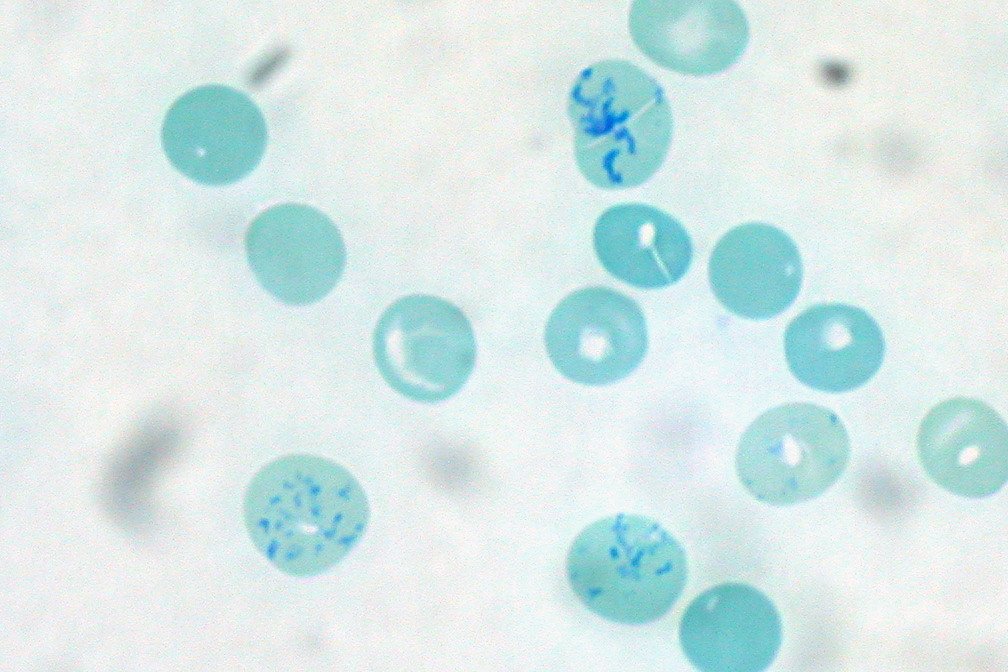
Reticulocytes are immature red blood cells. They still contain small amounts of ribonucleic acid, or RNA, that disappear as the cells mature. Modern laboratories typically use automated hematology analyzers or flow-cytometry methods to identify and count these cells. The result is a real-time clue about red blood cell production, sometimes called erythropoiesis.
A typical red blood cell lives for about 120 days, so a standard red blood cell count or hemoglobin level reflects a broad, averaged picture. Reticulocytes, by contrast, are newly produced cells. If your body suddenly loses blood, destroys red blood cells too quickly, or begins responding to treatment for a deficiency, the reticulocyte count may change before the hemoglobin fully recovers.
The test is often discussed together with a complete blood count (CBC). A CBC measures hemoglobin, hematocrit, red blood cell count, white blood cells, platelets, and red blood cell indices such as mean corpuscular volume (MCV). A reticulocyte count adds a production signal: is the marrow making enough new red cells for the situation? Merck Manual describes the reticulocyte count as a crucial part of anemia evaluation because it helps separate inadequate red blood cell production from increased destruction or loss. Merck Manual Professional Edition
Why a reticulocyte count blood test is ordered
Your clinician may order a reticulocyte count when your CBC shows anemia, when you have symptoms that could fit anemia, or when they need to monitor how well your bone marrow is responding to a condition or treatment.
| Reason for testing | What the reticulocyte count can help show |
|---|---|
| Low hemoglobin or hematocrit on a CBC | Whether the bone marrow is increasing production appropriately. |
| Suspected iron, B12, or folate deficiency | Whether the marrow response is low and whether it improves after treatment. |
| Possible hemolytic anemia | Whether the body is trying to replace red blood cells that are being destroyed too quickly. |
| Recent or ongoing bleeding | Whether red blood cell production has increased to replace losses. |
| Chronic kidney disease or low erythropoietin states | Whether marrow stimulation is insufficient for the level of anemia. |
| After chemotherapy or bone marrow transplant | Whether marrow recovery or engraftment is occurring. |
| Newborn blood disorders | Whether a newborn may be responding to red blood cell breakdown or incompatibility-related anemia. |
Symptoms that may lead to anemia testing include fatigue, weakness, shortness of breath with exertion, dizziness, pale skin, rapid heartbeat, or reduced exercise tolerance. These symptoms are nonspecific; they can occur with many conditions. That is why the reticulocyte count is not used by itself. It is part of a pattern that includes the CBC, medical history, exam findings, and follow-up testing.
How to prepare for the test
For a reticulocyte count alone, you usually do not need to fast, change your diet, or stop routine medicines. MedlinePlus states that no special preparation is needed for this blood test. MedlinePlus Medical Encyclopedia
There are two practical exceptions. First, if your clinician orders other tests at the same time, such as certain metabolic or lipid tests, those tests may have their own instructions. Second, your clinician may want to know about recent transfusion, bleeding, pregnancy, high-altitude travel or relocation, chemotherapy, iron therapy, erythropoiesis-stimulating agents, or medications that could affect blood counts. Do not stop any prescribed medicine unless the ordering clinician tells you to.
What happens during the blood draw
For most adults and older children, a phlebotomist draws blood from a vein in the arm into a tube, commonly an EDTA tube for hematology testing. The draw usually takes only a few minutes. You may feel a brief pinch or stinging sensation, and minor bruising can occur. For newborns, the sample may be collected from a heel stick.
Laboratory handling matters. Mayo Clinic Laboratories lists whole blood in a lavender-top EDTA tube for its reticulocyte profile and reports that refrigerated specimens are preferred, with a defined stability window. Mayo Clinic Laboratories Labcorp also notes that clotted specimens, hemolyzed specimens, improper tubes, inadequate volume, or samples contaminated by IV fluid can make a specimen unacceptable. Labcorp
How reticulocyte count results are reported
Reticulocyte results can appear in several formats. Understanding which value you are looking at is important because a percentage alone can be misleading when someone is anemic.
| Result term | What it means | Why it matters |
|---|---|---|
| Reticulocyte percentage | The percentage of red blood cells that are reticulocytes. | Easy to read, but can appear falsely high when total red blood cells are low. |
| Absolute reticulocyte count | The number of reticulocytes in a volume of blood, often reported as cells × 109/L or cells/µL. | Often more useful than a percentage because it reflects the actual number of new red cells. |
| Corrected reticulocyte count | A reticulocyte percentage adjusted for the degree of anemia. | Helps judge whether the marrow response is appropriate for a low hematocrit. |
| Reticulocyte production index (RPI) | A further adjustment that accounts for early release and longer circulation of reticulocytes in anemia. | Used by clinicians when assessing marrow response in more significant anemia. |
| Immature reticulocyte fraction (IRF) | The proportion of reticulocytes that are especially immature. | May rise early during marrow recovery or treatment response. |
| Reticulocyte hemoglobin | The hemoglobin content of young red blood cells. | Can provide an early clue about iron availability for new red cell production. |
Reference ranges vary by laboratory, age, analyzer, and reporting method. As examples, MedlinePlus lists a normal adult reticulocyte percentage for healthy adults who are not anemic as 0.77% to 2.26%, while Mayo Clinic Laboratories lists an adult reference interval of 0.60% to 2.71% for its reticulocyte profile. Mayo also lists adult absolute reticulocytes of 30.4 to 110.9 × 10⁹/L for that assay. These examples are useful for orientation, but your own report’s reference range should be used for interpretation. MedlinePlus Medical Encyclopedia Mayo Clinic Laboratories
What high and low reticulocyte counts can mean
A reticulocyte count is best interpreted in context. A high value is not always bad, and a normal value is not always reassuring. The key question is whether the number is appropriate for your hemoglobin level and clinical situation.
High reticulocyte count
A high reticulocyte count, called reticulocytosis, usually means the bone marrow is releasing more new red blood cells than usual. This can happen when the body is replacing red blood cells after blood loss, when red blood cells are being destroyed too quickly, or during recovery after effective treatment for a deficiency.
- Recent or ongoing bleeding: After blood loss, the marrow may increase reticulocyte production to replace what was lost.
- Hemolytic anemia: In hemolysis, red blood cells are destroyed faster than normal. The marrow often compensates by releasing more reticulocytes.
- Response to treatment: After iron, vitamin B12, or folate treatment, a rising reticulocyte count can be an early sign that the marrow is responding.
- High-altitude adaptation or pregnancy: Reticulocyte counts may change with oxygen demand and physiologic shifts; MedlinePlus notes pregnancy and high altitude as factors that can affect results. MedlinePlus
Low reticulocyte count
A low reticulocyte count suggests the bone marrow is not producing or releasing enough new red blood cells for the body’s needs. If hemoglobin is also low, this can point toward underproduction anemia.
- Iron deficiency anemia: Without enough iron, the marrow cannot make hemoglobin efficiently.
- Vitamin B12 or folate deficiency: These deficiencies can impair red blood cell maturation and often cause macrocytosis, meaning larger red blood cells.
- Chronic kidney disease: Diseased kidneys may produce less erythropoietin, a hormone that stimulates red blood cell production.
- Bone marrow disorders or suppression: Aplastic anemia, marrow infiltration, some infections, chemotherapy, radiation, or certain medicines can reduce production.
- Inflammation or chronic disease: Inflammation can limit iron use and blunt marrow response.
ARUP Consult notes that anemia evaluation commonly combines CBC results, red blood cell indices, reticulocyte count and percentage, corrected reticulocyte count, and sometimes a peripheral smear. The pattern of low, normal, or high MCV plus the corrected reticulocyte response helps guide which causes to evaluate next. ARUP Consult
Reticulocyte count patterns in anemia
One of the most useful ways to think about this test is by matching the reticulocyte response to the presence or absence of anemia.
| Hemoglobin / hematocrit | Reticulocyte pattern | Common interpretation | Possible follow-up tests |
|---|---|---|---|
| Low | High or appropriately increased | The marrow is responding; consider blood loss, hemolysis, or recovery after treatment. | Peripheral smear, bilirubin, LDH, haptoglobin, direct antiglobulin test, stool blood testing when indicated. |
| Low | Low or inappropriately normal | The marrow response is inadequate; consider iron deficiency, B12/folate deficiency, kidney disease, inflammation, marrow suppression, or marrow disorder. | Ferritin, iron/TIBC or transferrin saturation, B12, folate, creatinine/eGFR, inflammatory markers, smear, additional hematology evaluation when needed. |
| Normal | High | May reflect recent recovery, compensated hemolysis, high-altitude adaptation, pregnancy, or other physiologic/clinical factors. | Clinical review, CBC trend, hemolysis markers if symptoms or other abnormalities are present. |
| Normal | Low | May be normal for some people, but interpretation depends on the lab range and clinical context. | Usually guided by symptoms, CBC, and clinician judgment. |
Because a reticulocyte percentage can look higher simply because there are fewer mature red blood cells, clinicians often prefer an absolute reticulocyte count or corrected reticulocyte count in anemia. This is why two people with the same reticulocyte percentage may have different interpretations if one has severe anemia and the other has a normal hemoglobin.
Cost, insurance, and ordering considerations
The reticulocyte count is a common hematology test and is frequently ordered with or after a CBC. If a clinician orders it because of symptoms or an abnormal CBC, health insurance may cover it according to your plan’s rules, deductible, copay, network status, and medical-necessity policies. Coverage is not the same as zero cost; your out-of-pocket amount may depend on whether the ordering clinician, draw site, and performing laboratory are in network.
For self-pay or direct-access testing, compare the effective total cost, not just the advertised test price. The total may include the reticulocyte count itself, a physician authorization or service fee, a blood draw fee, processing fees, and any required companion tests. Also check whether the service is available in your state, whether you need to visit a patient service center, how results are delivered, and whether abnormal results include clinician review or simply a lab report.
From a billing-code perspective, reticulocyte-related testing may appear under CPT codes such as 85045 for automated reticulocyte count or 85046 for reticulocyte hemoglobin/concentration reporting, depending on exactly what is ordered and billed. Mayo Clinic Laboratories lists CPT 85046 for its reticulocyte profile, and CMS maintains the Clinical Laboratory Fee Schedule for Medicare payment information. Medicare fee schedule amounts are not consumer retail prices and do not guarantee coverage for a specific person, but they can help explain why the billed amount, insurer-allowed amount, and cash price may differ. Mayo Clinic Laboratories Centers for Medicare & Medicaid Services
Limitations and factors that can affect results
A reticulocyte count is useful, but it is not a standalone diagnosis. Several limitations matter:
- It does not identify the cause by itself. A high result may fit bleeding, hemolysis, or recovery after treatment. A low result may fit nutritional deficiency, kidney disease, inflammation, marrow suppression, or other causes.
- Reference ranges differ. Adult, pediatric, and newborn ranges differ substantially. Compare your value with the reference interval printed on your report.
- Recent transfusion can complicate interpretation. Transfused red cells can change hemoglobin and red cell counts, making marrow-response assessment harder.
- Timing matters. Reticulocytes may rise several days after effective treatment or blood loss. Testing too early or too late may miss the peak response.
- Specimen quality matters. Clotting, hemolysis, wrong tube type, delays, or contamination with IV fluid can lead to rejection or unreliable results.
- Percentage results can mislead in anemia. The absolute or corrected reticulocyte count is often more informative when red blood cells are low.
It is also possible to have more than one process at the same time. For example, someone may have iron deficiency and inflammation, or hemolysis plus kidney disease. Mixed patterns are one reason clinicians often look at trends and a panel of related tests rather than one isolated number.
Practical next steps after you receive results
If your result is outside the reference range, avoid assuming a diagnosis from the reticulocyte count alone. Instead, review the result with the ordering clinician and ask how it fits with the rest of your CBC and symptoms.
Questions to ask your clinician
- Is my reticulocyte count high, low, or appropriate for my hemoglobin level?
- Should we use the absolute reticulocyte count or corrected reticulocyte count for interpretation?
- Do my MCV, RDW, ferritin, iron saturation, B12, folate, kidney function, or inflammatory markers suggest a cause?
- Could recent bleeding, heavy menstrual periods, surgery, transfusion, pregnancy, altitude change, or medication affect this result?
- Should the test be repeated, and if so, when?
- Do I need evaluation for blood loss or hemolysis?
- At what symptoms or result levels should I seek urgent care?
Seek urgent medical advice promptly if anemia symptoms are severe or sudden, such as chest pain, fainting, severe shortness of breath, black or bloody stools, heavy uncontrolled bleeding, confusion, or rapid worsening weakness. Those symptoms require clinical evaluation rather than waiting for routine follow-up.
FAQs about the reticulocyte count blood test
Is a reticulocyte count the same as a CBC?
No. A CBC measures several blood components, including hemoglobin, hematocrit, red blood cell count, white blood cells, and platelets. A reticulocyte count specifically measures young red blood cells. It may be ordered along with a CBC or as a follow-up to abnormal CBC results.
Do I need to fast before a reticulocyte count?
Usually no. A reticulocyte count by itself does not require fasting. If other tests are ordered at the same time, follow the instructions for the full test panel.
What is a normal reticulocyte count?
Normal ranges vary by lab and age. Many adult ranges fall around 0.5% to 2.5%, but your lab’s printed reference range is the one that applies to your result. Absolute reticulocyte counts and corrected reticulocyte counts may be more meaningful than the percentage when anemia is present.
Is a high reticulocyte count dangerous?
A high reticulocyte count is a sign, not a diagnosis. It may be an appropriate response to blood loss or anemia treatment, or it may suggest red blood cell destruction. The clinical significance depends on your hemoglobin, symptoms, and other test results.
Can iron supplements change my reticulocyte count?
Yes. If iron deficiency is the reason for anemia and iron treatment is effective, the reticulocyte count may rise before hemoglobin fully improves. Do not start high-dose iron unless a clinician recommends it, because anemia has many causes and excess iron can be harmful for some people.
Why would my reticulocyte count be low if I am anemic?
A low or inappropriately normal reticulocyte count with anemia suggests the bone marrow is not producing enough new red blood cells. Possible reasons include iron deficiency, B12 or folate deficiency, kidney disease, inflammation, marrow suppression, or bone marrow disorders.
How quickly are reticulocyte count results available?
Many laboratories can report reticulocyte results within about one business day after the specimen is received, though timing depends on the lab, collection site, transport schedule, and whether additional tests were ordered.
Can I interpret my reticulocyte count without a doctor?
You can understand the basics, but interpretation is safest with the CBC and clinical context. Ask the ordering clinician whether your marrow response is appropriate for your hemoglobin level and what the next step should be.