
Medical & affiliate disclosure: CTX Stat provides educational laboratory information and is not a substitute for professional medical advice, diagnosis, or treatment. CTX Stat may receive compensation from some outbound provider links when an affiliate program is active; provider comparisons and rankings are based on consumer fit, effective cost, access, policies, and reputation—not commission.
Quick take
- Typical self-pay aldosterone blood test cost: about $56–$118 for a standalone aldosterone blood test when purchased online, depending on provider, lab network, and required fees.
- Lowest published standalone price found: Ulta Lab Tests lists an Aldosterone Test at $55.95, with Quest collection and LC/MS/MS measurement shown on the product page.
- Watch the “total” price: some services add a required physician or service fee. For example, Walk-In Lab lists $89 plus a $6 physician fee, and Request A Test lists $89 Labcorp / $114 Quest plus a $4 service fee.
- For high blood pressure workups, aldosterone alone is often not enough. The Endocrine Society describes screening for primary aldosteronism as measuring aldosterone and renin, then interpreting the aldosterone-to-renin ratio, with potassium considered for interpretation.
- Best value depends on the question: if you only need a doctor-requested aldosterone value, a standalone test may be cheapest. If you are evaluating possible primary aldosteronism, compare total cost for an aldosterone-renin ratio or a renin-first/reflex workflow rather than buying aldosterone alone.
Aldosterone blood test cost: self-pay comparison
The aldosterone blood test cost for a consumer-ordered, self-pay blood draw usually falls between about $56 and $118 for a standalone aldosterone test. The price can look lower or higher depending on whether the provider includes the lab order, physician authorization, blood draw, lab processing, and results portal in one price—or separates a required service fee at checkout.
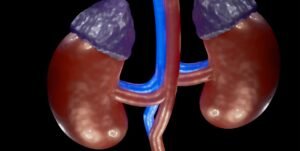
Aldosterone is a hormone made by the adrenal glands. It helps regulate blood pressure by influencing sodium, water, and potassium balance. MedlinePlus explains that aldosterone testing may be used with renin testing to evaluate whether aldosterone is contributing to high blood pressure, low potassium, or certain adrenal disorders (MedlinePlus aldosterone test).
Prices below are national online self-pay listings for adults where available. Local availability, taxes, coupon status, blood-draw site fees, age requirements, and state restrictions can change, so the checkout page for your ZIP code is the final price check.
| Provider | Test option | Published test price | Mandatory fee shown | Estimated effective self-pay cost | Collection / workflow | Best fit |
|---|---|---|---|---|---|---|
| Ulta Lab Tests | Aldosterone Test | $55.95 | Check selected collection site for any draw fee displayed at checkout | From $55.95 before any local draw fee or tax | Order online; blood draw at a listed patient service center; product page shows Quest aldosterone LC/MS/MS #17181 and average processing time of 5–6 business days | Lowest published standalone aldosterone price found, especially if no added draw fee appears for your site |
| Request A Test | Aldosterone Blood Test | $89 Labcorp / $114 Quest | $4 per-order service fee | $93 Labcorp / $118 Quest | Order online; choose Labcorp or Quest option where available; page lists typical turnaround of 4–6 business days for Labcorp and 4–8 business days for Quest | Useful when you want to choose between Labcorp and Quest pricing |
| Walk-In Lab | Aldosterone Blood Test, LC-MS | $89 | $6 per-order physician fee | $95 | Order online; blood draw at a participating lab; page lists no fasting and 7–9 business days, with possible delays | Standalone aldosterone by LC-MS when the effective total remains competitive for your ZIP code |
| Personalabs | Aldosterone Blood Test | $106 | No separate mandatory fee was displayed on the reviewed product page | $106 before any location-specific charges or tax | Order online; physician network approval; visit Quest or Labcorp depending on the selected option; page lists no fasting and 2–7 business days on the product summary | Reasonable if your preferred local collection network is available through the selected order |
| Quest Health | Primary Aldosteronism Test | $89 | $6 physician service fee | $95 | Order through Quest Health; visit a Quest location; this is a renin-first primary aldosteronism screen with aldosterone reflex testing only if plasma renin activity is out of range | Potentially good value for PA screening, but not the same as a guaranteed standalone aldosterone result |
| HealthLabs | Aldosterone-to-Renin Ratio Test | $149 | No separate required fee was displayed on the reviewed page | $149 before any taxes or checkout-specific charges | Order online; visit a listed lab; product page describes an aldosterone-renin ratio workflow | When the clinical question is PA screening and you want aldosterone plus renin/ratio rather than aldosterone alone |
How we compared costs
For this comparison, “effective cost to the patient” means the published test price plus any mandatory provider fee shown on the product page. We did not rank providers by advertising relationships, commission, coupon visibility, or brand size. A $55 test with a $20 mandatory draw fee is not cheaper than a $70 all-in test, so the most important number is the total that applies to your location and order.
We counted separately whether the listing is a standalone aldosterone blood test, an aldosterone-renin ratio (ARR), or a reflex primary aldosteronism screen. This matters because these options answer different questions. A standalone aldosterone test gives one hormone value. An ARR test includes aldosterone plus renin and a calculated ratio, which is often the more clinically useful screening approach for primary aldosteronism. Quest Health’s primary aldosteronism product is different again: the page states that it measures plasma renin activity first and performs aldosterone testing only if renin is out of range (Quest Health Primary Aldosteronism Test).
We also considered ordinary consumer factors: collection network, whether a doctor visit is required to purchase, whether insurance billing is used, estimated turnaround time, and public satisfaction signals. For example, Walk-In Lab publishes customer-review information and points to independent review collection sources on its review page (Walk-In Lab reviews), while HealthLabs has been reviewed by third-party health media and public review platforms. Public reviews can help identify ordering or customer-service patterns, but they should not replace checking the exact test name, lab network, and total price before you buy.
What is included in an aldosterone blood test price?
Most online self-pay lab services bundle several pieces into one order: the lab requisition, clinician authorization through a physician network, specimen collection at a partner patient service center, laboratory analysis, and online results delivery. Some providers show all of that in the test price. Others show a separate physician or service fee. If the fee is required to complete the order, include it in your real comparison.
Also check whether the price includes the exact test you need. “Aldosterone,” “aldosterone LC/MS,” “aldosterone LC/MS/MS,” “aldosterone-renin ratio,” and “primary aldosteronism screen” are not interchangeable labels. LC-MS or LC-MS/MS refers to a laboratory measurement method. The Endocrine Society notes that aldosterone assay type can affect screening cut points for primary aldosteronism, so it is reasonable to keep a copy of the lab report with the method, units, reference range, and collection posture documented (Endocrine Society guideline).
Why self-pay prices differ from insurance prices
Self-pay online prices are retail package prices. They are not the same as hospital chargemaster prices, negotiated insurance rates, or Medicare payment rates. As a reference point, the Medicare Clinical Laboratory Fee Schedule is the federal payment system for many covered lab tests, and CMS explains that CLFS rates are based on weighted median private-payer rates for many clinical diagnostic laboratory tests (CMS CLFS overview). Public 2026 fee-schedule files list CPT 82088, “assay of aldosterone,” at about $40.75, but that benchmark does not mean a consumer can buy the test at that price, nor does it include ordering, collection, interpretation, or office-visit costs.
If a clinician orders aldosterone testing through insurance, your cost may be $0, a copay, coinsurance, or the full allowed amount if your deductible has not been met. If the claim is denied as not medically necessary, you may owe more than an online cash price. If you already have a clinician managing high blood pressure, low potassium, adrenal disease, kidney disease, or medication changes, ask whether they can order the correct aldosterone-renin workup directly and whether your insurance requires a preferred lab.
Standalone aldosterone vs aldosterone-renin ratio: which is the better buy?
A standalone aldosterone blood test may be appropriate when your clinician specifically wants an aldosterone level by itself, such as follow-up testing, comparison with prior results, or a targeted adrenal evaluation. It is often the least expensive option.
For evaluating primary aldosteronism—a potentially treatable cause of high blood pressure—aldosterone alone is usually less informative than aldosterone plus renin. MedlinePlus notes that aldosterone testing is commonly combined with a renin test because comparing the two helps show whether abnormal aldosterone is related to the adrenal glands, kidneys, or the hormonal system that regulates blood pressure (MedlinePlus). The 2025 Endocrine Society guideline suggests screening individuals with hypertension for primary aldosteronism using serum or plasma aldosterone concentration and plasma renin, with the aldosterone-to-renin ratio used in interpretation (Endocrine Society).
Cost tip
If your goal is to screen for primary aldosteronism, compare the total cost of an ARR panel against buying aldosterone and renin separately. A $56 aldosterone test can become a poor value if you later need to repeat the blood draw and buy renin separately under the right collection conditions.
| Clinical question | Usually better option | Why it matters |
|---|---|---|
| “What is my aldosterone level?” | Standalone aldosterone blood test | Lowest cost when only one analyte is needed and your clinician requested it specifically. |
| “Could aldosterone be contributing to high blood pressure?” | Aldosterone + renin, with ARR interpretation | Renin suppression is central to primary aldosteronism screening; aldosterone alone can be misleading. |
| “I need a broad adrenal or electrolyte workup.” | Clinician-directed testing | Medication effects, potassium level, sodium intake, kidney function, and blood pressure status may determine the right panel. |
| “I want the cheapest test possible.” | Lowest total standalone price after fees | Fine for price shopping, but confirm the result will answer the medical question before ordering. |
Preparation, timing, and factors that affect results
Aldosterone is sensitive to posture, time of day, sodium intake, potassium level, medications, and stress. This is one reason price should not be the only decision factor. A cheap test drawn under the wrong conditions may need to be repeated.
MedlinePlus states that the amount of aldosterone in blood changes depending on whether you are standing or lying down, and you may be asked to remain in a particular position before testing (MedlinePlus). Labcorp’s aldosterone-renin ratio test directory gives more specific collection guidance: collect blood mid-morning after the patient has been up for at least two hours and seated for 5–15 minutes, with unrestricted dietary salt intake before testing and attention to medications that can markedly affect the ratio (Labcorp ARR test information).
Before you buy, ask these questions
- Does my clinician want aldosterone alone or aldosterone plus renin? If the reason is resistant hypertension or low potassium, ARR is commonly the more relevant screening option.
- What posture and timing are required? Some orders specify morning collection after being awake/upright for a set period.
- Should potassium be checked too? The Endocrine Society notes that low potassium may lead to falsely low aldosterone and potassium should be assessed to aid interpretation.
- Do any medications need adjustment? Blood pressure medicines, diuretics, mineralocorticoid receptor antagonists, licorice products, and other agents can affect aldosterone-renin interpretation. Do not stop prescribed medication without the clinician who manages it.
- Is the collection site able to process the specimen correctly? Renin testing can have more demanding handling requirements than aldosterone alone.
Fasting is usually not the main issue for aldosterone. Several consumer test pages list no fasting requirement. However, “no fasting” does not mean “no preparation.” Sodium intake, body position, potassium status, and medications can matter more than food timing.
How to think about results after you pay for the test
An aldosterone result is not a diagnosis by itself. It is interpreted with the reference range, units, sample type, posture, sodium intake, potassium level, renin result, kidney function, blood pressure pattern, and medication list. A value that appears “normal” may still be inappropriate if renin is very low; a high value may reflect secondary aldosterone stimulation rather than a primary adrenal problem.
In primary aldosteronism, the general pattern is aldosterone that is high relative to renin, often with suppressed renin. Some people have low potassium, but normal potassium does not rule it out. The Endocrine Society emphasizes that primary aldosteronism is underdiagnosed and that identification matters because targeted medical or surgical treatment may improve blood pressure control and reduce related cardiovascular risks (Endocrine Society).
Practical next steps
- Download the full lab report. Keep the analyte name, units, reference range, lab method, collection time, and collection posture if documented.
- Do not interpret aldosterone in isolation if hypertension is the concern. Ask whether renin, potassium, sodium, creatinine/eGFR, and ARR are needed.
- Share results with the clinician managing your blood pressure or adrenal concerns. Self-pay testing can provide data, but treatment decisions require clinical context.
- Expect possible repeat or confirmatory testing. Screening results may lead to repeat ARR under standardized conditions, confirmatory suppression testing, adrenal imaging, adrenal vein sampling, or medication changes, depending on the situation.
- Seek prompt medical care for severe symptoms. Very high blood pressure, chest pain, severe weakness, fainting, confusion, or heart rhythm symptoms should not wait for an online lab result.
How to choose a provider without overpaying
Start with the exact test type. If your order says “aldosterone, LC/MS/MS,” do not substitute a renin-only reflex screen unless your clinician agrees. If your concern is primary aldosteronism, do not assume the cheapest standalone aldosterone test is enough. Next, compare total price after mandatory fees. A service fee, physician fee, or local draw fee should be included in your real cost.
Then check convenience and restrictions. Quest Health states that lab tests are not currently available through Quest Health in Arizona, Hawaii, or Puerto Rico, and individual tests may have additional age, state, or sex restrictions (Quest Health Help Center). Personalabs explains that testing is not available in New York, New Jersey, or Rhode Island through its service (Personalabs FAQs). Other online lab-ordering services may also restrict certain states, labs, or test types. Always enter your real ZIP code and review the checkout messages before relying on a price.
Finally, consider customer-service evidence but keep it in perspective. Public reviews can reveal patterns such as easy ordering, confusion at the draw site, refund complaints, or delays. They do not prove that a specific test is medically appropriate, and review scores can change over time. For a hormone test that may affect blood pressure treatment, the most important “quality” factor is still whether the correct test is drawn under the correct conditions and interpreted by someone who understands the clinical context.
FAQs about aldosterone blood test cost
How much does an aldosterone blood test cost without insurance?
For online self-pay ordering, standalone aldosterone blood tests commonly list around $56–$118 after mandatory provider fees. Ulta Lab Tests lists $55.95 before any location-specific draw fee or tax, Walk-In Lab lists $89 plus a $6 physician fee, Request A Test lists $89 Labcorp or $114 Quest plus a $4 service fee, and Personalabs lists $106 on the reviewed product page.
Is the cheapest aldosterone test always the best choice?
No. The cheapest standalone aldosterone test may be a good value if aldosterone alone is exactly what you need. If you are evaluating possible primary aldosteronism or difficult-to-control hypertension, an aldosterone-renin ratio or clinician-directed panel may be the better value because it can avoid buying a second test or repeating the blood draw.
Does an aldosterone blood test require fasting?
Many provider pages list no fasting requirement for aldosterone. However, preparation can still matter. Posture, morning timing, sodium intake, potassium level, and medications can influence aldosterone and renin results. Follow the instructions on your lab order and ask your clinician before changing any medication.
What is the difference between aldosterone and aldosterone-renin ratio?
Aldosterone is one hormone measurement. The aldosterone-renin ratio compares aldosterone with renin, a kidney-related hormone involved in blood pressure regulation. For primary aldosteronism screening, guidelines emphasize measuring aldosterone and renin and interpreting the ratio rather than relying on aldosterone alone.
Will insurance cover an aldosterone test?
It depends on your plan, deductible, medical necessity rules, diagnosis codes, and preferred lab network. Online direct-pay lab services generally do not bill insurance for consumer-initiated tests. If a clinician orders testing through insurance, ask the lab and insurer about estimated out-of-pocket cost before the draw.
Can I order an aldosterone test myself?
In many states, yes, through an online lab-ordering service with physician network authorization. Availability varies by state, age, test type, and collection network. Some states restrict direct-to-consumer lab ordering, and individual providers may exclude certain locations.
How long do aldosterone results take?
Typical published turnaround times range from about 4–10 business days depending on provider, lab network, method, and specimen handling. Aldosterone and renin testing can take longer than routine chemistry tests, especially if the sample requires special processing or is sent to a reference laboratory.
Should I buy aldosterone, renin, potassium, or a full panel?
That depends on the reason for testing. For high blood pressure or suspected primary aldosteronism, aldosterone plus renin and potassium assessment are commonly important. If you have kidney disease, adrenal disease, abnormal electrolytes, or take blood pressure medications, ask the clinician managing your care which panel is appropriate.
Sources and references
- MedlinePlus: Aldosterone Test
- Endocrine Society: Primary Aldosteronism Clinical Practice Guideline
- Labcorp: Aldosterone:Renin Ratio Test Information
- Quest Health: Primary Aldosteronism Test
- Ulta Lab Tests: Aldosterone Test
- Walk-In Lab: Aldosterone Blood Test, LC-MS
- Request A Test: Aldosterone Blood Test
- Personalabs: Aldosterone Blood Test
- HealthLabs: Aldosterone-to-Renin Ratio Test
- CMS: Clinical Laboratory Fee Schedule