Medical & affiliate disclosure: CTX Stat provides educational laboratory information and is not a substitute for professional medical advice, diagnosis, or treatment. CTX Stat may receive compensation from some outbound provider links when an affiliate program is active; provider comparisons and rankings are based on consumer fit, effective cost, access, policies, and reputation—not commission.
Quick take
Adrenal blood tests are used when symptoms, vital signs, medications, or imaging raise concern that the adrenal glands may be making too little or too much hormone. The most common blood tests include morning cortisol, ACTH, aldosterone, renin, DHEA-S, and basic chemistry tests such as sodium, potassium, glucose, and kidney function. In many cases, a single baseline blood draw is not enough; clinicians may use an ACTH stimulation test for suspected adrenal insufficiency or combine blood testing with urine or saliva testing for suspected Cushing syndrome.
Adrenal symptoms can be vague. Fatigue, dizziness, nausea, weight changes, blood pressure changes, salt craving, skin darkening, abnormal potassium, and new diabetes or resistant hypertension can all point in different directions. The right test depends on whether the concern is low cortisol, high cortisol, excess aldosterone, or a less common adrenal hormone problem.
Seek urgent medical care now for severe weakness, fainting, confusion, severe vomiting or diarrhea, dehydration, very low blood pressure, or symptoms after stopping long-term steroid medicine. An adrenal crisis is treated as an emergency; clinicians should not delay treatment while waiting for routine lab results.
What the adrenal glands make—and why testing is targeted
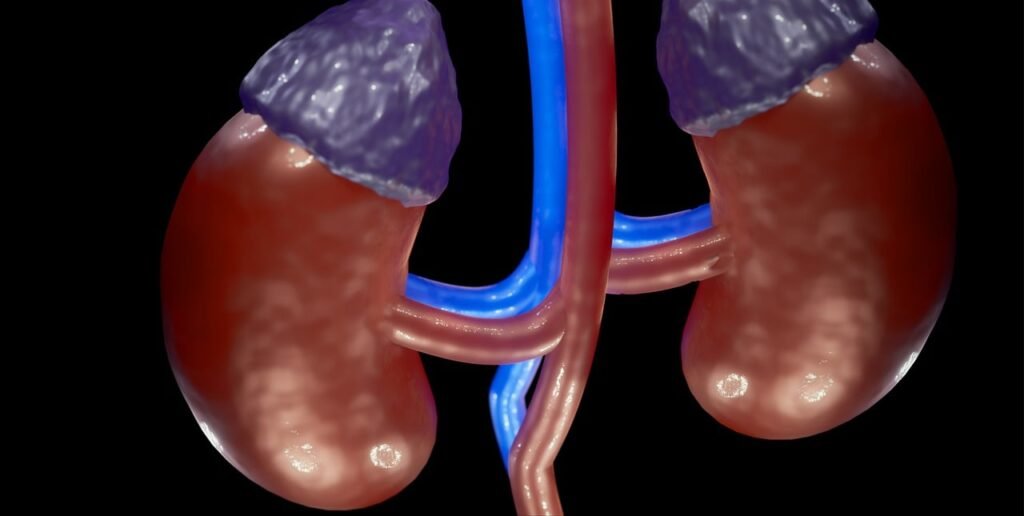
The adrenal glands sit above the kidneys and make several hormones. Cortisol helps maintain blood pressure, blood sugar, immune response, and the body’s response to illness or stress. Aldosterone helps regulate sodium, potassium, and blood pressure. The adrenal glands also produce adrenal androgens, including DHEA and DHEA-S, and the inner adrenal medulla makes catecholamines such as epinephrine and norepinephrine.
Because these hormones do different jobs, there is no single “adrenal panel” that answers every question. A person with dizziness, weight loss, and low sodium may need testing for adrenal insufficiency. A person with resistant high blood pressure and low potassium may need screening for primary aldosteronism. A person with progressive central weight gain, easy bruising, purple stretch marks, diabetes, and high blood pressure may need evaluation for Cushing syndrome.
Symptoms that commonly lead to adrenal blood testing
Clinicians usually order adrenal blood tests when symptoms are persistent, unexplained, progressive, or paired with abnormal physical findings or routine labs. The same symptom can have many non-adrenal causes, so adrenal testing is interpreted alongside medications, illness, blood pressure, electrolytes, and medical history.
| Symptom or finding | Adrenal question it may raise | Common first tests |
|---|---|---|
| Fatigue, weakness, weight loss, nausea, abdominal pain, salt craving, dizziness on standing | Could cortisol and/or aldosterone be too low? | Morning cortisol, ACTH, sodium, potassium, glucose; sometimes ACTH stimulation, renin, aldosterone |
| Low blood pressure, fainting, dehydration, low sodium, high potassium | Possible primary adrenal insufficiency, especially if persistent or severe | Morning cortisol with ACTH, electrolytes, renin, aldosterone; urgent evaluation if unstable |
| High blood pressure that is hard to control, low potassium, adrenal nodule | Could aldosterone be too high? | Aldosterone, renin, aldosterone-to-renin ratio, potassium |
| Central weight gain, rounded face, easy bruising, purple stretch marks, muscle weakness, new diabetes or osteoporosis | Could cortisol be too high? | Often late-night salivary cortisol, 24-hour urine free cortisol, or dexamethasone suppression testing; ACTH may follow |
| Irregular periods, acne, excess hair growth, early puberty signs, virilization | Could adrenal androgen production be abnormal? | DHEA-S, testosterone, 17-hydroxyprogesterone, sometimes androstenedione |
The most common adrenal blood tests
1. Morning serum cortisol
A serum cortisol blood test measures cortisol in the blood at the time of collection. For suspected adrenal insufficiency, it is usually drawn early in the morning—often around 7 a.m. to 9 a.m.—because cortisol normally follows a daily rhythm and tends to be highest soon after waking. Labcorp’s test information notes that cortisol concentrations usually peak early in the morning and decline during the day, making collection time important for interpretation (Labcorp cortisol test information).
A low morning cortisol can support concern for adrenal insufficiency, especially when symptoms and electrolytes fit. A clearly high morning cortisol, by itself, usually does not diagnose Cushing syndrome because stress, illness, pain, depression, alcohol use, pregnancy, estrogen therapy, and other factors can raise cortisol or cortisol-binding proteins. For suspected cortisol excess, clinicians usually use tests designed to evaluate cortisol regulation over time rather than relying on a random blood cortisol.
2. ACTH blood test
ACTH, or adrenocorticotropic hormone, is made by the pituitary gland and signals the adrenal glands to produce cortisol. ACTH is most useful when interpreted with cortisol. MedlinePlus notes that ACTH testing is often done with cortisol testing because ACTH helps control cortisol production (MedlinePlus ACTH test).
In broad terms, low cortisol with high ACTH suggests the pituitary is trying to stimulate adrenal glands that are not responding well, which can occur in primary adrenal insufficiency. Low cortisol with low or inappropriately normal ACTH suggests a possible pituitary or hypothalamic cause, medication suppression, or secondary/tertiary adrenal insufficiency. ACTH is a delicate sample for many labs and may require special handling, such as chilled collection tubes or rapid processing, so collection quality matters.
3. ACTH stimulation test, also called cosyntropin stimulation
The ACTH stimulation test is a dynamic test. A baseline cortisol is drawn, synthetic ACTH is given, and cortisol is measured again after a set interval, commonly at 30 and/or 60 minutes. The goal is to see whether the adrenal glands can respond appropriately.
The National Institute of Diabetes and Digestive and Kidney Diseases states that the ACTH stimulation test is the test used most often to diagnose adrenal insufficiency (NIDDK adrenal insufficiency diagnosis). The Endocrine Society guideline for primary adrenal insufficiency recommends confirmatory corticotropin stimulation testing when a patient’s condition allows, and also recommends measuring ACTH to help establish primary adrenal insufficiency (Endocrine Society primary adrenal insufficiency guideline).
This test often cannot be completed at a basic walk-in blood draw station because it requires medication administration and timed specimens. It may be performed in an endocrinology office, hospital outpatient department, infusion center, or specialty testing unit. If you are comparing self-pay options, check whether the quoted price includes the medication, facility fee, clinician order, all timed blood draws, lab analysis, and any required visit.
4. Aldosterone, renin, and the aldosterone-to-renin ratio
Aldosterone and renin are commonly tested together when there is concern for primary aldosteronism, a condition in which aldosterone production is too high relative to the body’s needs. It is an important and often under-recognized cause of hypertension. The 2025 Endocrine Society primary aldosteronism guideline suggests screening individuals with hypertension using serum or plasma aldosterone, plasma renin, and the aldosterone-to-renin ratio; potassium is measured alongside these tests to aid interpretation (Endocrine Society primary aldosteronism guideline).
The pattern that raises concern is typically renin that is low or suppressed with aldosterone that is inappropriately high. Potassium matters because low potassium can sometimes reduce aldosterone and obscure results. Sodium intake, posture, time of day, pregnancy, kidney function, and blood pressure medications can also affect results. The Endocrine Society guideline notes morning seated testing and avoiding dietary sodium restriction before screening, when clinically appropriate.
5. DHEA-S
DHEA-S is an adrenal androgen marker. It is not usually the main test for adrenal insufficiency, but it can help in selected situations. Low DHEA-S can be seen in adrenal insufficiency, but it is nonspecific and varies by age and sex. High DHEA-S may suggest excess adrenal androgen production and can be useful when evaluating hirsutism, acne, irregular periods, virilization, early puberty, or possible adrenal tumors. It is often interpreted with testosterone, androstenedione, 17-hydroxyprogesterone, and clinical findings.
6. Electrolytes, glucose, kidney function, and blood count
Basic blood tests are often ordered with adrenal hormone testing because adrenal disorders can affect the whole body. Sodium, potassium, bicarbonate, glucose, creatinine, and blood urea nitrogen can provide clues about dehydration, kidney function, acid-base balance, and mineralocorticoid activity. In primary adrenal insufficiency, low sodium and high potassium can occur. In cortisol excess, high glucose and other metabolic abnormalities may appear. A complete blood count and thyroid testing may also be ordered because symptoms such as fatigue, weakness, weight change, palpitations, and dizziness have many possible causes.
How common result patterns are interpreted
Adrenal results are not interpreted by “high” or “low” flags alone. Timing, units, assay method, medications, illness, pregnancy status, and the clinical question all matter. The following patterns are simplified examples, not diagnostic rules.
| Possible pattern | What it may suggest | Typical next step |
|---|---|---|
| Low morning cortisol + high ACTH | Possible primary adrenal insufficiency | ACTH stimulation test if stable; electrolytes, renin/aldosterone, adrenal antibodies, cause evaluation |
| Low morning cortisol + low or normal ACTH | Possible secondary or tertiary adrenal insufficiency, often related to pituitary/hypothalamic disease or steroid suppression | Endocrinology evaluation; stimulation testing; medication review; pituitary evaluation when indicated |
| Borderline morning cortisol | Indeterminate | Repeat timed testing or ACTH stimulation test |
| Suppressed renin + inappropriately high aldosterone | Possible primary aldosteronism | Repeat/confirmatory testing or treatment pathway depending on probability and guideline-based evaluation |
| High DHEA-S | Possible adrenal androgen excess | Repeat confirmation, additional androgen tests, congenital adrenal hyperplasia evaluation, imaging if markedly high or clinically concerning |
| Normal baseline cortisol but strong Cushing features | Baseline blood cortisol may not answer the question | Use recommended Cushing screening tests; consider endocrinology referral |
Blood tests for suspected low adrenal function
When clinicians suspect adrenal insufficiency, they are asking whether the body can make enough cortisol for everyday needs and stress. Symptoms can include long-lasting fatigue, muscle weakness, poor appetite, weight loss, nausea, abdominal pain, dizziness when standing, low blood pressure, salt craving, and skin darkening. Some people have low sodium, high potassium, low glucose, or dehydration.
Primary adrenal insufficiency, also called Addison disease when chronic, means the adrenal glands themselves are not producing enough hormone. Secondary adrenal insufficiency usually means the pituitary is not producing enough ACTH. Tertiary adrenal insufficiency can occur when the hypothalamic-pituitary-adrenal axis has been suppressed, often after long-term glucocorticoid use.
The usual blood testing approach includes:
- Early-morning cortisol to estimate baseline cortisol production.
- ACTH to help distinguish primary from central causes.
- ACTH stimulation testing when confirmation is needed and the patient is stable enough.
- Sodium, potassium, glucose, and kidney function to identify supportive abnormalities and safety concerns.
- Renin and aldosterone when primary adrenal insufficiency or mineralocorticoid deficiency is suspected.
- 21-hydroxylase antibodies in many evaluations for autoimmune Addison disease.
If someone is acutely ill with suspected adrenal crisis, treatment takes priority. The Endocrine Society notes that severely symptomatic patients or those with adrenal crisis should receive immediate treatment while diagnostic testing is pursued as appropriate (Endocrine Society guideline resources).
Blood tests for suspected high cortisol
High cortisol production, called Cushing syndrome when clinically significant, is evaluated differently from low cortisol. A random blood cortisol is usually not the best screening test because cortisol normally fluctuates during the day and rises with stress, illness, pain, and many medications.
The Endocrine Society Cushing syndrome diagnostic guideline recommends initial testing with one of several high-accuracy screening options: late-night salivary cortisol, 24-hour urinary free cortisol, the 1-mg overnight dexamethasone suppression test, or a longer low-dose dexamethasone suppression test (Endocrine Society Cushing syndrome guideline). Some of these are not blood tests, but they are often paired with blood tests later.
Blood tests may enter the Cushing workup in several ways. A dexamethasone suppression test uses a blood cortisol measurement the next morning after taking dexamethasone. ACTH may be measured after cortisol excess is confirmed to help determine whether cortisol production is ACTH-dependent or ACTH-independent. Additional blood tests may evaluate glucose, lipids, potassium, bone and metabolic complications, or pituitary and adrenal causes.
Blood tests for high blood pressure and low potassium
Primary aldosteronism deserves special attention because many people think of adrenal testing only in relation to fatigue or cortisol. In primary aldosteronism, excess aldosterone can contribute to hypertension, low potassium, muscle cramps or weakness, frequent urination, and increased cardiovascular risk. Some people have normal potassium, so potassium alone is not a reliable screen.
The key blood tests are aldosterone and renin, interpreted as a ratio and in context. A suppressed renin level is a central clue. Because multiple blood pressure medicines alter renin or aldosterone, clinicians may interpret results with caution, repeat testing, or adjust medications only when safe. Patients should not stop blood pressure medication on their own to prepare for testing.
How to prepare for adrenal blood tests
Preparation depends on the exact test. Always follow the ordering clinician’s and laboratory’s instructions, especially if you take steroid medications or blood pressure medicines.
| Test | Common preparation issues | Why it matters |
|---|---|---|
| Morning cortisol | Usually collected early morning; report sleep schedule and collection time | Cortisol has a strong daily rhythm |
| ACTH | May require special tube handling and prompt processing | ACTH is less stable than many routine analytes |
| ACTH stimulation | Timed appointment; baseline and post-injection specimens; ask about steroid medication instructions | Incorrect timing or interfering medication can change interpretation |
| Aldosterone/renin ratio | Ask about posture, time of day, salt intake, potassium correction, and blood pressure medications | Renin and aldosterone respond to volume status, medications, and potassium |
| DHEA-S or androgen testing | Tell the clinician about hormones, supplements, pregnancy, and menstrual status | Androgen levels vary by age, sex, and medication exposure |
Medications and supplements that can affect adrenal testing
Medication history is one of the most important parts of adrenal test interpretation. Glucocorticoids such as prednisone, methylprednisolone, hydrocortisone, dexamethasone, and some steroid injections can suppress the hypothalamic-pituitary-adrenal axis. Inhaled, topical, nasal, joint-injected, and high-potency skin steroids can also matter in some situations. Opioids, certain antifungals, antiseizure medications, estrogen-containing therapy, and some blood pressure medicines can affect cortisol, ACTH, aldosterone, or renin testing.
Biotin is another practical issue. Some immunoassays can be affected by high-dose biotin supplements. Labcorp’s cortisol test page, for example, notes potential interference when samples are collected from people consuming high-dose biotin (Labcorp cortisol assay notes). Do not stop prescribed medications without medical guidance, but do tell the ordering clinician and lab about prescriptions, over-the-counter products, hormones, steroid creams, injections, and supplements.
What adrenal blood tests cannot tell you
Adrenal blood tests are powerful when used for the right question, but they have limits. A normal result does not automatically explain symptoms away, and an abnormal result does not always prove an adrenal disorder. Stress, shift work, acute illness, poor sleep, depression, eating disorders, alcohol use, pregnancy, estrogen therapy, kidney disease, and lab assay differences can all influence interpretation.
It is also important to separate true adrenal disorders from the popular term “adrenal fatigue.” The Endocrine Society states that there is no scientific proof that adrenal fatigue is a true medical condition and warns that unvalidated testing may distract from finding the real cause of symptoms (Endocrine Society adrenal fatigue information). Mayo Clinic similarly notes that adrenal fatigue is not an official medical diagnosis (Mayo Clinic adrenal fatigue discussion).
That does not mean fatigue, brain fog, dizziness, or sleep disruption are not real. It means the evaluation should look for evidence-based explanations: anemia, thyroid disease, diabetes, kidney or liver disease, sleep apnea, medication effects, pregnancy, depression, chronic infection or inflammation, autoimmune disease, nutritional deficiencies, dysautonomia, and other conditions.
Cost and access considerations
For routine blood draws, the cost to the patient depends on the test, the ordering pathway, insurance coverage, deductible status, lab network, and whether the collection site charges a separate draw fee. Cortisol, ACTH, DHEA-S, aldosterone, renin, and chemistry panels may each be billed separately. An ACTH stimulation test can cost more because it involves a medication, timed specimens, staff time, and sometimes a facility or infusion-center charge.
If paying out of pocket, compare the effective total cost, not only the headline lab price. Ask whether the price includes the clinician order, phlebotomy or draw fee, specimen handling, all timed draws, medication administration, follow-up interpretation, and any required visit. Also confirm whether the testing service is available in your state and whether the collection site can perform timed or specialty handling tests such as ACTH.
Practical next steps if you are considering adrenal testing
- Write down the pattern. Note symptoms, when they happen, blood pressure readings, weight changes, salt craving, fainting, bruising, muscle weakness, menstrual changes, and medication timing.
- List all steroid exposures. Include pills, injections, inhalers, nasal sprays, creams, eye drops, and recent emergency or hospital treatments.
- Ask what adrenal disorder is being evaluated. Low cortisol, high cortisol, and high aldosterone require different testing strategies.
- Confirm timing and preparation. Morning cortisol, ACTH, aldosterone/renin, and stimulation tests each have specific collection needs.
- Do not self-treat with steroid hormones. Taking glucocorticoids without a diagnosis can suppress natural cortisol production and complicate testing.
- Seek endocrinology input when results are abnormal, borderline, or confusing. Dynamic testing and medication-adjusted interpretation often require specialty expertise.
Frequently asked questions
What blood test checks adrenal function?
The most common starting point is an early-morning cortisol blood test, often paired with ACTH. Depending on the concern, clinicians may also order aldosterone, renin, DHEA-S, electrolytes, glucose, kidney function tests, adrenal antibodies, or an ACTH stimulation test.
Can adrenal blood tests diagnose Addison disease?
They can strongly support or confirm the diagnosis when interpreted correctly. Primary adrenal insufficiency is typically evaluated with cortisol, ACTH, electrolytes, and often ACTH stimulation testing. Renin, aldosterone, and adrenal antibodies can help determine the type and cause.
Is a cortisol blood test enough for Cushing syndrome?
Usually not. Cushing syndrome is a disorder of cortisol excess and cortisol regulation. Recommended screening strategies include late-night salivary cortisol, 24-hour urinary free cortisol, and dexamethasone suppression testing, with blood cortisol used in specific protocols.
Why did my clinician order aldosterone and renin?
These tests screen for primary aldosteronism, a potentially treatable cause of high blood pressure. The most concerning pattern is low renin with aldosterone that is too high for the body’s sodium and volume state. Potassium and medication history are important for interpretation.
Do I need to fast before adrenal blood tests?
Many adrenal hormone tests do not require fasting, but fasting may be requested if glucose, lipids, or other labs are being drawn at the same time. Follow the specific instructions on the lab order.
Should I stop steroids before cortisol testing?
Only if your clinician tells you to. Stopping steroid medicine abruptly can be dangerous, especially after long-term use. Instead, tell the clinician exactly what steroid you take, how much, when you last took it, and whether it is oral, injected, inhaled, topical, nasal, or ophthalmic.
Are at-home adrenal saliva panels reliable?
Late-night salivary cortisol is an evidence-based test in selected evaluations for Cushing syndrome. However, multi-point saliva panels marketed to diagnose “adrenal fatigue” are not validated for diagnosing adrenal insufficiency and should not replace medical evaluation.
What if my adrenal results are normal but symptoms continue?
Continue the evaluation rather than assuming the symptoms are not real. Fatigue, dizziness, weight change, palpitations, nausea, and brain fog can come from many conditions, including thyroid disease, anemia, diabetes, sleep disorders, medication effects, nutritional deficiencies, autonomic disorders, and mood disorders.
Source Notes
- MedlinePlus — Adrenocorticotropic Hormone Acth
- NIDDK: Diagnosis of Adrenal Insufficiency & Addison’s Disease
- Endocrine Society: Primary Adrenal Insufficiency Guideline Resources
- Endocrine Society: Primary Aldosteronism Clinical Practice Guideline
- Endocrine Society Clinical Practice Guideline: Diagnosis of Cushing’s Syndrome
- Endocrine Society adrenal fatigue information
- Mayo Clinic: Adrenal Fatigue Discussion